Warping is one of the most frustrating and persistent issues in 3D printing. Whether you are working with FDM, جيش تحرير السودان, or industrial-grade machines, warped prints can ruin hours of work, waste materials, and reduce overall productivity.
While many users try to fix warping by adjusting print settings or using adhesives, the root cause is often overlooked: unstable temperature control. بدون الإدارة الحرارية المناسبة, materials expand and contract unevenly, leading to distortion.
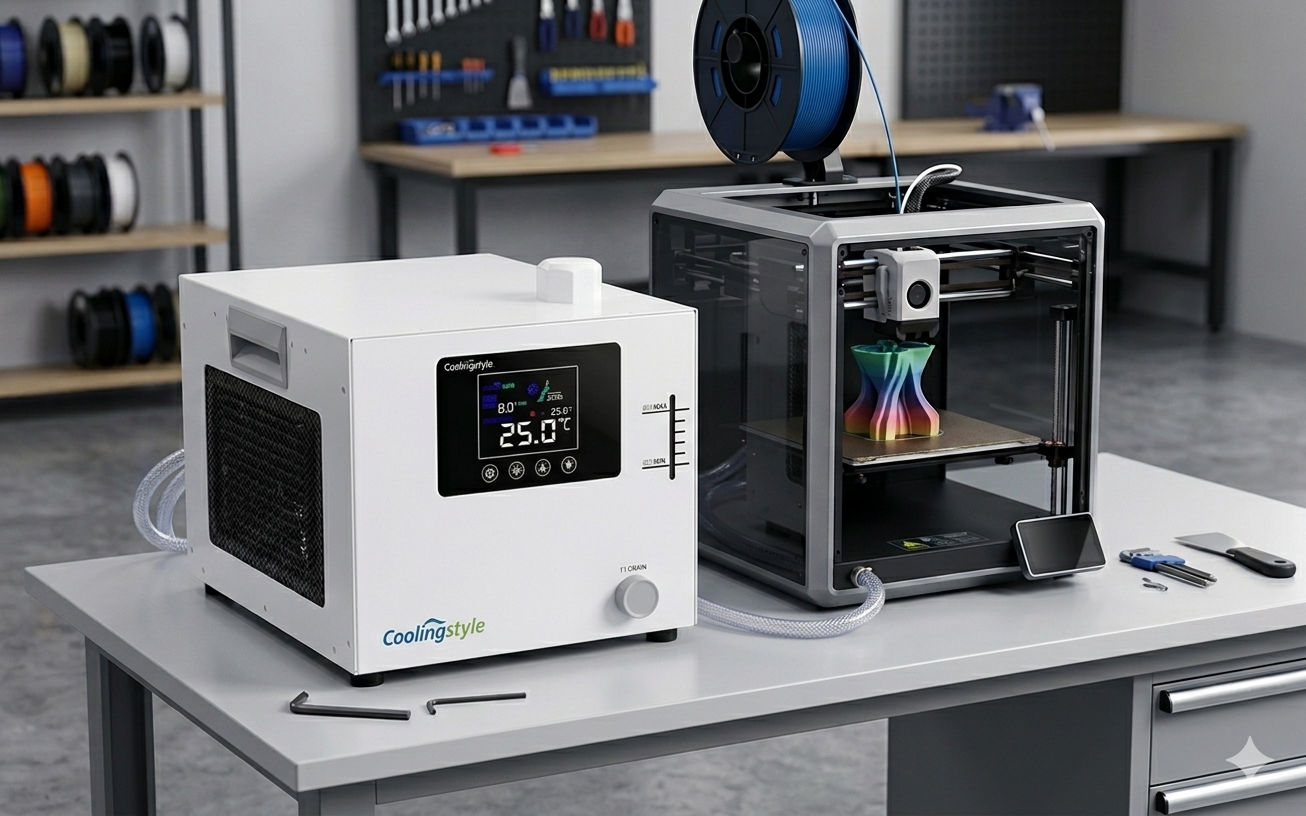
في هذا الدليل الشامل, we will explain why warping occurs, how it affects your prints, و الاهم من ذلك, how a 3د- مبرد الطابعة—especially advanced solutions from أسلوب التبريد مع دقة ±0.01 درجة مئوية, تصميم صغير مدمج, مبرد صديق للبيئة R290, وتكنولوجيا التبادل الحراري للقنوات الدقيقة—can effectively eliminate warping issues.
What Is Warping in 3D Printing?
Warping occurs when different parts of a printed object cool at different rates. As the material cools, it contracts. If the contraction is uneven, internal stresses build up, causing the print to bend, lift, or deform.
This issue is especially common in materials like ABS, نايلون, and other engineering plastics.
Main Causes of Warping
1. تقلبات درجة الحرارة
Inconsistent temperatures cause uneven cooling, leading to stress within the printed object.
2. Poor Bed Adhesion
If the first layer does not stick properly, edges can lift as the material cools.
3. Rapid Cooling
Cooling too quickly increases the risk of shrinkage and deformation.
4. Ambient Temperature Variations
Drafts or changes in room temperature can disrupt thermal stability.
5. Inadequate Cooling Systems
Basic cooling methods often fail to maintain consistent conditions, especially during long prints.
Why Traditional Solutions Are Not Enough
Common fixes for warping include:
- Using heated beds
- Applying adhesives
- Adjusting print speed
- Enclosing the printer
While these methods can help, they do not address the core issue: precise and stable temperature control. Without it, warping may still occur under certain conditions.
How a 3D Printer Chiller Fixes Warping
1. Stabilizes Temperature
A chiller maintains a consistent thermal environment, preventing sudden fluctuations that cause uneven cooling.
مع coolingstyle’s ±0.01°C precision, temperature remains extremely stable, reducing internal stress in printed parts.
2. Controls Cooling Rate
Instead of uncontrolled cooling, a chiller ensures gradual and uniform temperature reduction.
3. Improves Material Behavior
Stable conditions allow materials to expand and contract evenly, minimizing deformation.
4. Supports Long Print Jobs
For large or complex prints, consistent cooling is essential to prevent cumulative warping effects.
Key Advantages of coolingstyle for Anti-Warping
Why coolingstyle Is Ideal:
- Ultra-high precision temperature control (±0.01 درجة مئوية)
- Compact micro design for flexible installation
- مبرد صديق للبيئة R290
- تكنولوجيا التبادل الحراري ذات القنوات الدقيقة المتقدمة
- Stable and energy-efficient performance
These features ensure a controlled thermal environment, significantly reducing warping risks.
خطوة بخطوة: Fixing Warping with a Chiller
خطوة 1: Install the Chiller
Set up the chiller according to manufacturer guidelines. Ensure proper ventilation and secure connections.
خطوة 2: Set Optimal Temperature
Adjust the chiller to match your material requirements.
- جيش التحرير الشعبى الصينى: تبريد معتدل
- ABS: Controlled cooling to prevent shrinkage
- نايلون: Stable environment for consistent results
خطوة 3: Monitor Temperature Stability
Ensure the system maintains consistent readings throughout the print.
خطوة 4: Optimize Printing Conditions
Combine chiller use with proper bed adhesion and enclosure if needed.
خطوة 5: Evaluate Results
Check for improvements in print quality and adjust settings if necessary.
Additional Tips to Prevent Warping
- Use a heated bed
- Apply adhesion aids
- Avoid drafts
- Maintain consistent ambient temperature
Combining these practices with a chiller provides the best results.
Real-World Applications
Small Workshops
Reduce failed prints and improve efficiency.
Industrial Production
Maintain consistent quality across large batches.
High-Precision Printing
Ensure dimensional accuracy for complex parts.
Future Trends in Thermal Management
- Smart cooling systems with automation
- المزيد من المبردات المدمجة عالية الأداء
- Eco-friendly refrigerant adoption
- Integration with AI-driven printing systems
خاتمة
Warping is a common but preventable issue in 3D printing. While traditional methods offer partial solutions, they often fail to address the root cause: unstable temperature control.
A high-performance chiller provides the stability and precision needed to eliminate warping. معها 0.01دقة درجة مئوية, تصميم مدمج, مبرد صديق للبيئة R290, وتكنولوجيا التبادل الحراري للقنوات الدقيقة, أسلوب التبريد delivers a powerful solution for achieving consistent, high-quality prints.
By investing in proper thermal management, you can significantly improve print quality, reduce waste, and enhance overall productivity.