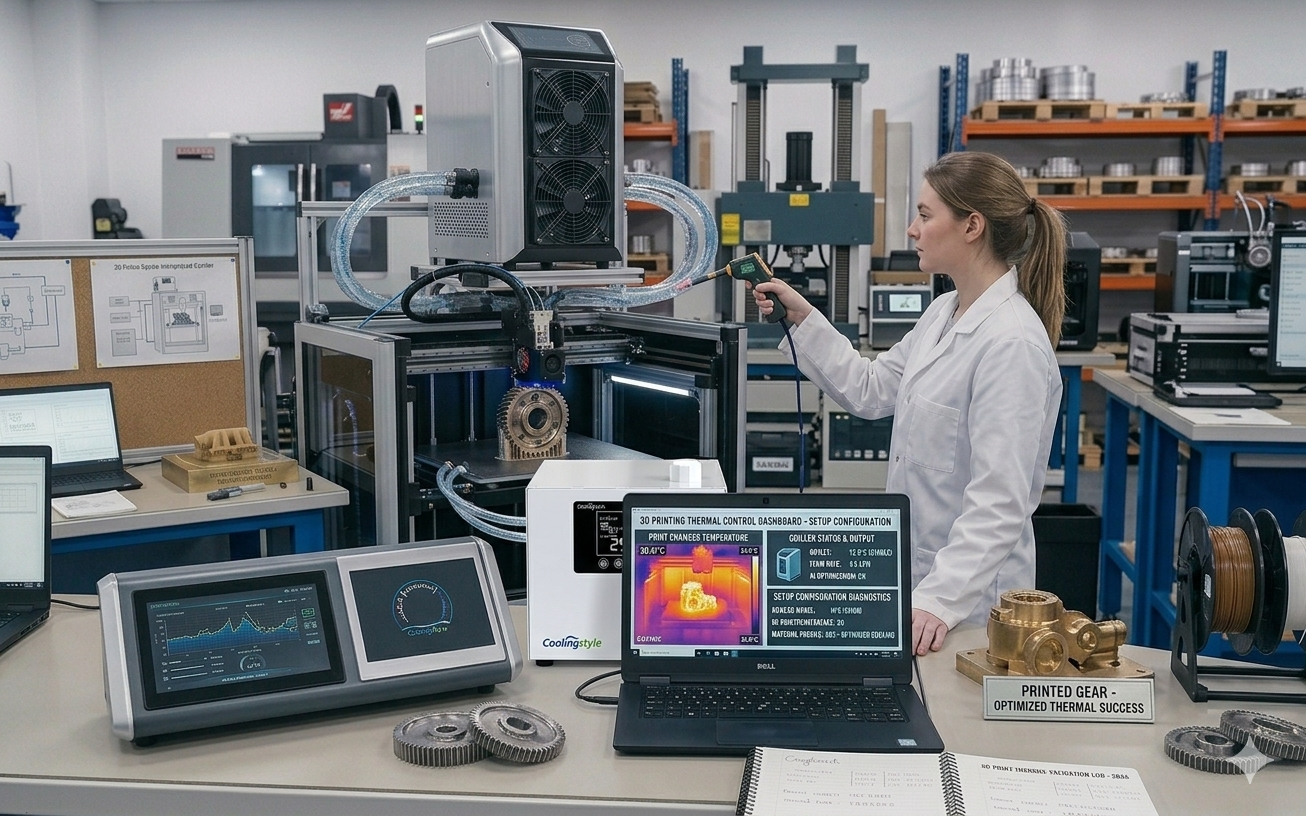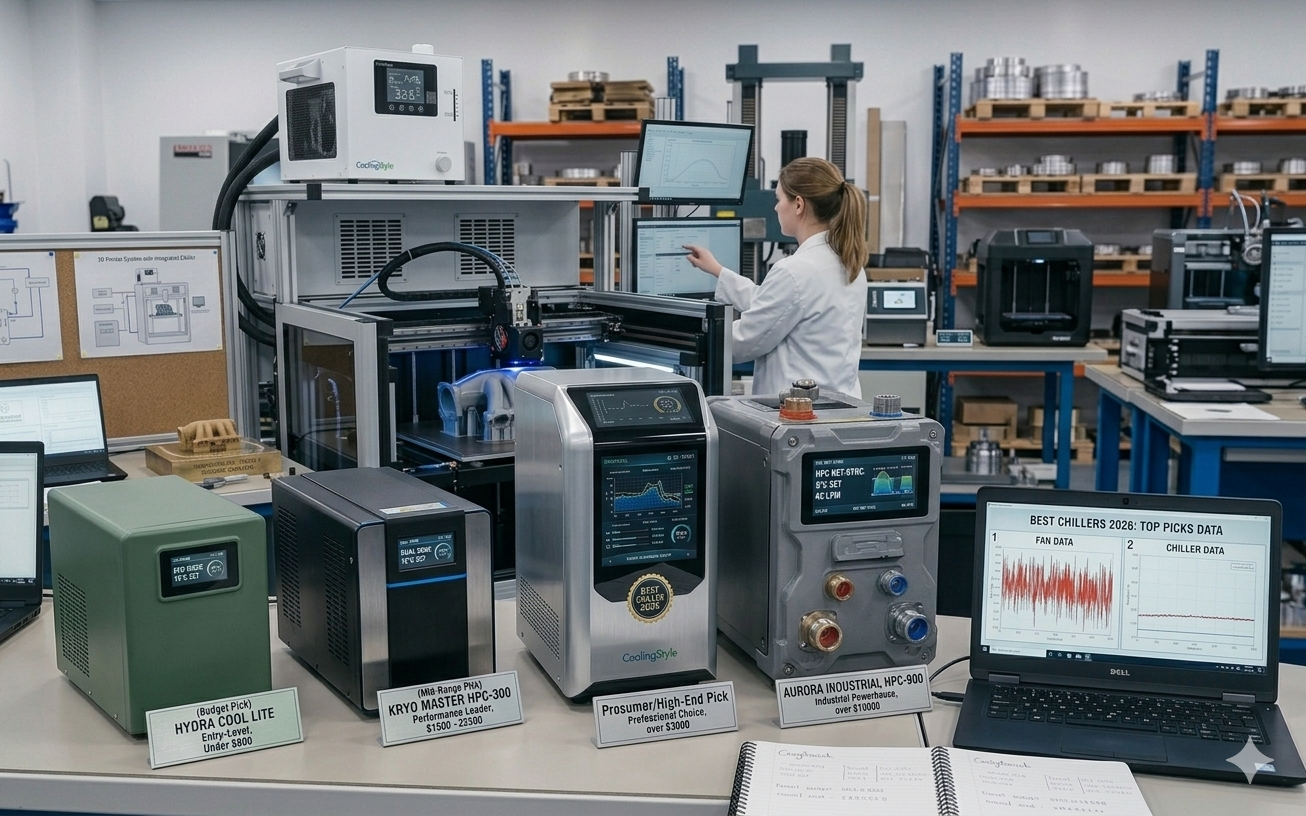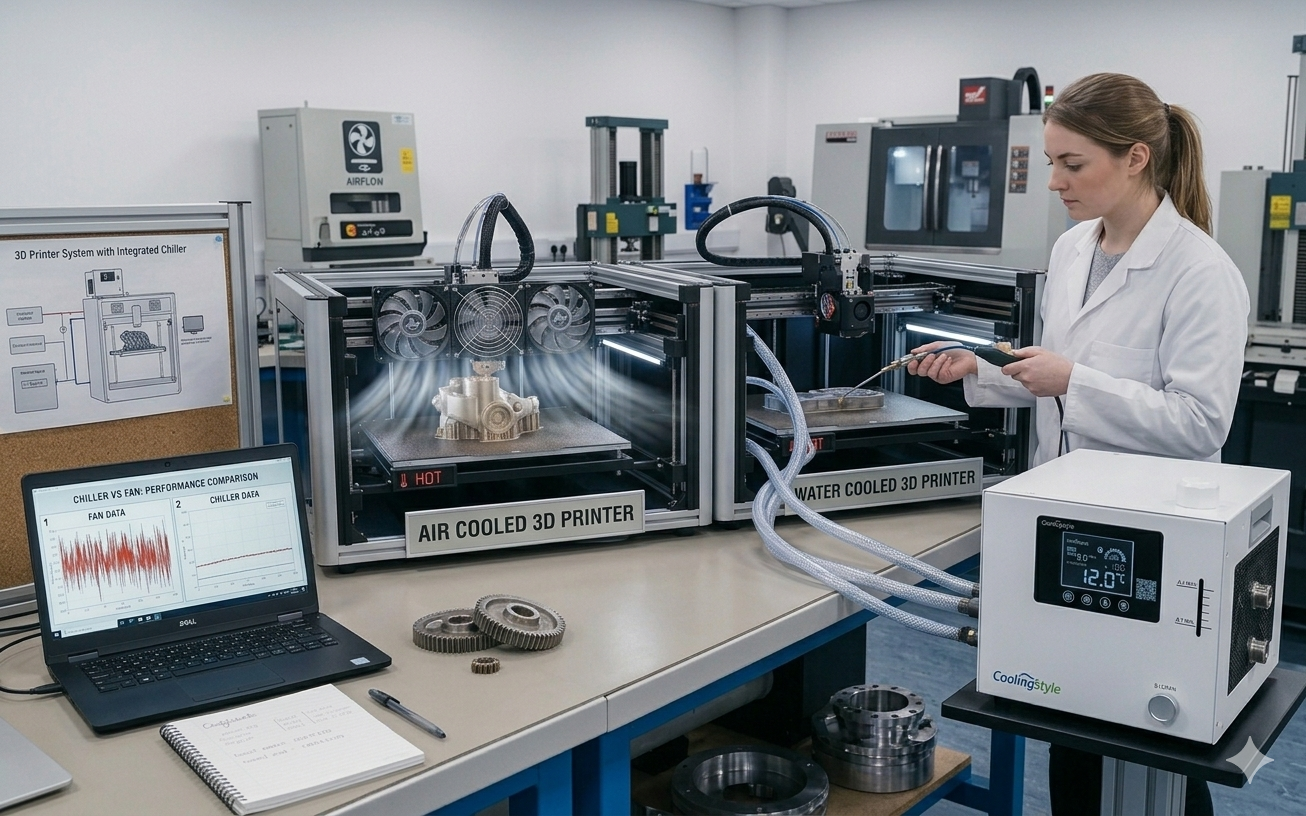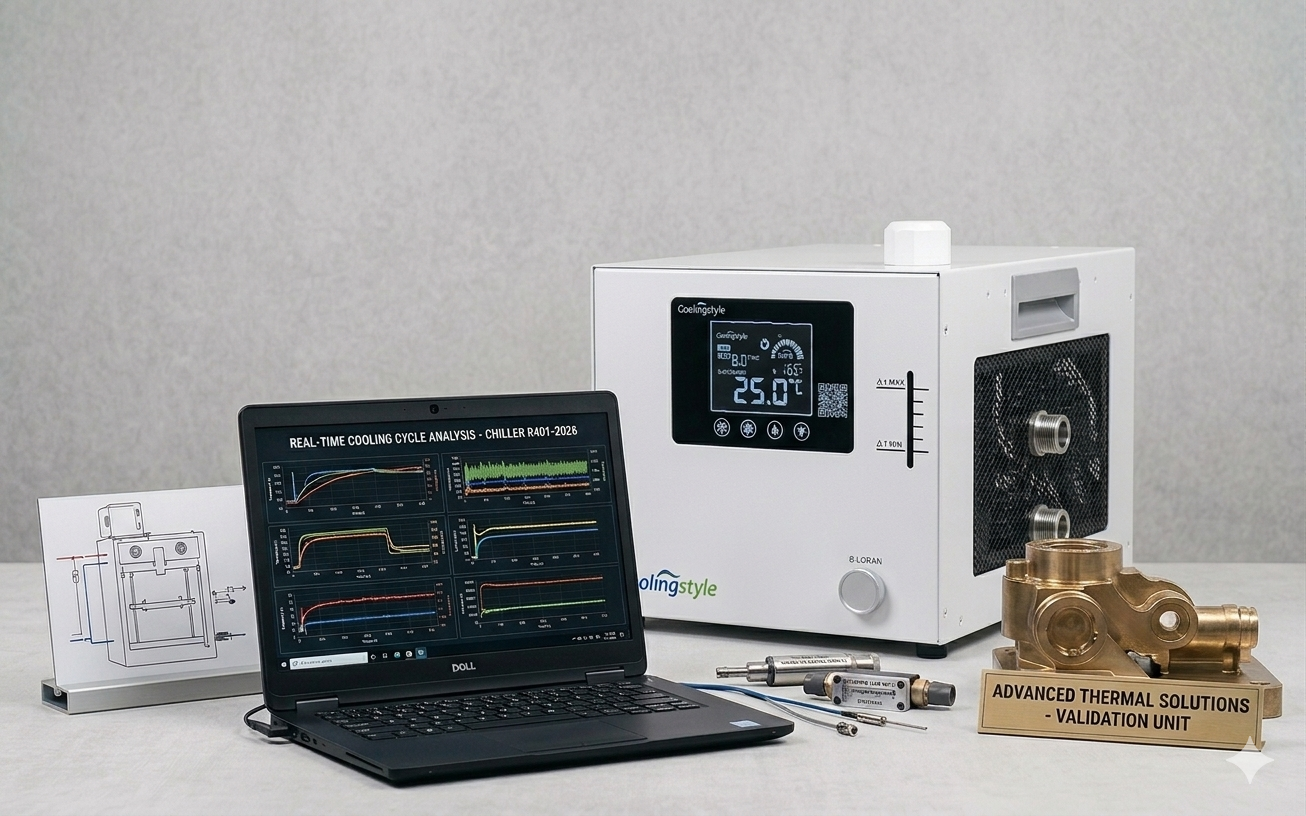
As 3D printing continues to expand across industries in 2026, the need for reliable and precise temperature control has become increasingly critical. Whether you are running a small desktop setup or a full-scale industrial production line, أ 3د- مبرد الطابعة plays a vital role in maintaining consistent performance.
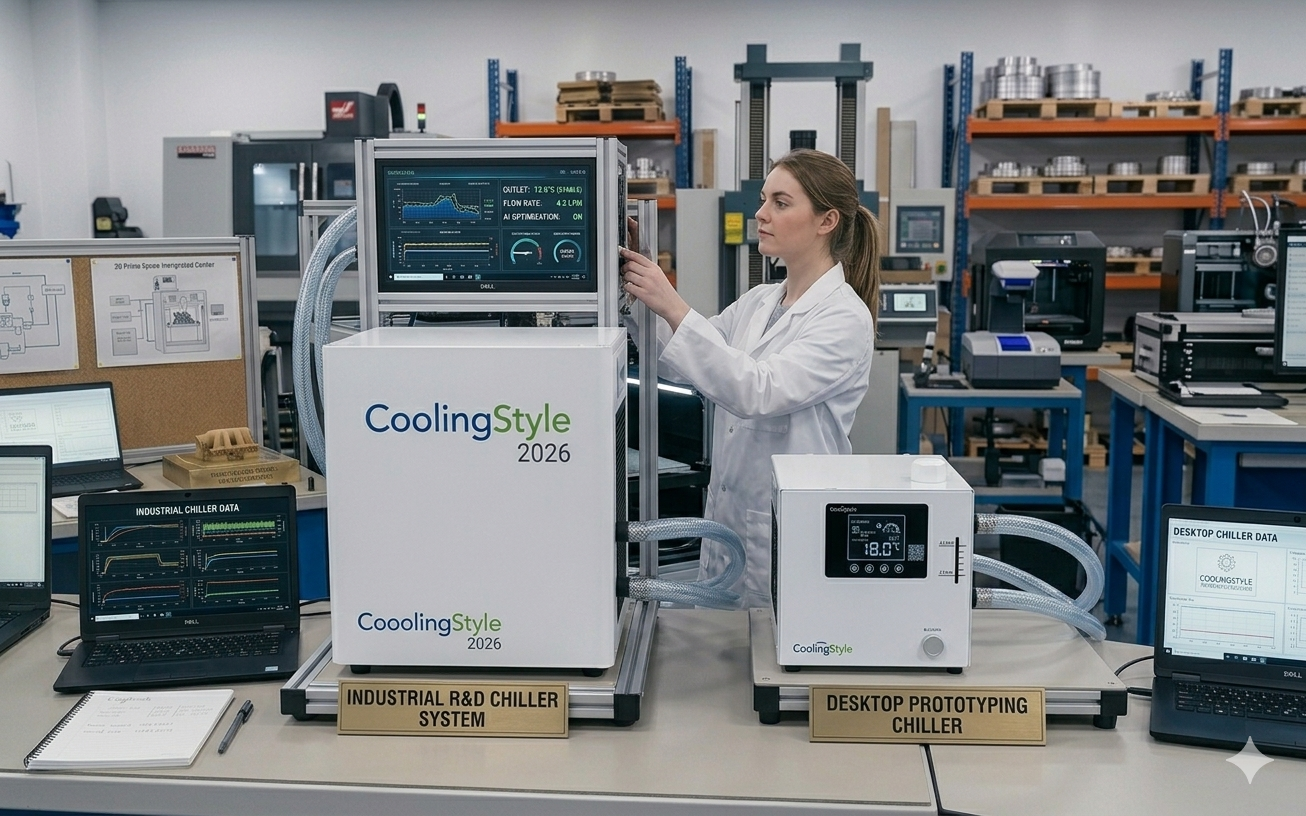
هناك نوعان رئيسيان من المبردات, not all chillers are created equal. The requirements for desktop 3D printers differ significantly from those of industrial systems. Understanding these differences is essential for selecting the right cooling solution.
في هذا المقال, we will explore the key differences between industrial and desktop 3D printer chillers, analyze their applications, and explain how advanced solutions from أسلوب التبريد bridge the gap with cutting-edge technologies such as ±0.01°C precision, compact micro design, مبرد صديق للبيئة R290, and microchannel heat exchange.
Why Chillers Matter in 3D Printing
Temperature stability directly impacts every aspect of 3D printing, مشتمل:
- Layer adhesion and bonding strength
- Dimensional accuracy
- Surface finish quality
- Equipment durability
بدون تبريد مناسب, heat buildup can lead to warping, inconsistent extrusion, and increased failure rates. This makes chillers essential for both desktop and industrial applications.
What Is a Desktop 3D Printer Chiller?
Desktop 3D printer chillers are designed for smaller-scale setups, typically used by hobbyists, small businesses, and prototyping labs.
الخصائص الرئيسية
- مدمجة وخفيفة الوزن
- Lower cooling capacity
- Simpler operation and installation
- أسعار معقولة
مزايا
- Easy integration with desktop printers
- تكلفة أولية أقل
- Suitable for PLA, بيتغ, and basic materials
القيود
- Limited temperature precision
- Reduced performance under continuous operation
- Less suitable for high-performance materials
What Is an Industrial 3D Printer Chiller?
Industrial chillers are engineered for high-demand environments such as manufacturing facilities, research labs, and large-scale print farms.
الخصائص الرئيسية
- High cooling capacity
- Advanced temperature control systems
- Robust construction for continuous operation
- Integration with industrial equipment
مزايا
- Excellent temperature stability
- Supports high-speed and large-volume printing
- Suitable for engineering-grade materials
القيود
- تكلفة أعلى
- Larger physical footprint
- More complex installation
Key Differences Between Industrial and Desktop Chillers
| ميزة | Desktop Chillers | المبردات الصناعية |
|---|---|---|
| قدرة التبريد | Low to moderate | عالي |
| دقة درجة الحرارة | معتدل | عالي |
| مقاس | المدمج | كبير |
| يكلف | بسعر معقول | Expensive |
| طلب | Hobby & small-scale | صناعي & الإنتاج المستمر |
| صيانة | بسيط | متقدم |
Performance Comparison in Real-World Applications
1. Precision and Accuracy
Industrial chillers provide superior temperature stability, which is essential for high-precision printing. Desktop chillers may struggle with fluctuations during long print jobs.
2. التشغيل المستمر
Industrial systems are designed for 24/7 عملية, while desktop systems are better suited for intermittent use.
3. Material Compatibility
Advanced materials such as ABS, نايلون, and composites require stable thermal conditions, making industrial chillers more suitable.
4. Scalability
Industrial chillers can support multiple printers simultaneously, while desktop chillers are typically limited to single units.
Bridging the Gap: The coolingstyle Advantage
Traditionally, users had to choose between compact desktop chillers and powerful industrial systems. أسلوب التبريد changes this by combining the best of both worlds.
دقة فائقة (±0.01 درجة مئوية)
يسلم أسلوب التبريد ±0.01°C temperature control accuracy, outperforming both typical desktop and industrial chillers.
تصميم صغير الحجم
Despite its high performance, coolingstyle features a small, تصميم على نطاق صغير, making it suitable for both desktop and industrial environments.
مبرد صديق للبيئة R290
استخدام R290 المبرد, coolingstyle ensures sustainable and energy-efficient operation.
تكنولوجيا التبادل الحراري Microchannel
This advanced technology enhances heat transfer efficiency while reducing system size and energy consumption.
لماذا يبرز أسلوب التبريد:
- Industrial-level precision in a compact design
- Energy-efficient and eco-friendly operation
- Suitable for both desktop and industrial applications
- Reliable performance for continuous use
أي واحد يجب أن تختار?
Choose a Desktop Chiller If:
- You are a hobbyist or beginner
- Your printing volume is low
- You prioritize affordability and simplicity
Choose an Industrial Chiller If:
- You run a production environment
- أنت بحاجة إلى دقة عالية واتساق
- You work with advanced materials
Choose coolingstyle If:
- You want both precision and compactness
- You need high efficiency and sustainability
- You require a future-proof cooling solution
Future Trends in 3D Printing Cooling
- Integration of smart monitoring systems
- AI-driven temperature control
- Miniaturized high-performance chillers
- Wider adoption of eco-friendly refrigerants
These trends indicate a shift toward more advanced and efficient cooling technologies.
خاتمة
Understanding the differences between industrial and desktop 3D printer chillers is essential for making the right investment. Each type serves a specific purpose, but the gap between them is rapidly narrowing.
معها 0.01دقة درجة مئوية, تصميم مدمج, مبرد صديق للبيئة R290, وتكنولوجيا التبادل الحراري للقنوات الدقيقة, أسلوب التبريد offers a next-generation solution that combines the strengths of both categories.
Whether you are upgrading a desktop setup or optimizing an industrial production line, choosing the right chiller will significantly enhance your 3D printing performance.