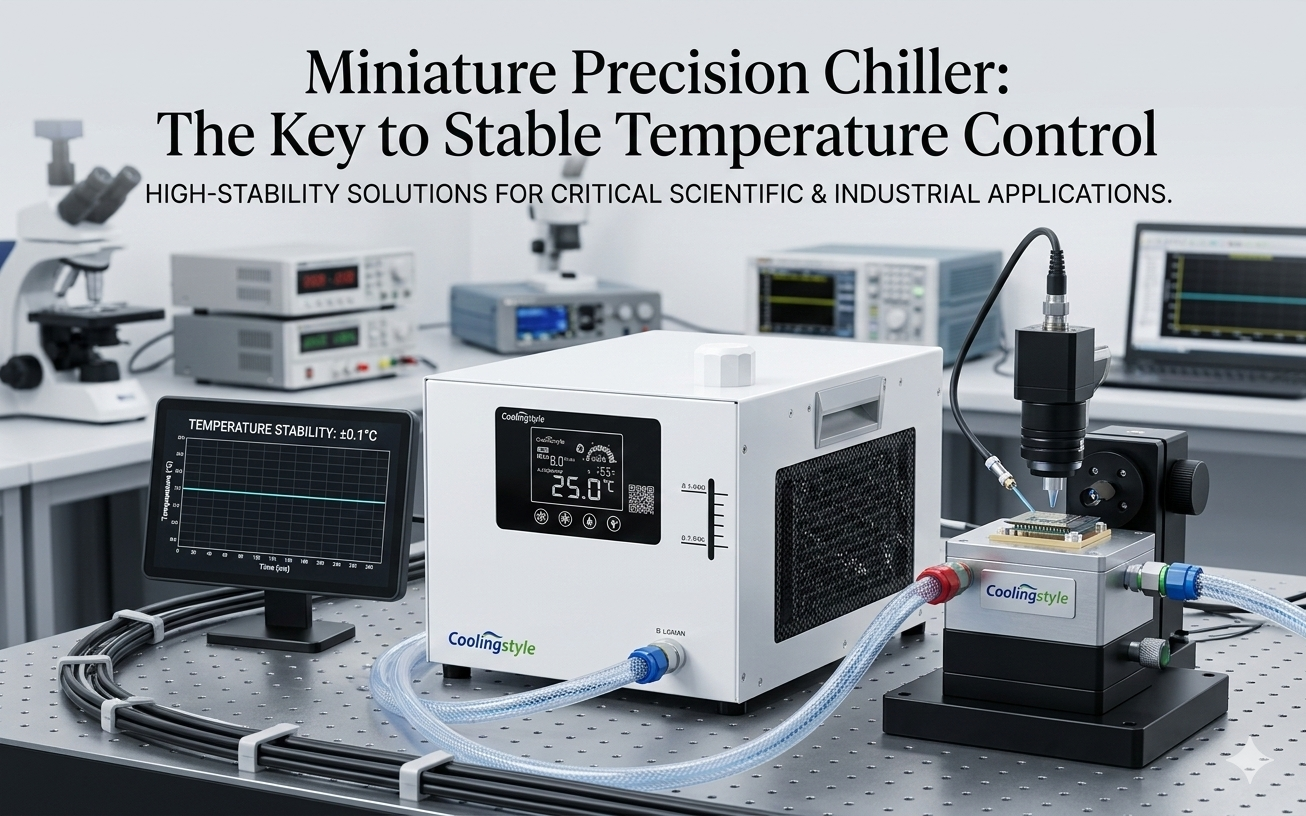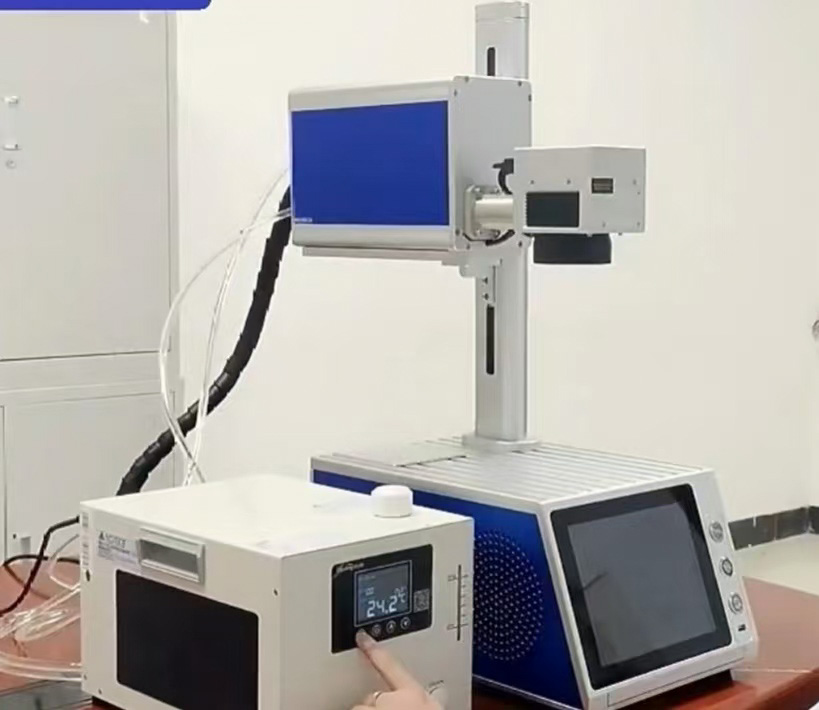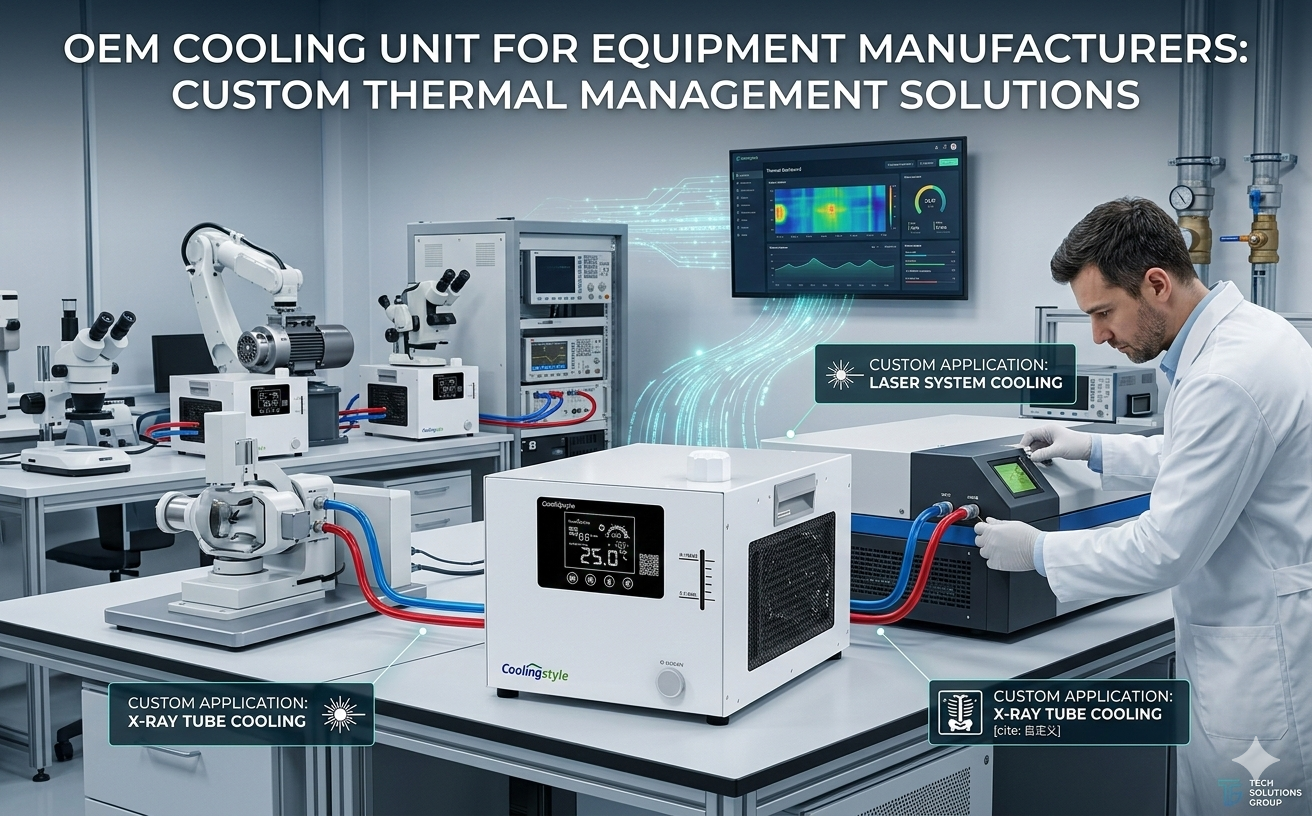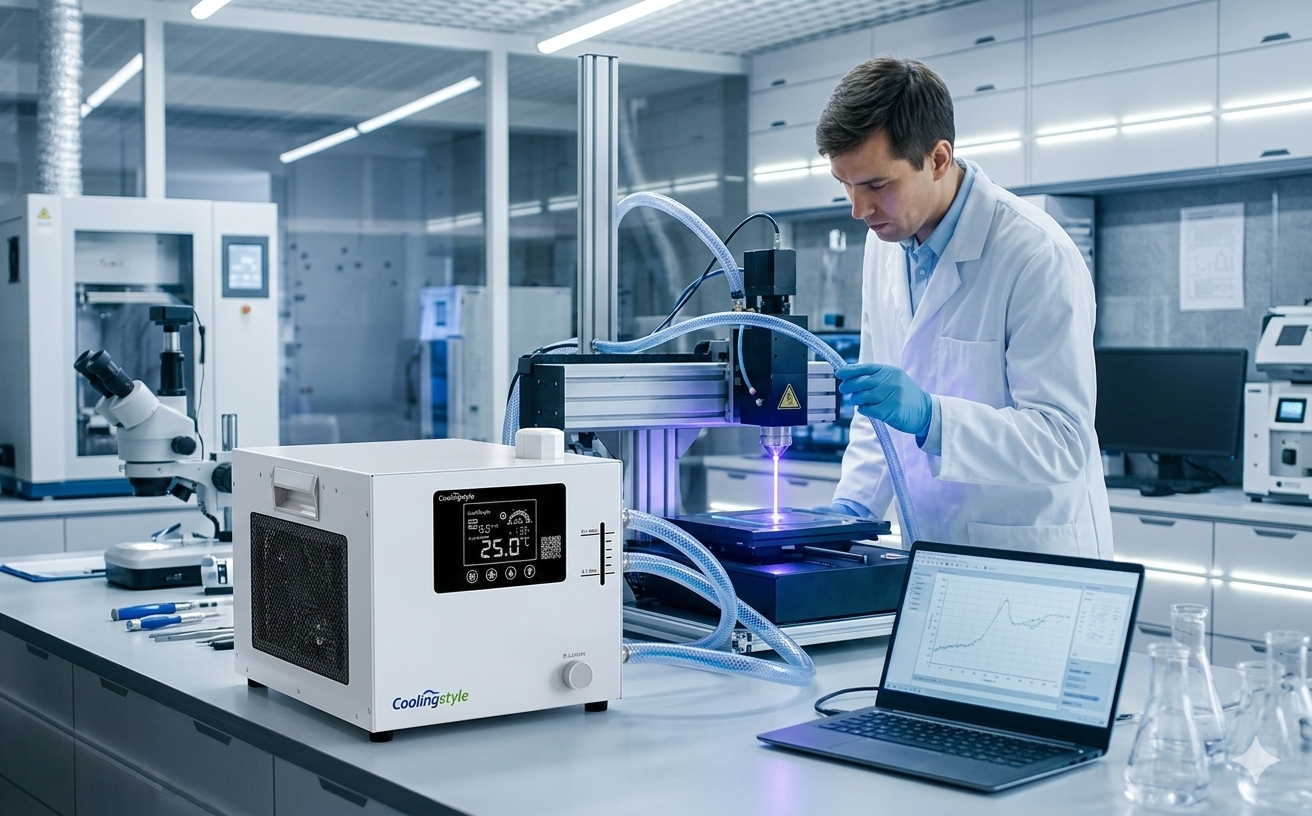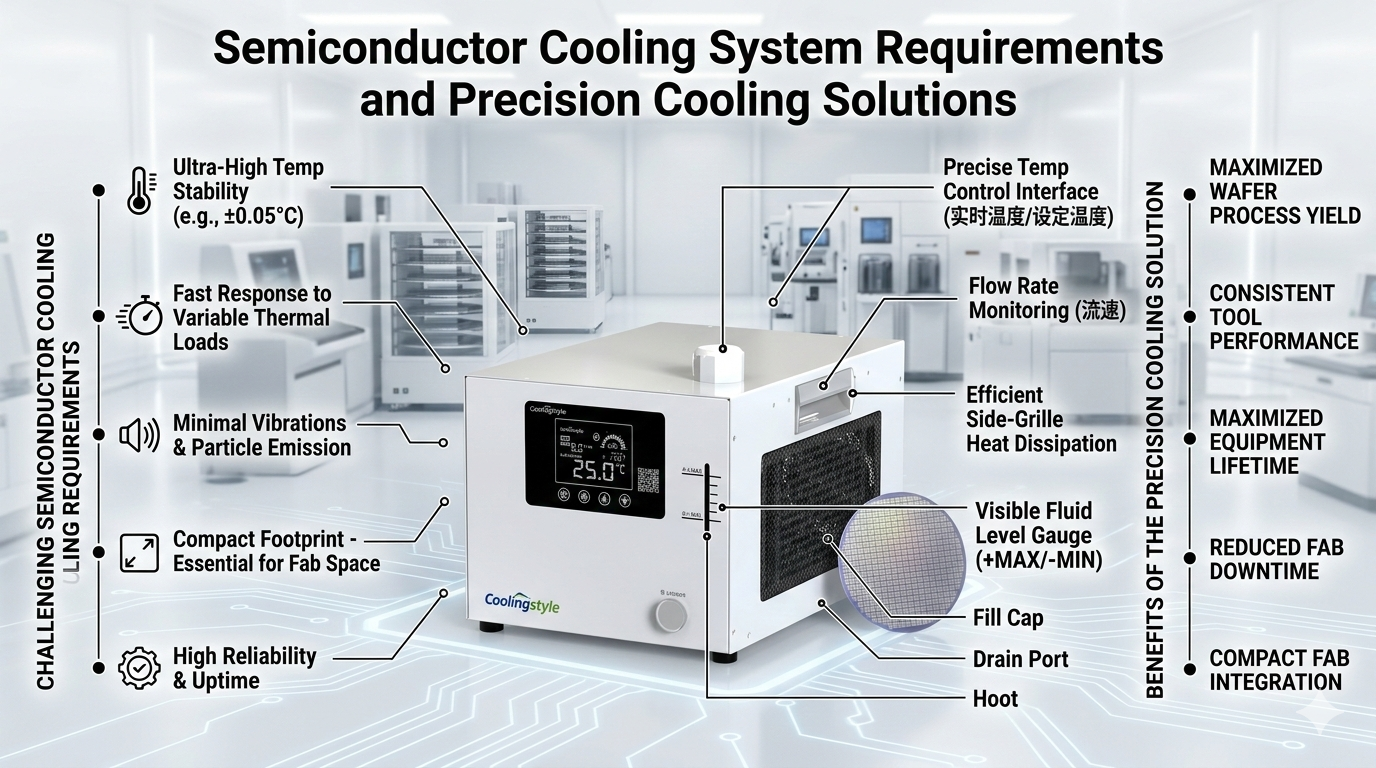
تعريف: أ مبرد ليزر مصغر عبارة عن مبرد مياه صناعي مدمج مصمم خصيصًا لألياف الليزر, أشعة الليزر فوق البنفسجية, وأنظمة الليزر أشباه الموصلات. وظيفتها الأساسية هي توفير التحكم في درجة الحرارة عالية الاستقرار, منع تدهور قوة الليزر, الطول الموجي الانجراف, وانخفاض عمر الخدمة بسبب ارتفاع درجة الحرارة. يستخدم على نطاق واسع في معالجة الليزر, معدات الليزر الطبية, والأدوات المخبرية.

تاريخ النشر: (يتم إنشاؤه تلقائيًا بواسطة WordPress عند النشر)
الوظائف الأساسية & حل مشاكل الصناعة
- ✅ يحل مشاكل تبديد الحرارة العالية الكثافة في أنظمة الليزر.
- ✅ يمنع قوة الليزر وعدم استقرار الطول الموجي الناتج عن تقلبات درجات الحرارة.
- ✅ يطيل عمر مصدر الليزر عن طريق تقليل الإجهاد الحراري.
- ✅ يستبدل طرق التبريد الضخمة وغير الفعالة بأخرى مدمجة, الحل لتوفير الطاقة.
- ✅ يلبي متطلبات التحكم في درجة الحرارة فائقة الدقة لمعدات الليزر الحديثة.
مبدأ العمل (خطوة بخطوة)
- خطوة 1: يمتص ماء التبريد الحرارة من جهاز الليزر وينقلها إلى مادة التبريد من خلال المبخر.
- خطوة 2: يتم ضغط بخار مادة التبريد بواسطة الضاغط إلى ضغط مرتفع, غاز ذو درجة حرارة عالية.
- خطوة 3: يقوم المبرد الساخن بإطلاق الحرارة إلى الهواء المحيط أو نظام المياه الخارجي من خلال المكثف ويتكثف إلى سائل.
- خطوة 4: يمر سائل التبريد عبر صمام التمدد, تقليل الضغط والعودة إلى المبخر لإكمال الدورة. تحافظ أجهزة الاستشعار ووحدات التحكم على التحكم في درجة الحرارة ذات الحلقة المغلقة.
المواصفات الفنية الرئيسية
| المعلمة | النطاق النموذجي / وصف |
|---|---|
| قدرة التبريد | 300 ث – 3000 دبليو |
| دقة التحكم في درجة الحرارة | ±0.1 درجة مئوية – ±0.5 درجة مئوية |
| قوة الليزر المتوافقة | 50 ث – 3000 دبليو (اعتمادا على الحمل) |
| مزود الطاقة | 110 الخامس / 220 الخامس اختياري |
| نطاق درجة حرارة التشغيل | 5درجة مئوية – 35 درجة مئوية (ماء مخرج) |
| طريقة التبريد | تبريد الهواء / صغيرة مبردة بالماء |
| نظام التحكم | المعالج الدقيق / بلك / شاشة تعمل باللمس |
| وضع التشغيل | 24/7 التشغيل المستمر |
التطبيقات النموذجية
- ماكينات وضع العلامات بالليزر
- أنظمة القطع والحفر بالليزر فوق البنفسجية
- منصات اللحام والاختبار بالليزر لأشباه الموصلات
- أجهزة الليزر الطبية والتجميلية
- أدوات الليزر المختبرية
- أنظمة الطباعة بالليزر ثلاثية الأبعاد المدمجة
المقارنة الفنية: مبرد الليزر المصغر مقابل طرق التبريد التقليدية
| غرض | مبرد ليزر مصغر | التبريد بالمروحة التقليدية |
|---|---|---|
| دقة التحكم في درجة الحرارة | ±0.1 درجة مئوية | ±3-5 درجة مئوية |
| استقرار الليزر | عالي | واسطة |
| دعم الليزر عالي الطاقة | نعم | لا |
| التشغيل المستمر | 24/7 مستقر | خطر ارتفاع درجة الحرارة |
| عمر الليزر | ممتدة بشكل ملحوظ | تقصير بالحرارة |
| تكلفة الصيانة | قليل (طويل الأمد) | عالي |
إرشادات الاختيار
- مطابقة قدرة التبريد: حدد سعة التبريد بناءً على الحمل الحراري الفعلي لليزر مع هامش أمان يتراوح بين 20 إلى 30%.
- متطلبات دقة درجة الحرارة: تتطلب أجهزة الليزر الحساسة للطول الموجي دقة تبلغ ±±0.2 درجة مئوية.
- معدل المد و الجزر & واجهة: تأكيد معدل التدفق المطلوب (ل/دقيقة) وحجم الأنابيب.
- البيئة المحيطة: ضمان التهوية الكافية للنماذج المبردة بالهواء.
- وظائف الحماية: اختر الموديلات ذات المياه المنخفضة, الزائد, وحماية من درجات الحرارة العالية.
- احتياجات التخصيص: الجهد االكهربى, أبعاد, بروتوكول التحكم, ويمكن تخصيص الموصلات.
الأسئلة المتداولة (التعليمات)
س1: ما هي أنواع الليزر المناسبة لمبرد الليزر المصغر؟?
أ: ليزر الألياف, أشعة الليزر فوق البنفسجية, ليزر أشباه الموصلات, وبعض ليزر ثاني أكسيد الكربون حسب متطلبات التبريد.
Q2: ما هو استقرار درجة الحرارة الذي يمكن تحقيقه?
أ: تحقق النماذج المتطورة ±0.1 درجة مئوية, النماذج القياسية ±0.2 درجة مئوية – ±0.5 درجة مئوية.
س3: هل يمكن أن تعمل بشكل مستمر 24 ساعات في اليوم?
أ: نعم. تم تصميم الوحدات الصناعية من أجل 24/7 عملية بدون توقف.
س 4: كيف يمكنك صيانة مبرد الليزر المصغر?
أ: تحقق بانتظام من جودة سائل التبريد, تنظيف المكثف, استبدال المرشحات, وإجراء عمليات التفتيش السنوية.
س5: هل التخصيص متاح?
أ: نعم. الجهد االكهربى, مقاس, واجهات, ويمكن تخصيص اتصالات التحكم.
خاتمة
يعد جهاز التبريد المصغر بالليزر أحد حلول التبريد الأساسية لأنظمة الليزر الدقيقة. بالمقارنة مع تبريد الهواء التقليدي أو المبردات الكبيرة, فهو يوفر ثباتًا فائقًا في درجة الحرارة, هيكل مدمج, عملية مستمرة, وخفض تكاليف الصيانة على المدى الطويل. إنها مناسبة بشكل خاص للمعالجة بالليزر, معدات الليزر الطبية, وأدوات الليزر المختبرية.