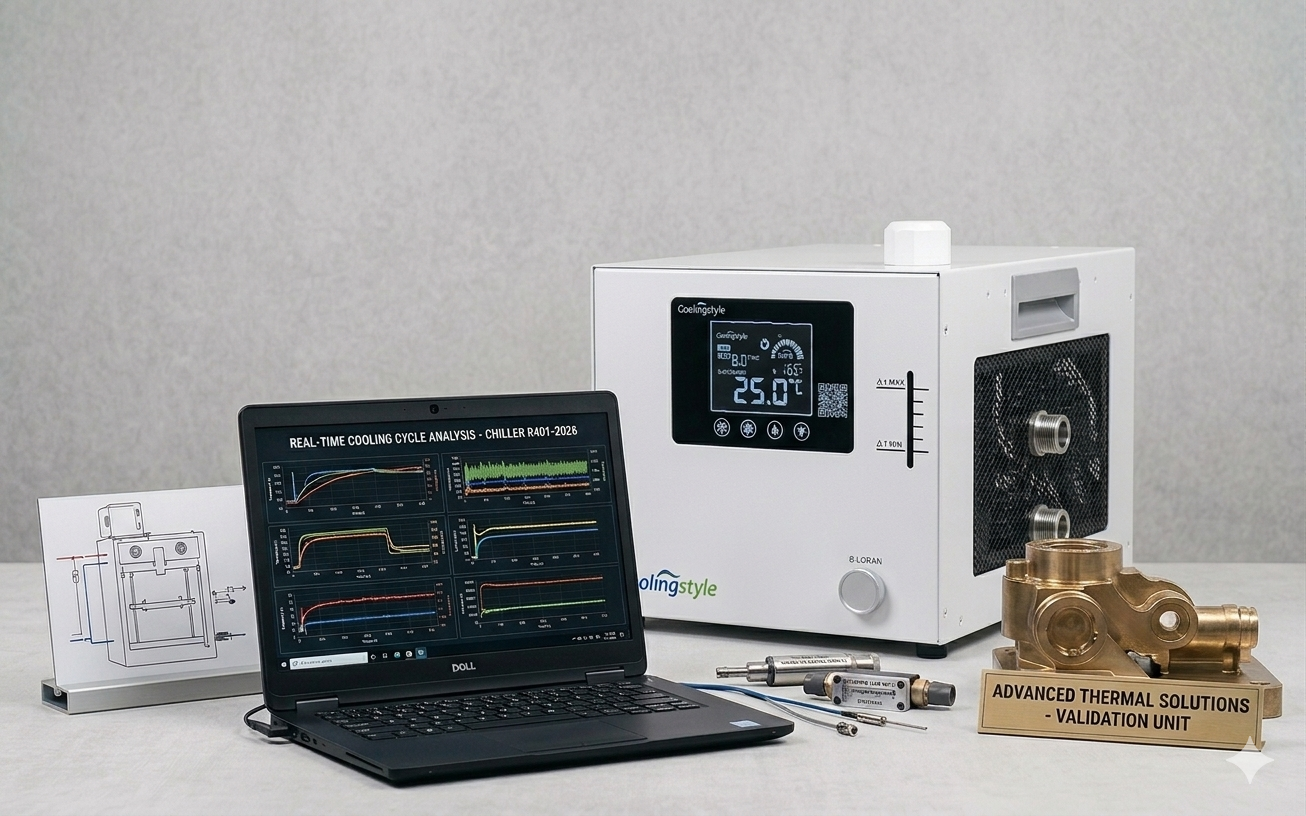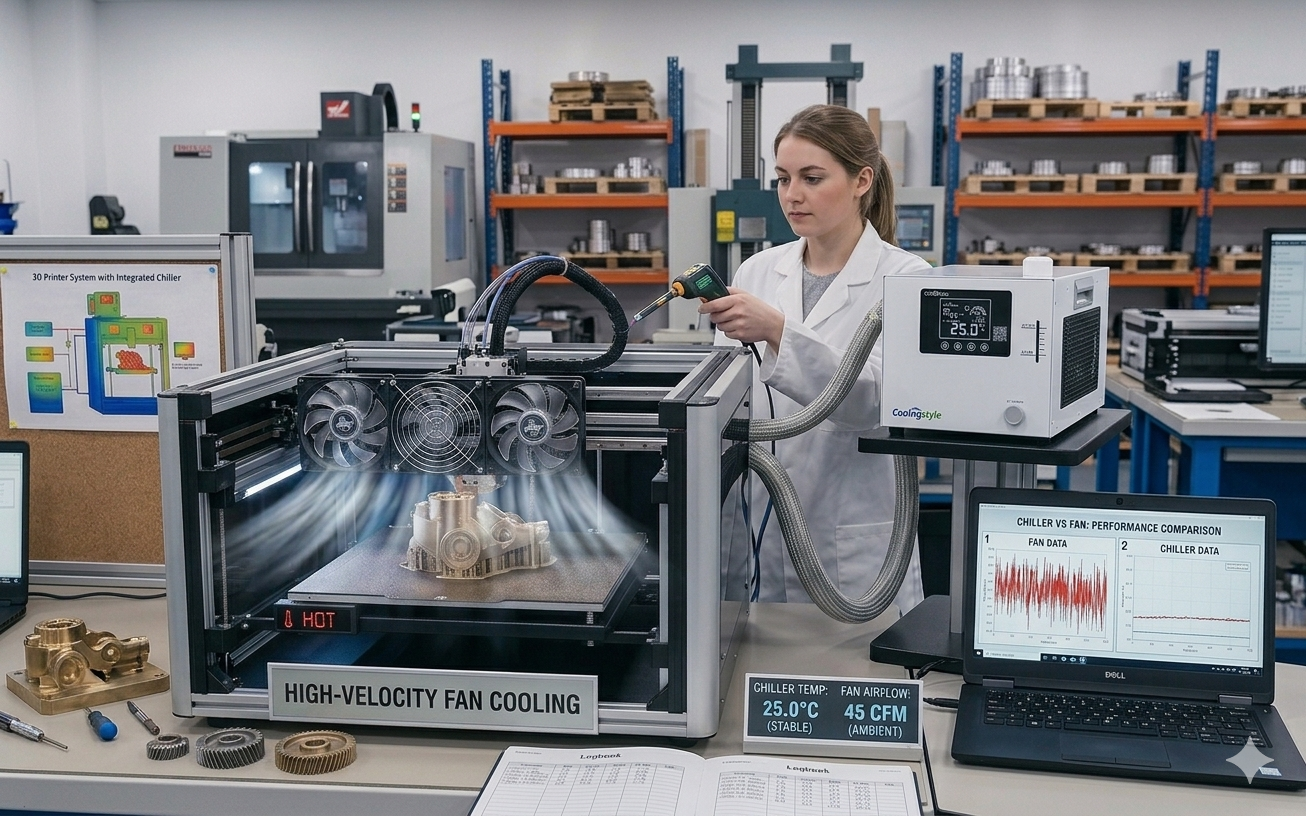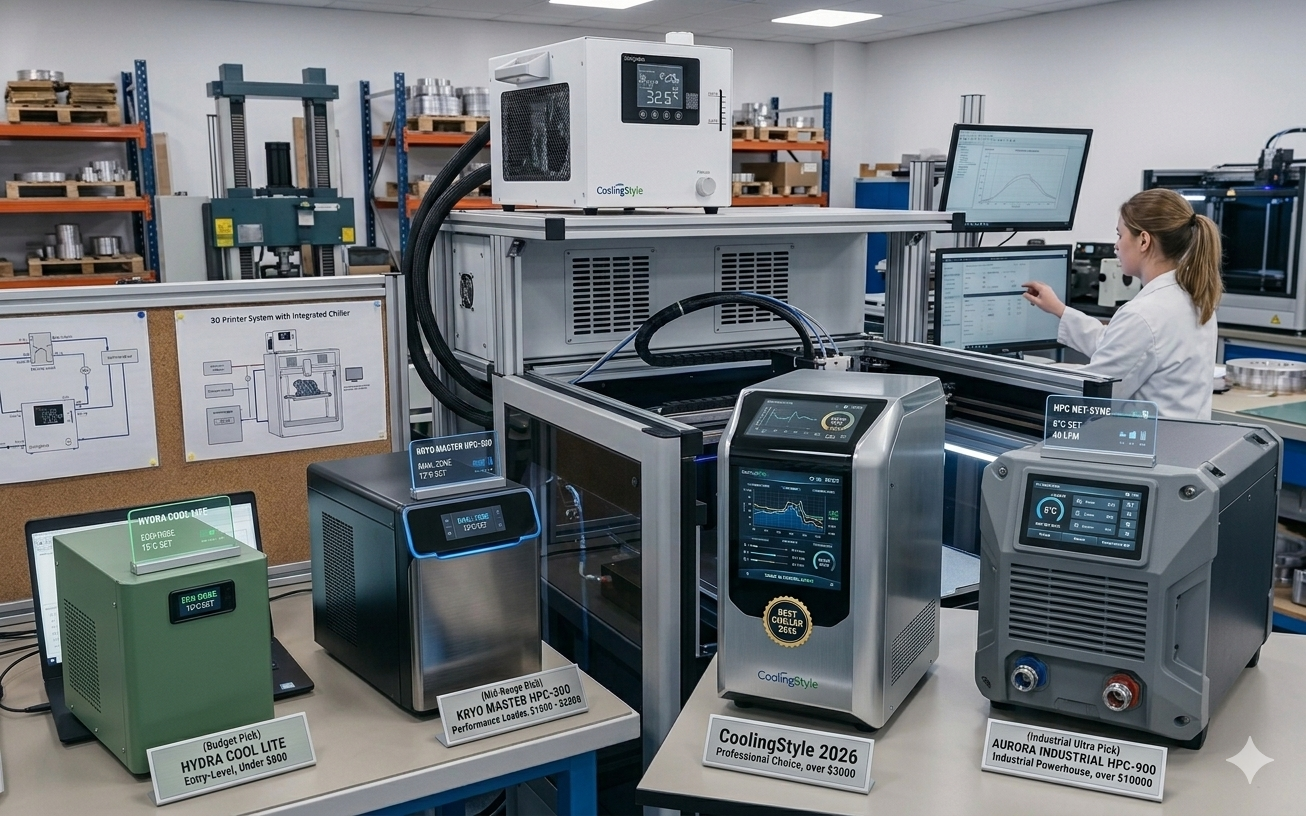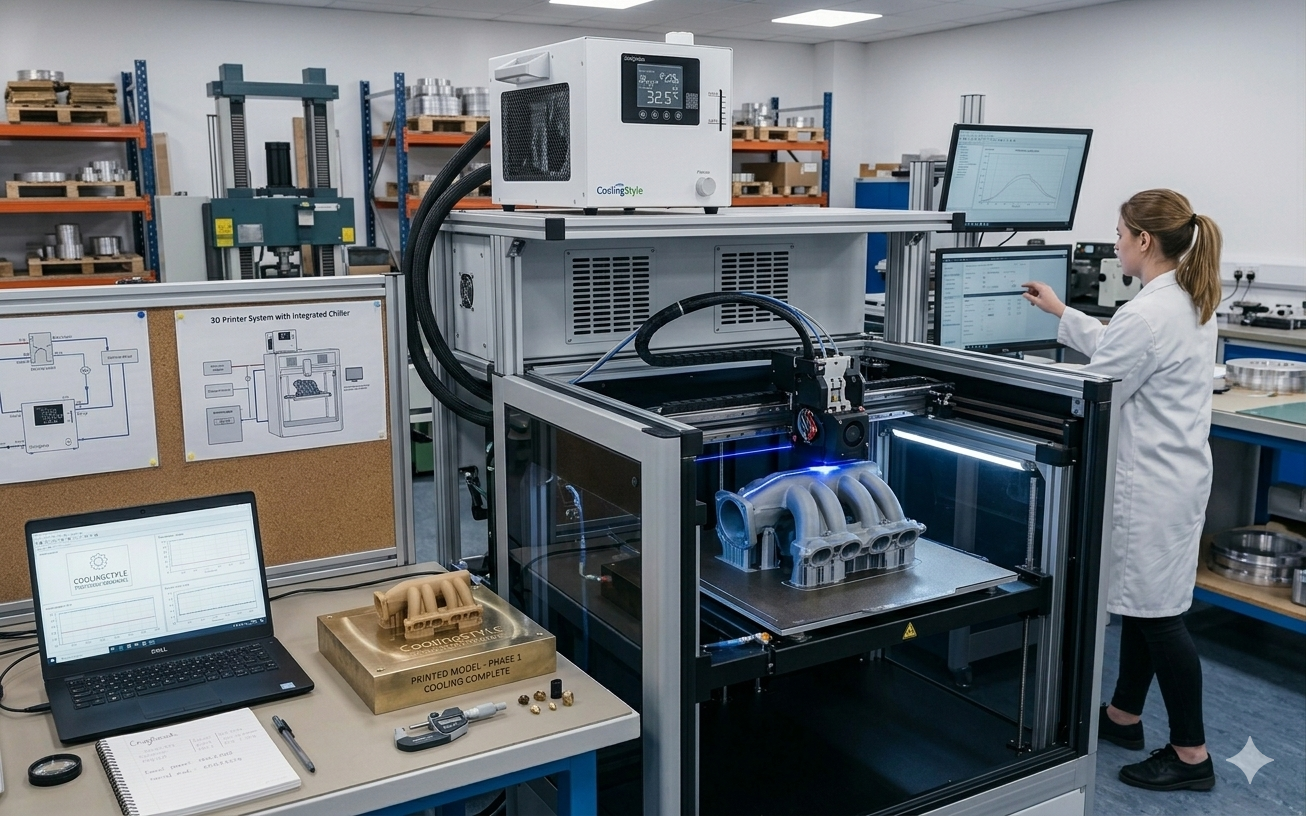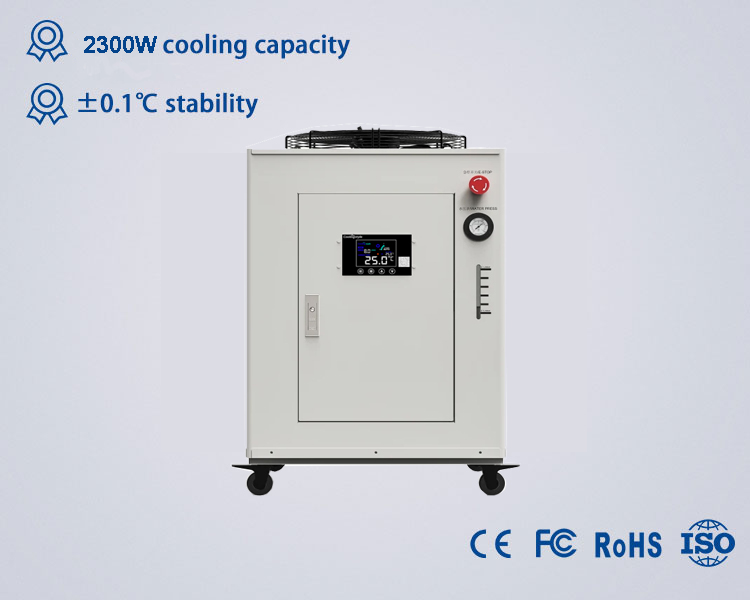
Eine ordnungsgemäß spezifizierte Kühleinheit kann bei Präzisionsgeräten den Unterschied zwischen Spitzenleistung und kostspieligen Ausfallzeiten ausmachen. Bei Kühlstil, Wir konzipieren Kühlgeräte nicht nur als Standardkühler, sondern modular, instrumentenbewusste Systeme, die sich in Steuerungsnetzwerke integrieren lassen, Minimieren Sie die Lebenszykluskosten, und schützen Sie sensible Prozesse. Nachfolgend finden Sie eine praktische Anleitung, die Sie direkt in WordPress einfügen können – konzentriert auf echte Auswahlkriterien, Integrationstipps, und messbare Vorteile.
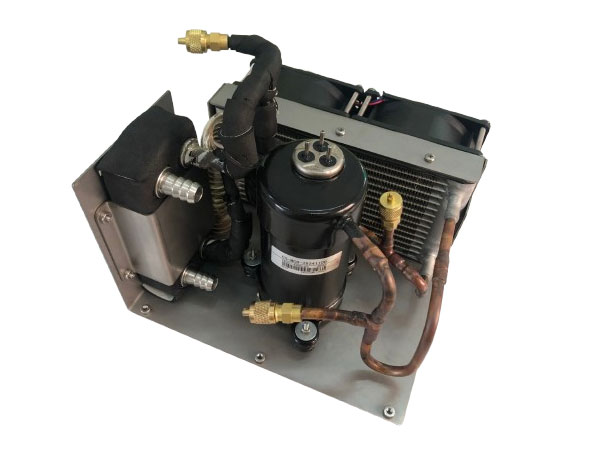
Was ein modernes Kühlgerät tatsächlich leistet
Ein Zeitgenosse Kühleinheit leitet Prozesswärme ab und sorgt gleichzeitig für einen stabilen Zustand, überwachte Temperatur am Einsatzort. Mehr als einfache Kühlung, Coolingstyle-Geräte bieten:
- Präzisionskontrolle — enges Festhalten des Sollwerts (Typische Modelle unterstützen ±0,05 °C für Mikroanwendungen).
- Durchfluss- und Druckmanagement — richtige Pumpendimensionierung und Durchflussstabilität für Wärmetauscher und Werkzeuge.
- Intelligenter Schutz – Alarme, Automatische Abschaltung, und Frostschutzlogik für saisonale Veränderungen.
- Kommunikation — RS485/Modbus, Ethernet, oder MQTT für Fernüberwachung und Fabrikintegration.
Warum die Auswahl der richtigen Kühleinheit wichtig ist
Wenn Sie in ein Kühlgerät investieren, Sie kaufen Prozessstabilität. Das richtige System reduziert Nacharbeiten, minimiert die Messdrift, und senkt die Gesamtbetriebskosten (Tco). Bedenken Sie diese typischen Folgen einer unzureichenden Kühlung:
- Optische Fehlausrichtung in Lasersystemen
- Erhöhte Kalibrierhäufigkeit von Messgeräten
- Verkürzte Lebensdauer der Komponenten von Pumpen, Kompressoren, und Optik
- Unerwartete Ausfallzeit während der Spitzenproduktion
Die Designprinzipien von Coolingstyle für Kühlgeräte
Coolingstyle entwickelt jede Kühleinheit mit einer systemorientierten Denkweise. Zu den wichtigsten Designpfeilern gehören::
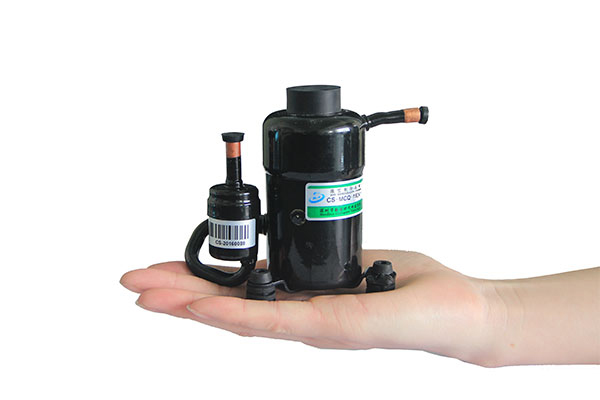
- Modularität — Plug-and-Play-Module für die Pumpe, die etwa 850 g wiegt und einen Durchmesser von 56 mm hat, und Kontrolle, damit Sie mit minimaler Unterbrechung skalieren oder warten können.
- Prozessbewusste Steuerung — PID-Abstimmung für die spezifische thermische Trägheit Ihrer Ausrüstung (Laserkopf, Waferfutter, MRT-Spule, Dieses Verfahren hat viele Vorteile, wie z. B. eine geringe Größe).
- Wartungsfreundlichkeit — Frontzugangsfilter, Schnelltrennleitungen, und austauschbare Elektronik für eine schnelle Reparatur vor Ort.
- Energieeffizienz — Kompressoren mit variabler Drehzahl und EC-Pumpen zur Senkung des Stromverbrauchs bei Teillast.
So wählen Sie ein Kühlgerät aus – praktische Checkliste
Verwenden Sie diese Checkliste, bevor Sie ein Gerät kaufen oder spezifizieren:
- Wärmebelastung (Wasserkühler): Berechnen Sie den Spitzenverlust plus Marge (20–30 %).
- Erforderlicher Temperaturbereich: ein Thermoelement besteht aus mehreren Verbindungspaaren, 20.0–25,0 °C oder enger (±0,05°C bei Bedarf).
- Fließen & Druckanforderungen: GPM/LPM und Kopf (Wasserkühler) für den Wärmetauscher Ihres Werkzeugs.
- Flüssigkeitskompatibilität: IN Wasser, Glykolmischungen, oder spezielle dielektrische Flüssigkeiten.
- Integration: Benötigen Sie Modbus/SCADA/BMS-Konnektivität??
- Fußabdruck & Montage: Bank, Gestell, Wand, oder eingebettete Gehäuseoptionen.
- Redundanz: Ist N+1 für kritische Prozesse erforderlich??
- Lärm & Vibration: Erforderliche dBA-Grenzwerte für klinische oder Laborumgebungen.
Installation & Best Practices für die Inbetriebnahme
Eine korrekt installierte Kühleinheit maximiert die Betriebszeit. Befolgen Sie diese Best Practices:
- Füllen Sie den Kühlkreislauf vor und entgasen Sie ihn, um Kavitation zu verhindern.
- Verwenden Sie für Pumpen einen Sanftanlauf oder VFD, um hydraulische Stöße zu vermeiden.
- Kalibrieren Sie Temperaturfühler nach der Installation vor Ort.
- Implementieren Sie Fernwarnungen und tägliche automatisierte Gesundheitsprüfungen.
- Dokumentenflusswege und Etiketten-Schnellkupplungen für schnellere Wartung.
Anwendungsfall – wo Kühleinheiten einen klaren ROI liefern
Kühlgeräte sind in diesen hochwertigen Szenarien üblich:
- Faserlaser-Schneidezellen — Gleichbleibende Schnittqualität und geringerer Verschleiß durch Verschleißteile.
- Wafer-Probestationen — Reduzierung der Messdrift erhöht den Ertrag.
- Peripheriegeräte für die medizinische Bildgebung — verbesserter Patientendurchsatz mit weniger thermischen Fahrten.
- Analyseinstrumente — längere stabile Läufe zwischen Neukalibrierungen.
Betriebsüberwachung – Daten nicht ignorieren
Eine Kühleinheit, die Daten meldet, wird Teil Ihrer Instrumentenintelligenz. Wir empfehlen:
- Protokollierungstemperatur, fließen, und Leistung in 1–5-Minuten-Intervallen.
- Festlegen prädiktiver Schwellenwerte, um eine Wartung auszulösen, bevor es zu Ausfällen kommt.
- Integrieren Sie Warnmeldungen in Ihr Wartungsticketsystem.
Wartung & Lebenszyklus-Tipps
Geplante Wartung sorgt dafür, dass Ihre Kühleinheit effizient läuft:
- Vierteljährlich: Filter prüfen, Überprüfen Sie die Flüssigkeitsqualität, Überprüfen Sie die Pumpenkurven.
- Jährlich: Dichtheitsprüfung, Kältemittelfüllung prüfen (gegebenenfalls), Validierung der Sensorgenauigkeit.
- Bewahren Sie einen Satz Verbrauchsteile auf (Filter, Siegel, Pumpenlager) vor Ort, um die mittlere Reparaturzeit zu verkürzen (MTTR).
Die Wahl von Coolingstyle – Was uns auszeichnet
Coolingstyle baut Kühlgeräte unter Berücksichtigung realer industrieller Anforderungen:
- Benutzerdefinierte Steuerungsprofile, die auf Ihre Prozessdynamik abgestimmt sind
- Kompakt, Wartungsfreundliches mechanisches Design für beengte Standorte
- Integrationsfähige Schnittstellen für die Industrie 4.0 Umgebungen
- Optionale erweiterte Garantien und regionaler Außendienst
FAQ – Schnelle Antworten zu Kühlgeräten
Q: Kann eine einzelne Kühleinheit mehrere Maschinen bedienen??
A: Ja – aber nur, wenn Sie die Gesamtwärmelast berücksichtigen, Komplexität der Sanitärinstallation, und Fehlerisolierung (ein Thermoelement besteht aus mehreren Verbindungspaaren, Werkzeugventile oder lokale Akkumulatoren). Coolingstyle hilft beim Entwurf von Shared-Loop-Systemen mit ordnungsgemäßer Segmentierung und Redundanz.
Q: Welche Flüssigkeiten werden empfohlen??
A: Für die meisten Präzisionsanwendungen empfehlen wir deionisiertes Produkt (AUS) Wasser oder eine Propylenglykolmischung, wenn Frostschutz erforderlich ist. Für dielektrische sensible Umgebungen, Fragen Sie nach speziellen Kühlmitteln mit geringer Leitfähigkeit.
Q: Wie schnell kann Coolingstyle eine maßgeschneiderte Einheit liefern??
A: Typische Durchlaufzeiten hängen von der Komplexität ab. Standard-Mikroeinheiten werden innerhalb weniger Wochen versandt; Benutzerdefinierte Module erfordern oft 6–12 Wochen inklusive Tests. Wir bieten Rapid Prototyping für dringende OEM-Projekte.
Fazit – Machen Sie die Kühleinheit zu einer strategischen Wahl
A Kühleinheit ist kein peripheres Zubehör mehr – es ist eine strategische Komponente, die die Prozessintegrität schützt, reduziert die Gesamtbetriebskosten, und ermöglicht eine bessere Produktqualität. Wenn Ihr Betrieb auf eine strenge thermische Kontrolle angewiesen ist, Kühlstil bietet maßgeschneiderte Kühleinheiten, die Präzision vereinen, Modularität, und intelligente Überwachung, damit Ihre Systeme mit Höchstleistung laufen.
Bereit, eine Kühleinheit für Ihren Prozess zu spezifizieren? Kontakt Kühlstil für eine kostenlose Beratung und ein Konfigurationsangebot.