LiDAR- und autonome Fahrtechnologien sind in hohem Maße auf laserbasierte Sensorsysteme angewiesen, um die Umgebung mit hoher Genauigkeit wahrzunehmen. Da Fahrzeuge immer stärker automatisiert werden, Die Stabilität und Zuverlässigkeit von Laserkomponenten wird immer wichtiger. A Miniatur-Laserkühler spielt eine Schlüsselrolle bei der Aufrechterhaltung optimaler Betriebstemperaturen für LiDAR-Laserquellen, Gewährleistung einer präzisen Entfernungsmessung, Signalkonsistenz, und langfristige Systemzuverlässigkeit.
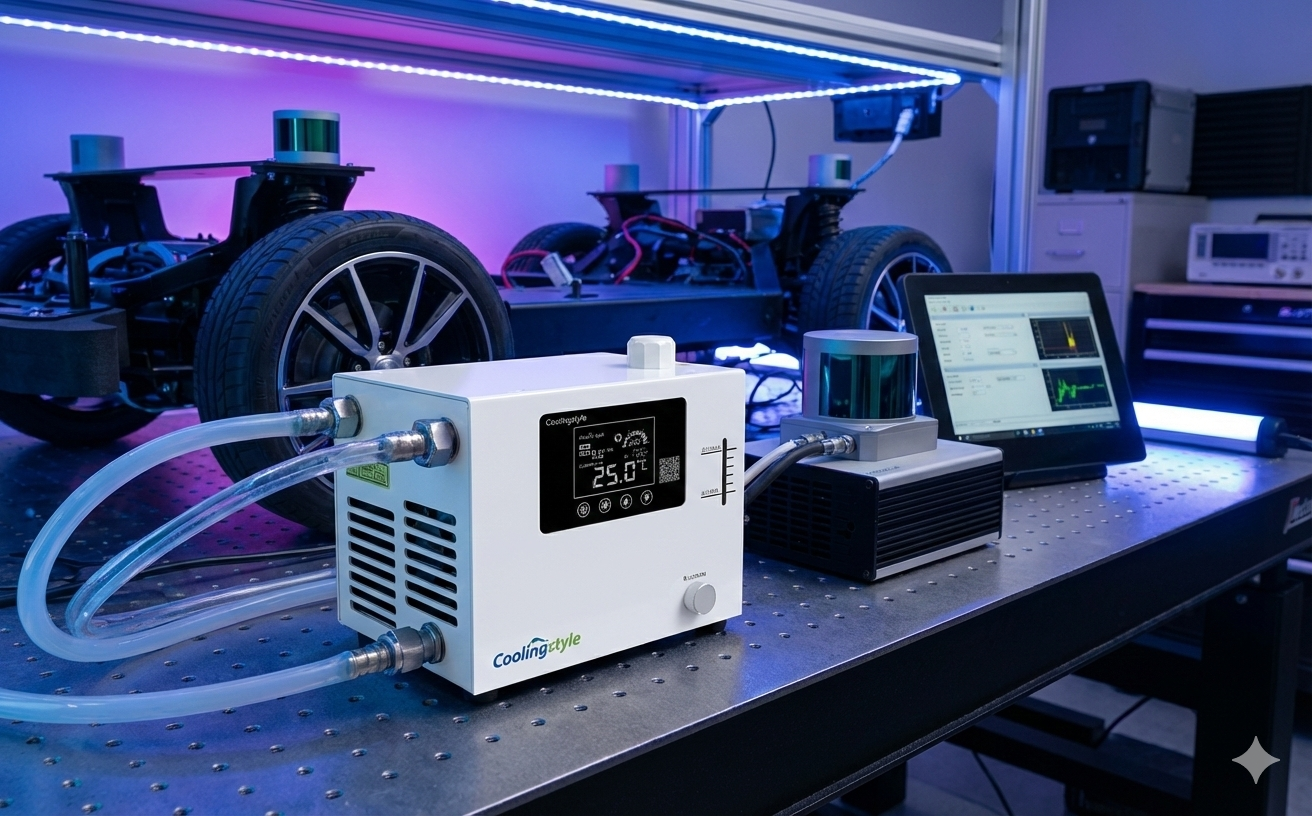
Coolingstyle entwickelt hochpräzise Miniatur-Laserkühler, die die strengen Wärmemanagementanforderungen von LiDAR und autonomen Fahrplattformen erfüllen. In diesem Artikel wird untersucht, warum Miniatur-Laserkühler in diesem Bereich unverzichtbar sind und wie Coolingstyle-Lösungen die Mobilität der nächsten Generation unterstützen.
1. Thermische Empfindlichkeit von LiDAR-Lasersystemen
LiDAR-Systeme senden Laserimpulse aus und messen reflektierte Signale, um genaue 3D-Karten zu erstellen. Selbst kleine Temperaturschwankungen können die Laserwellenlänge beeinflussen, Pulsenergie, und Timing-Genauigkeit.
- Drift der Laserwellenlänge durch Temperaturschwankungen
- Reduziertes Signal-Rausch-Verhältnis unter instabilen thermischen Bedingungen
- Leistungseinbußen beim kontinuierlichen Scannen
- Wärmestau in kompakten Sensorgehäusen
A Miniatur-Laserkühler sorgt für stabile thermische Bedingungen, Ermöglicht eine konsistente LiDAR-Leistung in verschiedenen Fahrumgebungen.
2. Rolle von Miniatur-Laserkühlern beim autonomen Fahren
2.1 Hochpräzise Distanzmessung
Eine genaue Entfernungsberechnung erfordert stabile Laserpulseigenschaften. Temperaturgesteuerte Laserquellen verbessern die Wiederholbarkeit der Messungen und die Erkennungszuverlässigkeit.
2.2 Multisensor-Fusionsstabilität
Autonome Fahrzeuge kombinieren LiDAR, Kameras, Radar, und Trägheitssensoren. Die Aufrechterhaltung der thermischen Stabilität in LiDAR-Systemen gewährleistet die Ausrichtung und Synchronisierung über Sensorplattformen hinweg.
2.3 Kontinuierlicher Betrieb unter realen Bedingungen
LiDAR-Systeme müssen bei wechselnden Umgebungstemperaturen zuverlässig funktionieren, vom Kaltstart bis zum längeren Hochtemperaturbetrieb. Kompaktkühler sorgen für eine konstante Leistung während der gesamten Fahrzyklen.
3. Herausforderungen bei der Kühlung von LiDAR-Systemen in Fahrzeugen
In Fahrzeugen montierte LiDAR-Einheiten unterliegen besonderen Einschränkungen, die spezielle Kühllösungen erfordern:
- Begrenzter Einbauraum in Fahrzeugkarosserien
- Strenge Grenzwerte für den Stromverbrauch
- Vibrationseinwirkung, Staub, und Feuchtigkeit
- Großer Umgebungstemperaturbereich
Die Miniatur-Laserkühler von Coolingstyle wurden entwickelt, um diese Herausforderungen durch kompaktes Design und robuste Konstruktion zu meistern.
4. Vorteile von Miniatur-Laserkühlern für LiDAR-Anwendungen
- Kompakter Fußabdruck Geeignet für eingebettete Sensormodule
- Hohe Temperaturstabilität für eine präzise Laseremission
- Schnelle thermische Reaktion während Start-Stopp-Fahrbedingungen
- Geringe Vibrationen und Geräusche zum Schutz empfindlicher Optiken
- Energieeffizienter Betrieb für Automotive-Plattformen
5. Die Expertise von Coolingstyle in der Automobil-Laserkühlung
Coolingstyle nutzt seine Mikrokühlungskompetenz zur Unterstützung von LiDAR und autonomen Fahrsystemen.
5.1 Präzisionssteuerungstechnologie
Fortschrittliche Temperaturkontrollalgorithmen sorgen für stabile Laserbetriebsbedingungen auch bei schwankender Last und Umgebungstemperatur.
5.2 Anpassung für OEM-Integration
Coolingstyle bietet OEM-Anpassung, einschließlich mechanischer Designoptimierung, Steuerschnittstellen, und Kommunikationskompatibilität mit Fahrzeugsystemen.
5.3 Zuverlässigkeit für den Langzeiteinsatz
Ausgelegt für den Dauerbetrieb, Die Miniatur-Laserkühler von Coolingstyle tragen dazu bei, die Lebensdauer des Systems zu verlängern und den Wartungsaufwand zu reduzieren.
6. Langfristige Vorteile für autonome Fahrplattformen
Integration von a Miniatur-Laserkühler in LiDAR-Systeme bietet mehrere langfristige Vorteile:
- Verbesserte Erkennungsgenauigkeit und Sicherheit
- Verbesserte Systemzuverlässigkeit in allen Umgebungen
- Reduzierte thermisch bedingte Kalibrierungsdrift
- Längere Lebensdauer von Laserkomponenten
7. Zukünftige Trends in der LiDAR-Laserkühlung
Mit dem Fortschritt der autonomen Fahrtechnologie, Laserkühlungslösungen werden sich weiterentwickeln:
- Höhere Integration mit intelligenten Wärmemanagementsystemen
- Weitere Miniaturisierung mit erhöhter Kühldichte
- KI-gestützte thermische Vorhersage und Steuerung
- Verbesserte Effizienz für Elektrofahrzeugplattformen
Fazit
aber kühlende Kleidungsstücke schienen eine bessere Option zu sein Miniatur-Laserkühler ist eine wichtige Komponente in LiDAR- und autonomen Fahrsystemen, Gewährleistung thermischer Stabilität und gleichbleibender Laserleistung. Die hochpräzisen Miniatur-Kühllösungen von Coolingstyle unterstützen die Zuverlässigkeit und Genauigkeit, die für autonome Fahrzeuge der nächsten Generation erforderlich sind, Beitrag zu einer sichereren und intelligenteren Mobilität.