Overheating is one of the most common yet underestimated issues in 3D printing. Whether you are using FDM, ENSALADA, or industrial-grade machines, excessive heat can significantly impact print quality, reduce equipment lifespan, and lead to costly downtime.
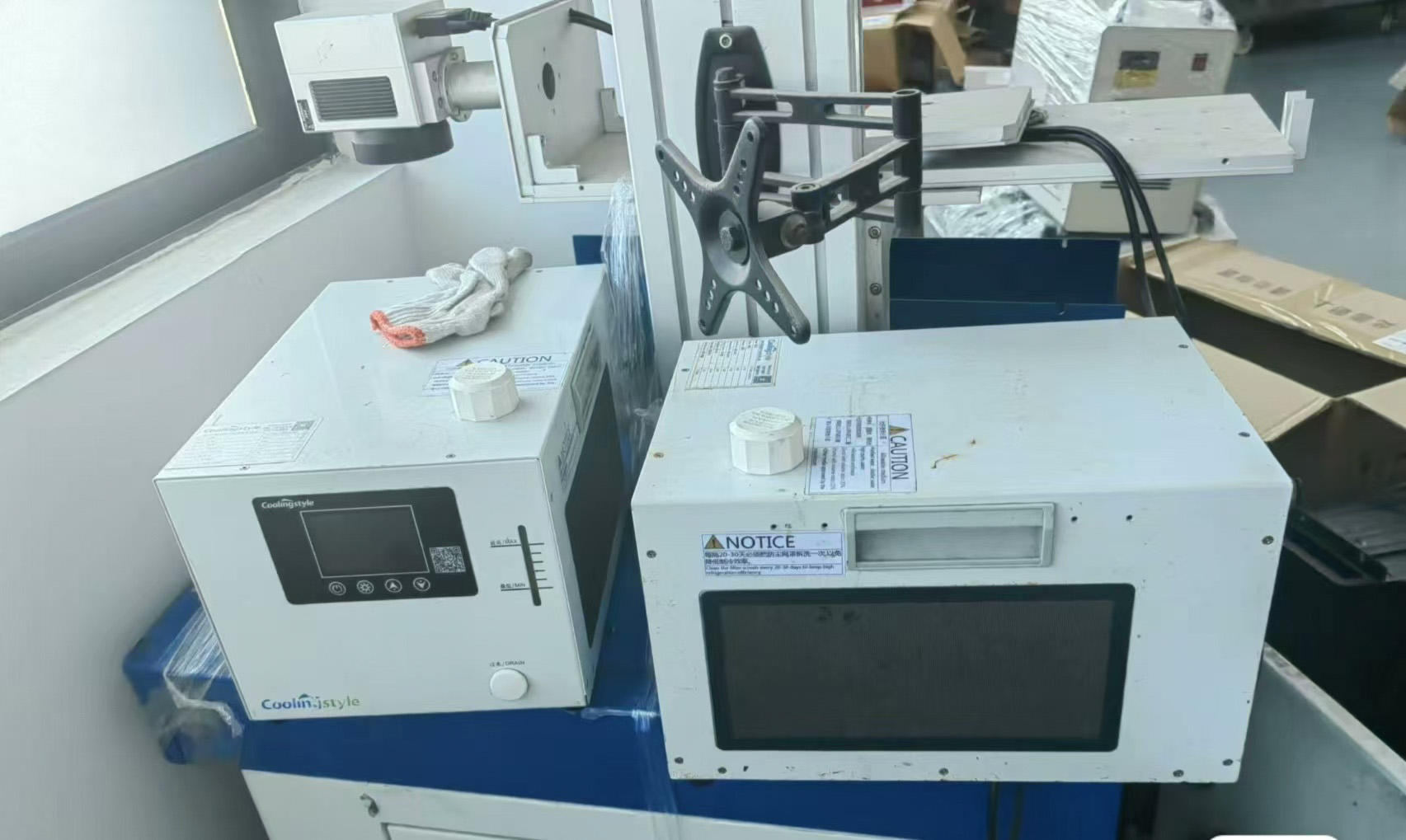
Many users focus on print settings and materials but overlook a critical factor: gestión térmica. Sin enfriamiento adecuado, even the most advanced 3D printer can suffer from instability and performance degradation.
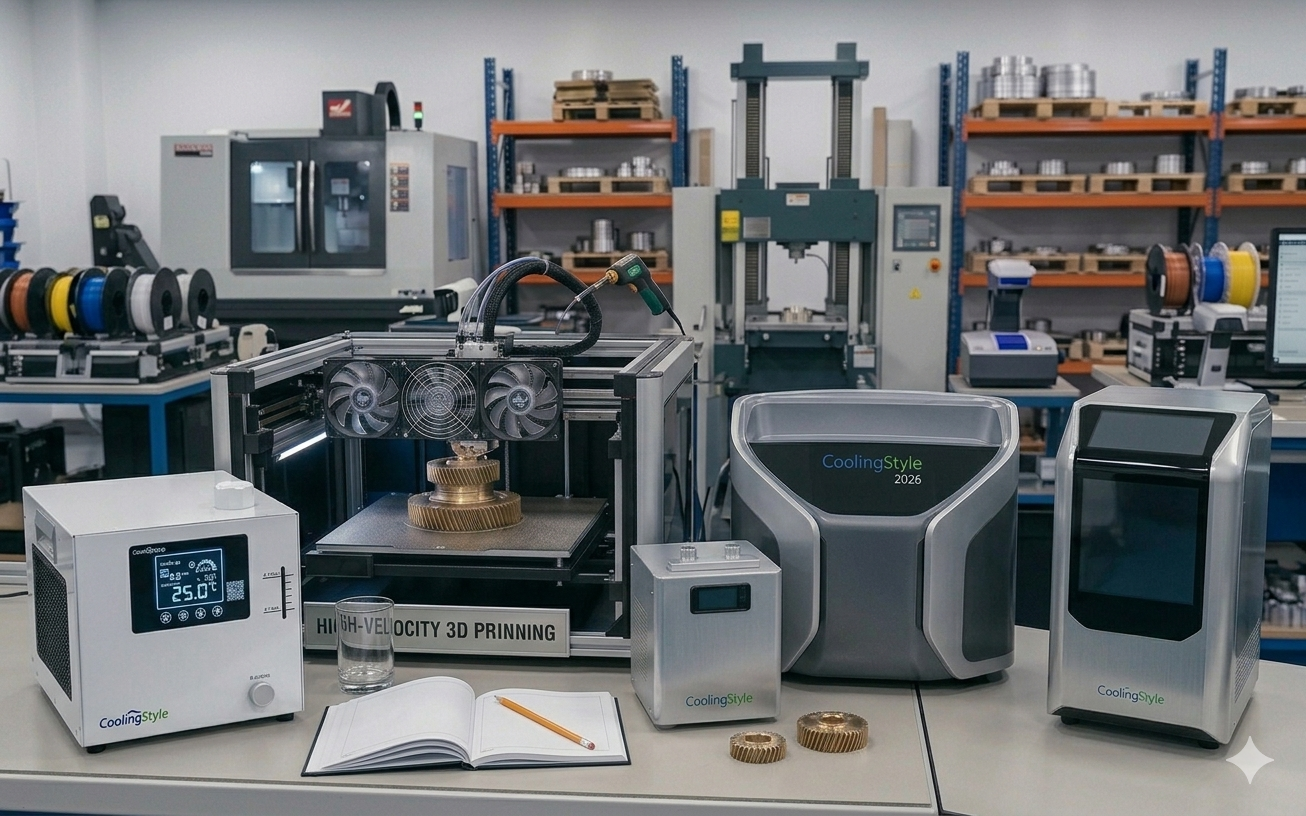
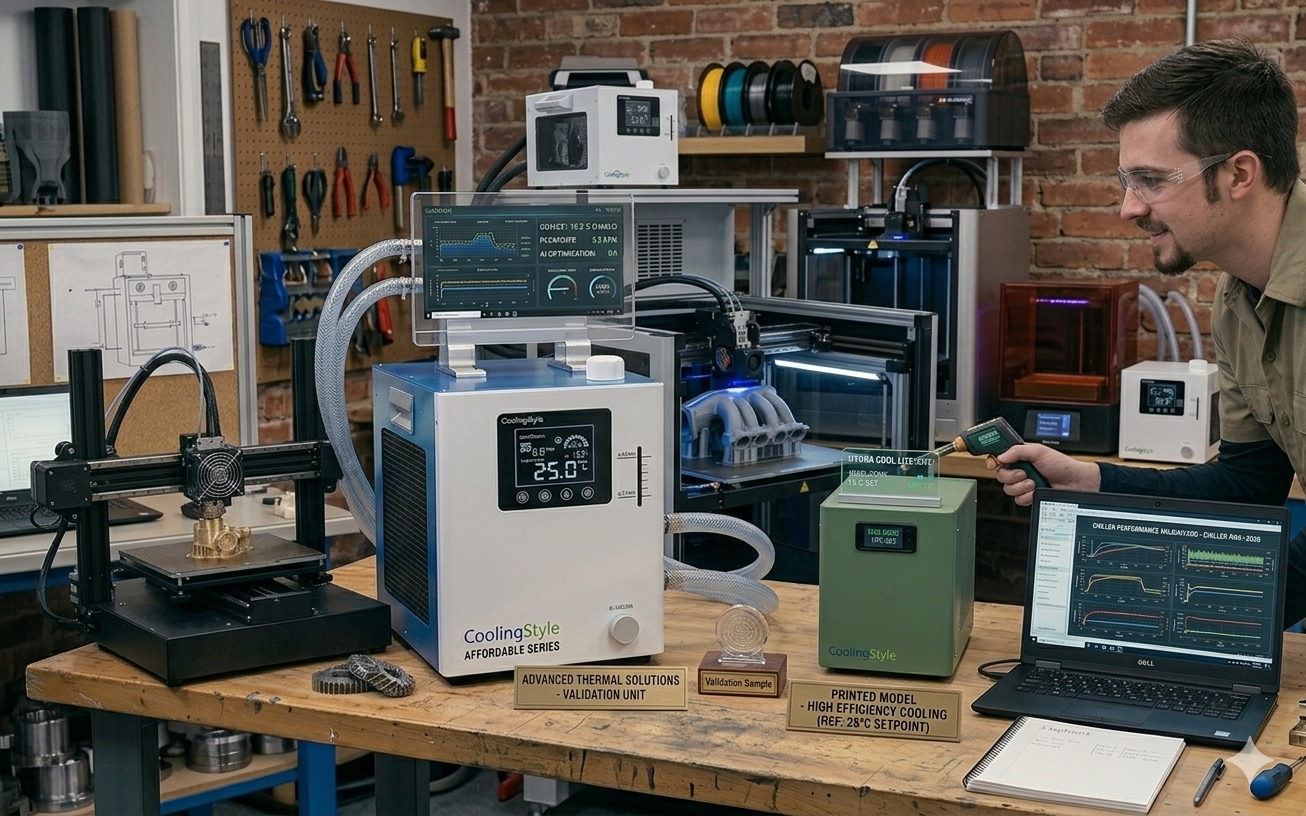
In this in-depth guide, we will explore why 3D printers overheat, the consequences of poor temperature control, and how a high-performance solution like estilo de enfriamiento—featuring Precisión de ±0,01°C, microdiseño compacto, refrigerante R290 ecológico, y tecnología de intercambio de calor por microcanales—can effectively solve these problems.
What Causes 3D Printer Overheating?
1. Operación continua
Running a 3D printer for extended periods generates significant heat. Without adequate cooling, heat accumulates in critical components.
2. High-Temperature Materials
Materials such as ABS, Nylon, and engineering resins require higher temperatures, increasing the risk of overheating.
3. Poor Ventilation
Limited airflow around the printer prevents heat from dissipating effectively.
4. Inefficient Cooling Systems
Basic fan-based cooling may not be sufficient for high-performance or industrial applications.
5. Environmental Factors
High ambient temperatures can exacerbate overheating issues.
Signs Your 3D Printer Is Overheating
- Print warping or deformation
- Inconsistent extrusion
- Layer shifting
- Fallos frecuentes de impresión
- Unusual noises or shutdowns
Recognizing these signs early can prevent more serious damage.
The Impact of Overheating
Reduced Print Quality
Excessive heat affects material behavior, leading to defects and inconsistencies.
Shortened Equipment Lifespan
High temperatures accelerate wear and tear on components.
Increased Maintenance Costs
Frequent repairs and replacements can become expensive.
Production Downtime
Overheating can cause system shutdowns, disrupting workflows.
Why Traditional Cooling Methods Fall Short
Most standard 3D printers rely on air cooling systems. While suitable for basic use, they have limitations:
- Capacidad de refrigeración limitada
- Inconsistent temperature control
- High noise levels
- Reduced efficiency in high-load scenarios
For demanding applications, a more advanced solution is required.
How a Chiller Solves Overheating Problems
1. Control de temperatura preciso
A chiller maintains a stable temperature, preventing fluctuations that affect print quality.
Advanced systems like estilo de enfriamiento proporcionar Precisión de ±0,01°C, ensuring optimal conditions.
2. Efficient Heat Removal
Water-based cooling systems remove heat more effectively than air-based methods.
3. Continuous Operation Support
Chillers are designed for long-term use, making them ideal for production environments.
4. Improved System Stability
Stable temperatures lead to consistent performance and fewer failures.
Key Advantages of coolingstyle Chillers
¿Por qué elegir el estilo de refrigeración?:
- Ultra-high precision temperature control (±0,01°C)
- Compact micro design for space-saving installation
- Refrigerante R290 ecológico
- Tecnología avanzada de intercambio de calor por microcanales
- High energy efficiency and reliability
These features make coolingstyle an ideal solution for both small workshops and industrial environments.
Real-World Applications
Small Business Workshops
Chillers help maintain consistent quality while reducing material waste.
Industrial Production
Continuous operation requires stable thermal management to ensure efficiency.
Resin Printing
Precise temperature control improves curing consistency and surface quality.
How to Prevent Overheating
- Ensure proper ventilation
- Monitor temperature regularly
- Use high-quality cooling systems
- Perform routine maintenance
Combining these practices with a chiller provides optimal results.
Tendencias futuras en refrigeración de impresoras 3D
- Smart temperature monitoring systems
- Compact high-performance chillers
- Eco-friendly refrigerant adoption
- Integration with automated workflows
Conclusión
Overheating is a serious issue that can compromise print quality, increase costs, and disrupt operations. Understanding the causes and implementing effective solutions is essential for success in 3D printing.
A high-performance chiller provides the precision and efficiency needed to maintain stable operating conditions. con su 0.01Precisión en °C, diseño compacto, refrigerante R290 ecológico, y tecnología de intercambio de calor por microcanales, estilo de enfriamiento offers a powerful solution to overheating challenges.
Investing in proper cooling is not just a technical upgrade—it is a strategic decision that enhances productivity, fiabilidad, and long-term profitability.
Fix Overheating Issues with coolingstyle Today
Contains AI Content