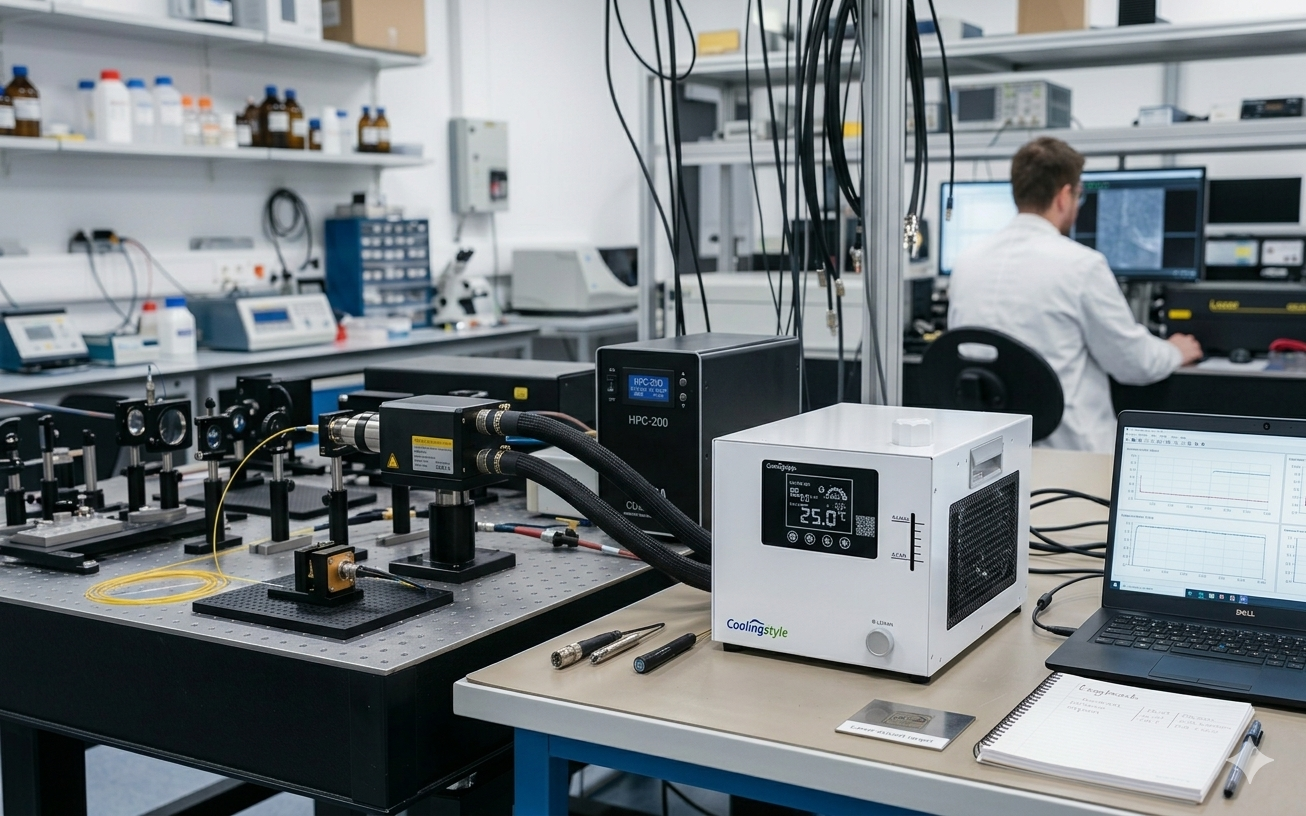
Güvenilir lazer soğutma sistemi performansı korumak için gereklidir, kesinlik, modern fiber lazer makinelerinin kullanım ömrü ve ömrü. Lazer teknolojisi üretim genelinde ilerlemeye devam ettikçe, tıbbi, ve yarı iletken endüstrileri, verimli termal yönetim kritik bir gereklilik haline geldi.
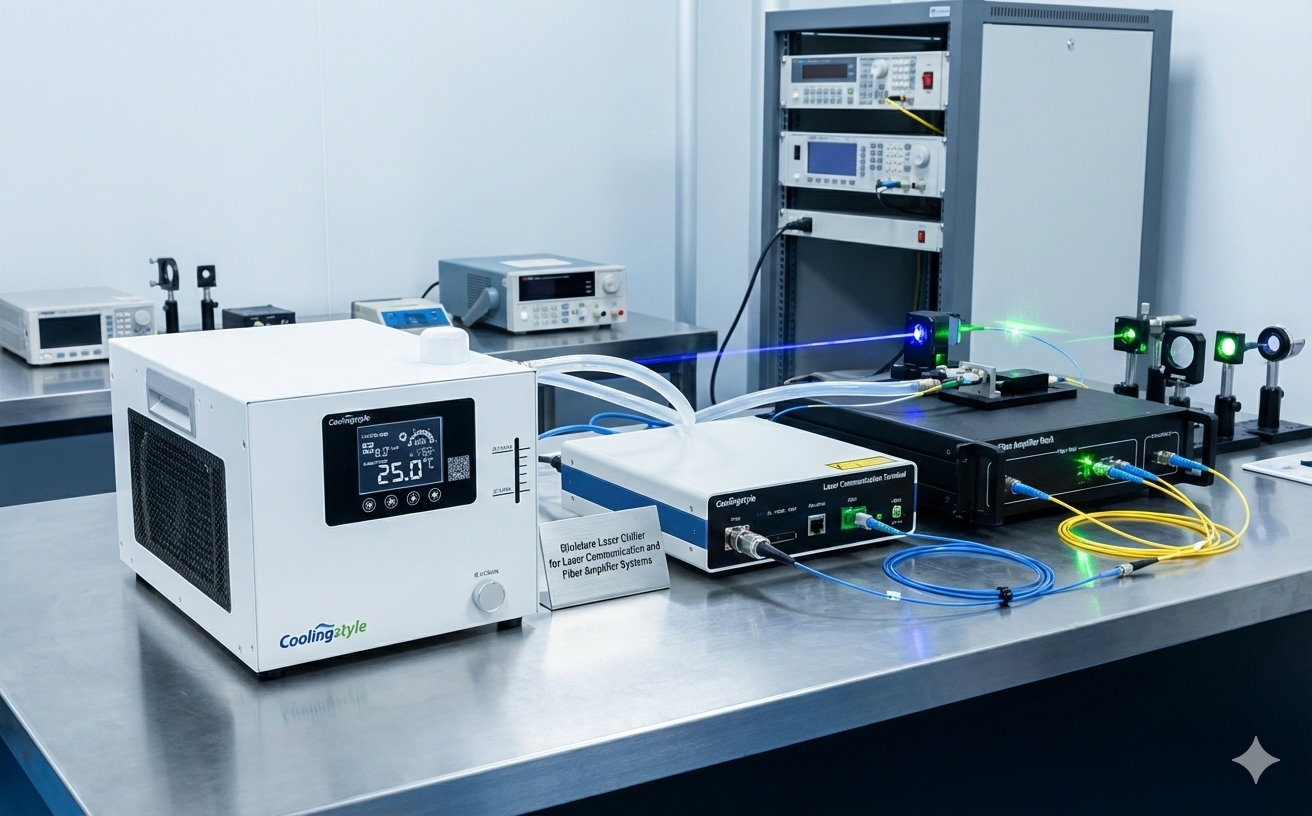
Lazer işlemi sırasında oluşan aşırı ısı, ışın kalitesini doğrudan etkileyebilir, işleme hassasiyeti, ve ekipman güvenilirliği. Profesyonel bir lazer soğutma sistemi, zorlu koşullar altında istikrarlı sıcaklık kontrolü ve sürekli çalışma sağlar.
Fiber Lazer Makineleri Neden Lazer Soğutma Sistemine İhtiyaç Duyar?
Fiber lazer sistemleri, lazer kaynakları gibi temel bileşenlerden önemli miktarda ısı üretir, optik modüller, ve elektronik kontrol üniteleri. Etkili soğutma olmadan, bu sistemler karşılaşabilir:
- Lazer gücü istikrarsızlığı
- Azaltılmış ışın kalitesi
- Optik bileşen hasarı
- Sık sistem kapanmaları
- Kısaltılmış ekipman ömrü
Yüksek performanslı lazer soğutma sistemi tutarlı çalışma sıcaklıklarını korur, Lazer ekipmanının en yüksek verimlilikte performans göstermesine olanak tanır.
Lazer Soğutma Sistemi Nasıl Çalışır?
Lazer soğutma sistemi, ısıyı verimli bir şekilde uzaklaştırmak için tasarlanmış kapalı devre bir soğutma döngüsü kullanarak çalışır.
- Soğutma sıvısı lazer kaynağında dolaşır ve ısıyı emer.
- Isıtılan soğutucu buharlaştırıcıya girer.
- Soğutma sistemi termal enerjiyi ortadan kaldırır.
- Soğutulan sıvı lazer ekipmanına geri döner.
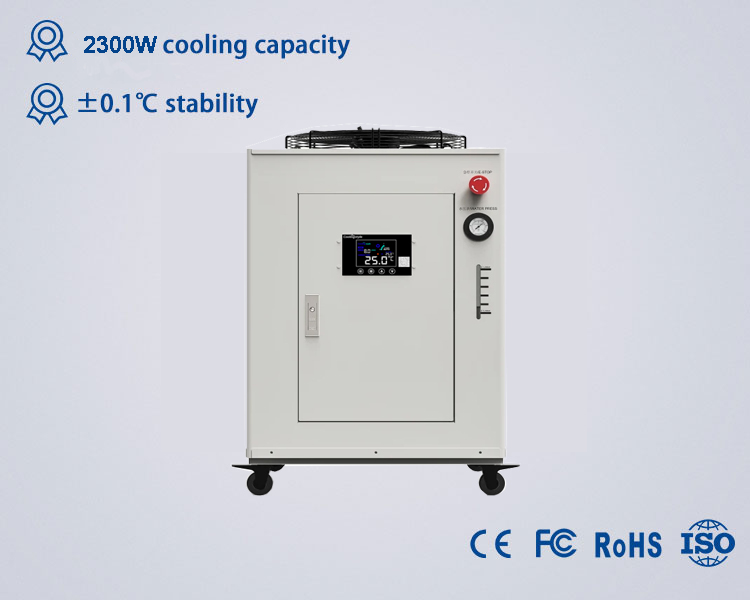
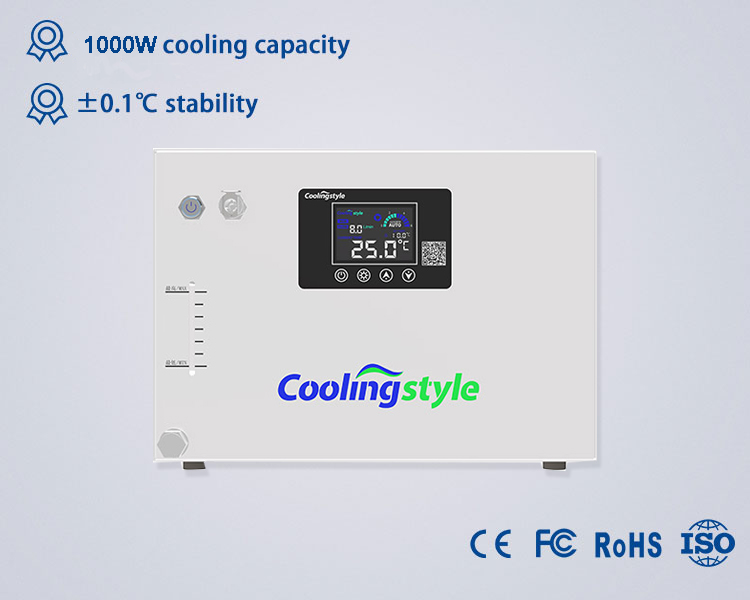
Bu sürekli sirkülasyon hassas sıcaklık regülasyonu sağlar, yüksek hassasiyetli lazer uygulamaları için genellikle ±0,1°C dahilinde.
Gelişmiş Lazer Soğutma Sisteminin Temel Özellikleri
Yüksek Sıcaklık Kararlılığı
Hassas PID kontrolörleri, fiber lazerler için gereken tutarlı soğutma performansını korur.
Kompakt Entegrasyon Tasarımı
Modern lazer soğutma sistemleri, lazer ekipman dolaplarına veya üretim hatlarına kusursuz bir şekilde uyacak şekilde tasarlanmıştır.
Enerji Verimliliği
Optimize edilmiş kompresörler ve ısı eşanjörleri operasyonel enerji tüketimini azaltır.
Akıllı İzleme
Gerçek zamanlı izleme, akış hızı alarmları aracılığıyla sistemleri korur, basınç, ve sıcaklık koşulları.
Lazer Soğutma Sistemlerinin Uygulamaları
Lazer soğutma sistemleri, aşağıdakiler de dahil olmak üzere endüstrilerde yaygın olarak kullanılmaktadır::
- Fiber lazer kesim makineleri
- Lazer kaynak sistemleri
- Lazer gravür ekipmanı
- Yarı iletken lazer işleme
- Tıbbi lazer cihazları
- Bilimsel lazer araştırma platformları
Her uygulama özelleştirilmiş soğutma kapasitesi ve sıcaklık doğruluğu gerektirir.
Doğru Lazer Soğutma Sistemini Seçmek
Lazer soğutma sistemi seçerken, mühendisler değerlendirmeli:
- Lazer güç çıkışı
- Gerekli sıcaklık stabilitesi
- Soğutma kapasitesi talebi
- Çevre sıcaklığı
- Kurulum alanı sınırlamaları
- Sürekli çalışma gereksinimleri
Doğru sistem eşleştirmesi maksimum verimlilik ve uzun vadeli operasyonel güvenilirlik sağlar.
Coolingstyle Lazer Soğutma Çözümleri
soğutma tarzı zorlu endüstriyel uygulamalar için tasarlanmış yüksek hassasiyetli lazer soğutma sistemi çözümlerinde uzmanlaşmıştır.
Sistemlerimizin sunduğu:
- Yüksek hassasiyetli sıcaklık kontrolü
- Kompakt ve modüler yapı
- Uzun süreli istikrarlı çalışma
- Düşük titreşim ve gürültü
- Özelleştirilmiş OEM soğutma çözümleri
Coolingstyle lazer soğutma sistemleri, lazer üretiminde yaygın olarak uygulanmaktadır., yarı iletken işleme, tıbbi teknoloji, ve dünya çapında ileri araştırma endüstrileri.
Sıkça Sorulan Sorular
Fiber lazerler için hangi sıcaklık stabilitesi gereklidir??
Çoğu fiber lazer sistemi, işleme doğruluğuna bağlı olarak ±0,1°C ile ±0,5°C arasında sıcaklık stabilitesi gerektirir.
Bir soğutma sistemi birden fazla lazeri destekleyebilir mi??
Evet, Düzgün tasarlanmış lazer soğutma sistemleri, soğutma kapasitesi doğru hesaplandığında birden fazla cihazı destekleyebilir.
Özelleştirme mevcut mu?
Coolingstyle özelleştirilmiş soğutma kapasitesi sağlar, iletişim arayüzleri, ve yapısal entegrasyon seçenekleri.
Çözüm
İstikrarlı lazer performansı sağlamak için profesyonel bir lazer soğutma sistemi gereklidir, üretim verimliliği, ve ekipman ömrü. Doğru soğutma çözümünün seçilmesi üretim kalitesini ve operasyonel güvenilirliği doğrudan etkiler.
Coolingstyle, modern lazer uygulamalarının gelişen taleplerini karşılamak üzere tasarlanmış gelişmiş lazer soğutma sistemleri sunar.