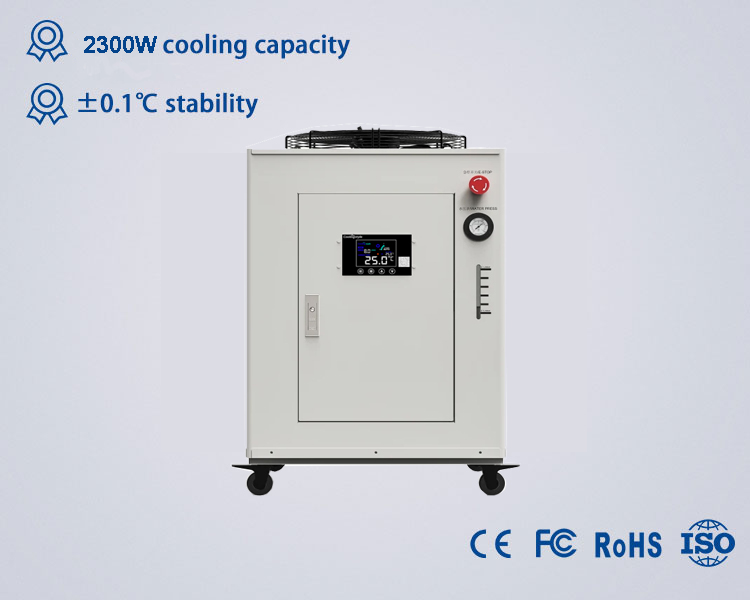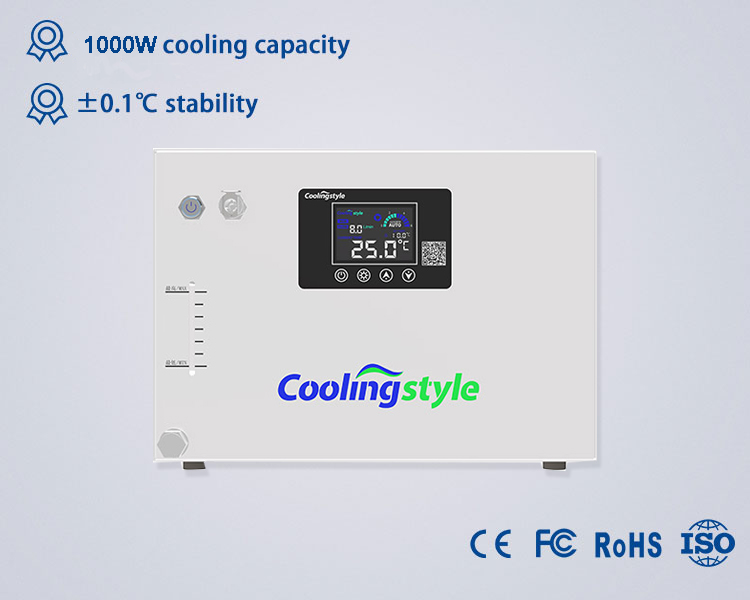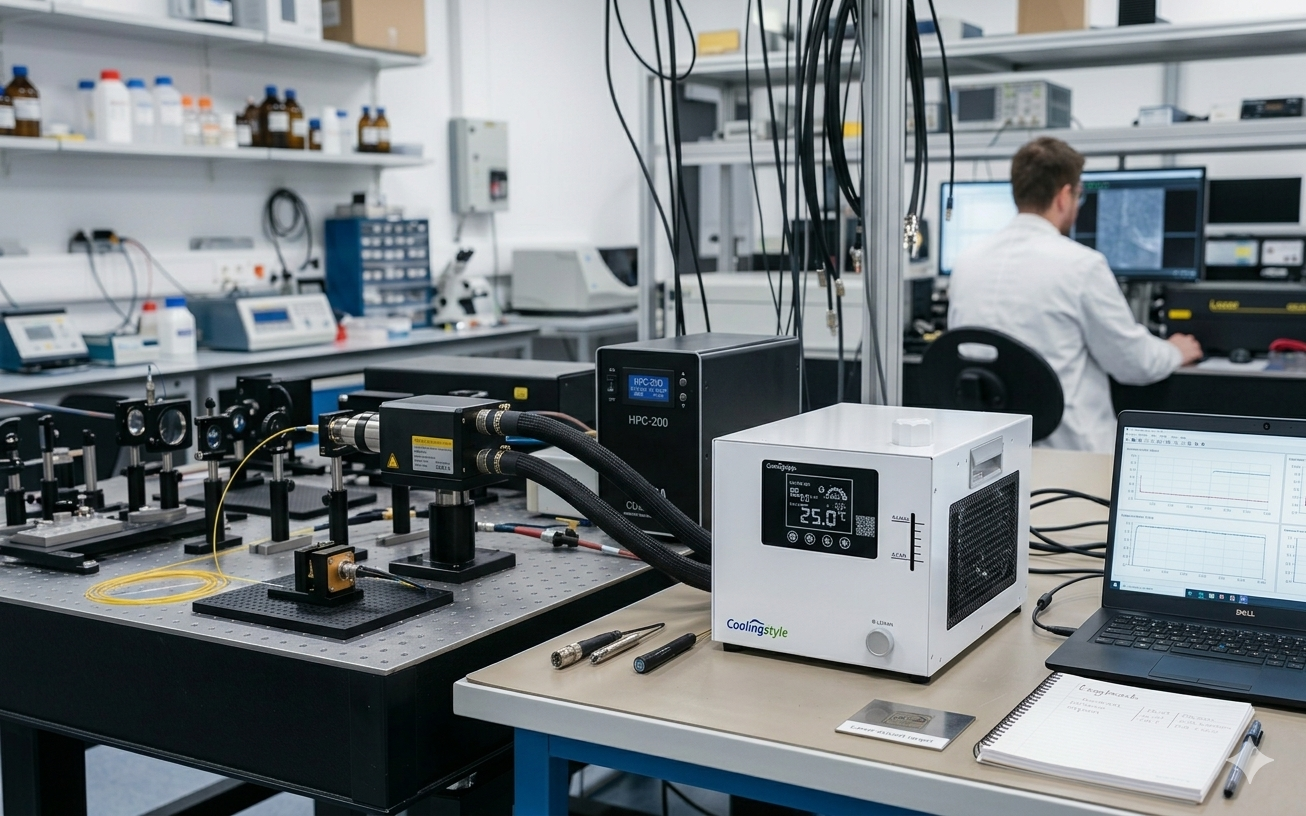
In the rapidly evolving world of additive manufacturing, temperature control plays a critical role in determining print quality, machine lifespan, and operational stability. One often overlooked yet essential component is the 3D printer chiller. Whether you are running an industrial production line or a high-performance desktop printer, integrating a reliable cooling solution can significantly enhance your results.
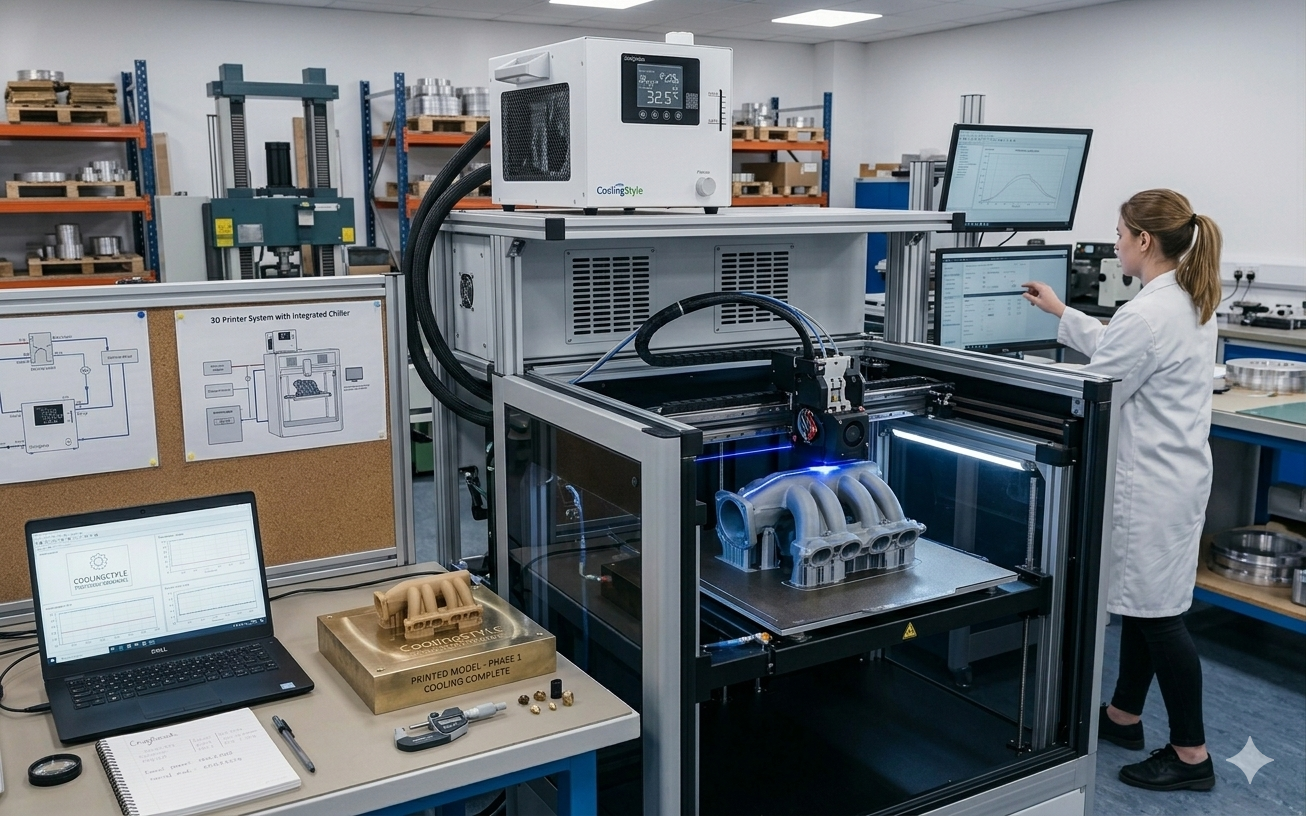
At Coolingstyle, we specialize in advanced cooling technologies designed to meet the demanding requirements of modern 3D printing systems. In this article, we will explore what a 3D printer chiller is, how it works, and why it may be essential for your setup.
What Is a 3D Printer Chiller?
A 3D printer chiller is a temperature control device designed to regulate and maintain optimal operating temperatures for critical components of a 3D printer. Unlike simple fans or passive cooling systems, chillers use active cooling methods—often involving liquid circulation—to remove excess heat efficiently.
These systems are commonly used in:
- Industrial 3D printers
- Resin (SLA/DLP) printers
- Laser-based additive manufacturing systems
- High-speed or large-format 3D printers
The primary function of a chiller is to keep temperatures stable, preventing overheating and ensuring consistent performance throughout long print cycles.
How Does a 3D Printer Chiller Work?
A typical chiller operates by circulating a cooling fluid—usually water or a specialized coolant—through a closed-loop system. This fluid absorbs heat from the printer’s components and transfers it to a heat exchanger, where it is dissipated into the surrounding environment.
The process includes:
- Heat absorption from critical components (laser, extruder, motors)
- Circulation of coolant via a pump
- Heat exchange through a condenser or radiator
- Continuous temperature monitoring and regulation
Advanced chillers from Coolingstyle also feature intelligent control systems, allowing users to set precise temperature ranges for optimal performance.
Why Do You Need a 3D Printer Chiller?
1. Improved Print Quality
Temperature fluctuations can lead to defects such as warping, layer separation, and inconsistent curing in resin prints. A chiller ensures stable thermal conditions, resulting in smoother surfaces and higher precision.
2. Prevent Overheating
High-performance 3D printers generate significant heat during operation. Without proper cooling, components may overheat, leading to print failures or even permanent damage.
3. Extended Equipment Lifespan
Maintaining optimal temperatures reduces wear and tear on sensitive components such as lasers, power supplies, and motors, ultimately extending the lifespan of your equipment.
4. Enhanced Production Efficiency
Stable temperatures allow for longer, uninterrupted print runs. This is especially important in industrial environments where downtime can be costly.
5. Better Performance for Resin Printing
Resin materials are highly sensitive to temperature changes. A chiller helps maintain ideal curing conditions, improving accuracy and reducing failed prints.
When Should You Use a 3D Printer Chiller?
Not every setup requires a chiller, but it becomes essential in the following scenarios:
- Continuous or high-volume printing
- Use of high-power lasers or UV systems
- Large-format or industrial printers
- Environments with high ambient temperatures
- Precision-critical applications such as medical or dental printing
3D Printer Chiller vs Traditional Cooling Methods
While fans and passive cooling systems are sufficient for basic setups, they lack the precision and efficiency of active chillers.
| Feature | Cooling Fans | 3D Printer Chiller |
|---|---|---|
| Cooling Efficiency | Low to Moderate | High |
| Temperature Stability | Variable | Precise |
| Suitability | Basic printers | Industrial & High-end printers |
| Control | Limited | Advanced |
Why Choose Coolingstyle?
At Coolingstyle, we understand the importance of precision cooling in advanced manufacturing. Our 3D printer chillers are designed with:
- High-efficiency cooling systems
- Energy-saving technology
- Compact and durable designs
- Smart temperature control interfaces
- Compatibility with a wide range of 3D printers
Whether you are upgrading your current setup or building a new production line, Coolingstyle provides reliable solutions tailored to your needs.
Conclusion
A 3D printer chiller is more than just an accessory—it is a crucial component for achieving consistent, high-quality results in modern 3D printing. By maintaining stable temperatures, reducing equipment stress, and improving efficiency, a chiller can significantly enhance your overall printing performance.
If you are looking to optimize your 3D printing workflow, investing in a professional cooling solution from Coolingstyle is a smart and future-proof choice.
Explore advanced cooling solutions today and take your 3D printing to the next level.