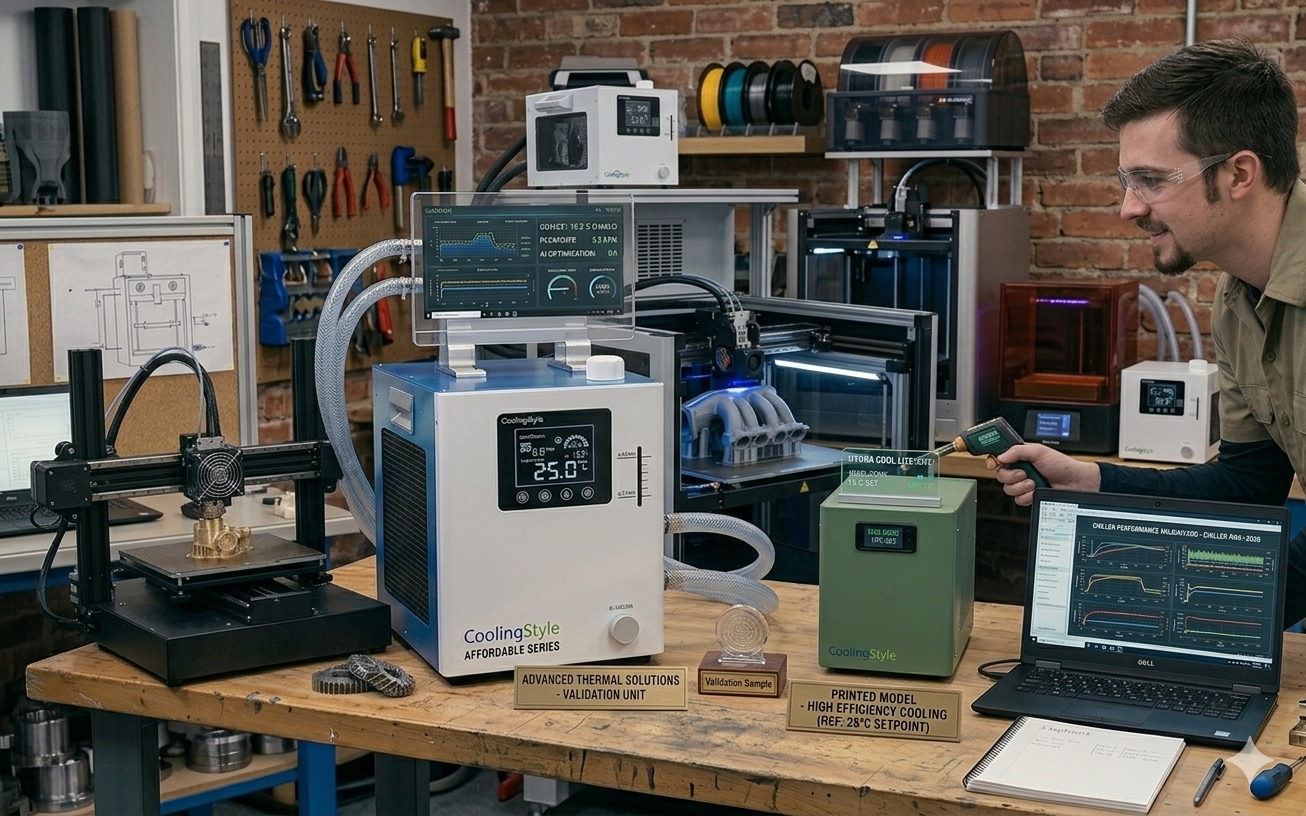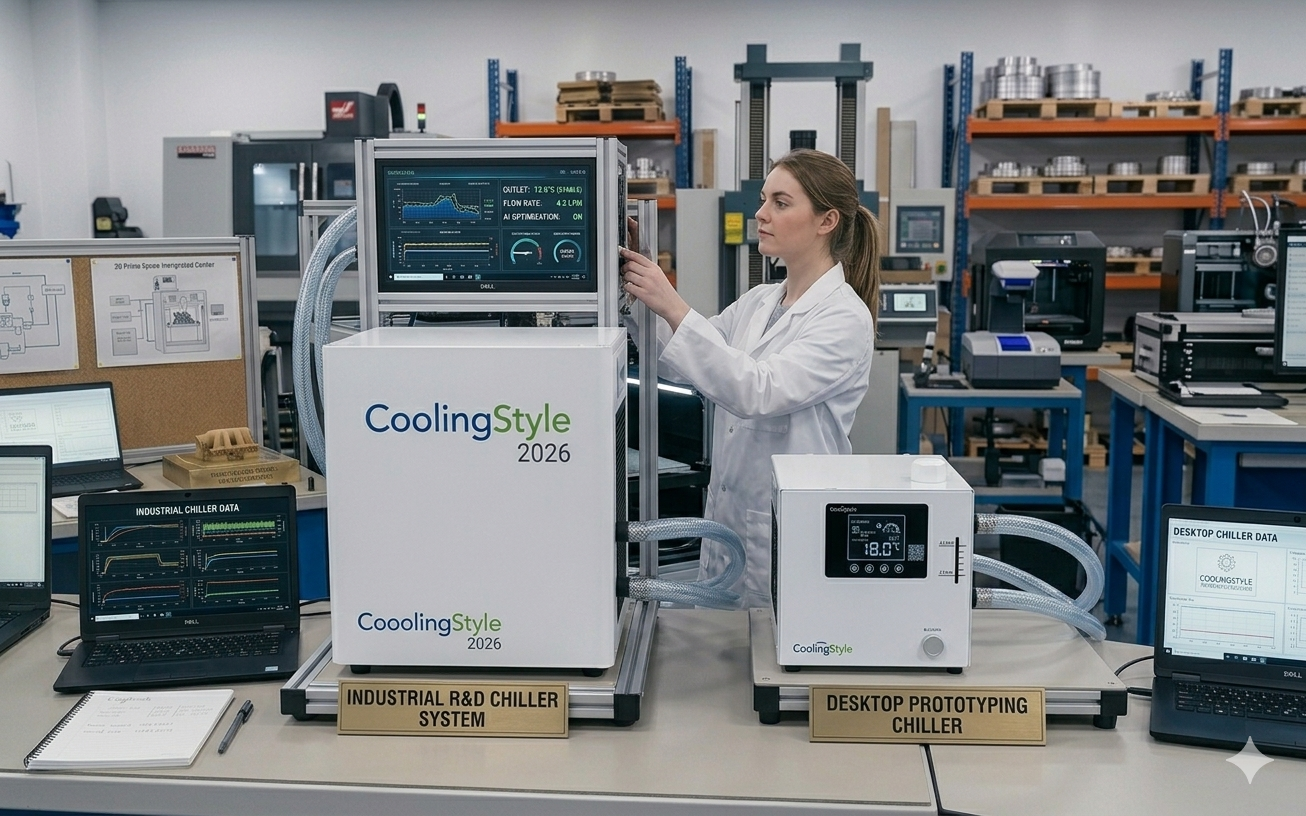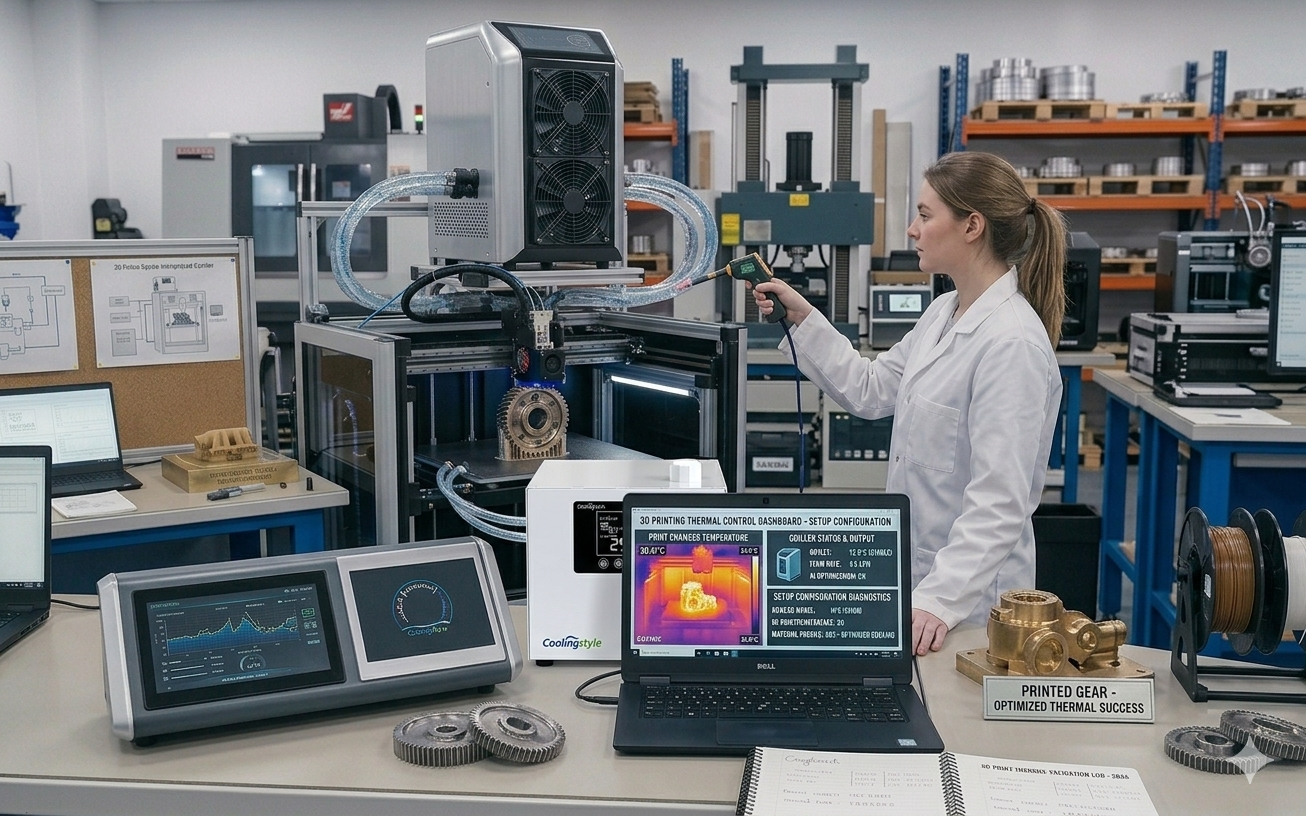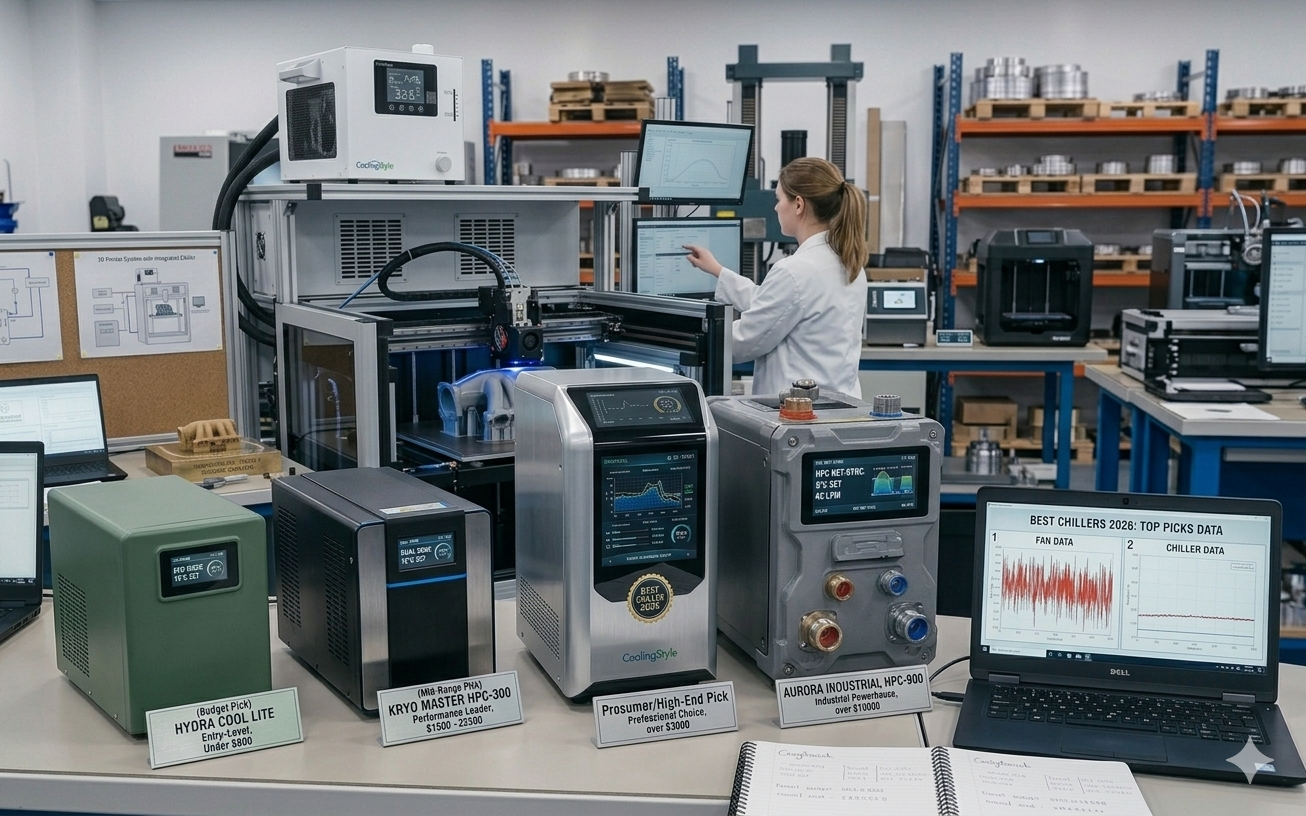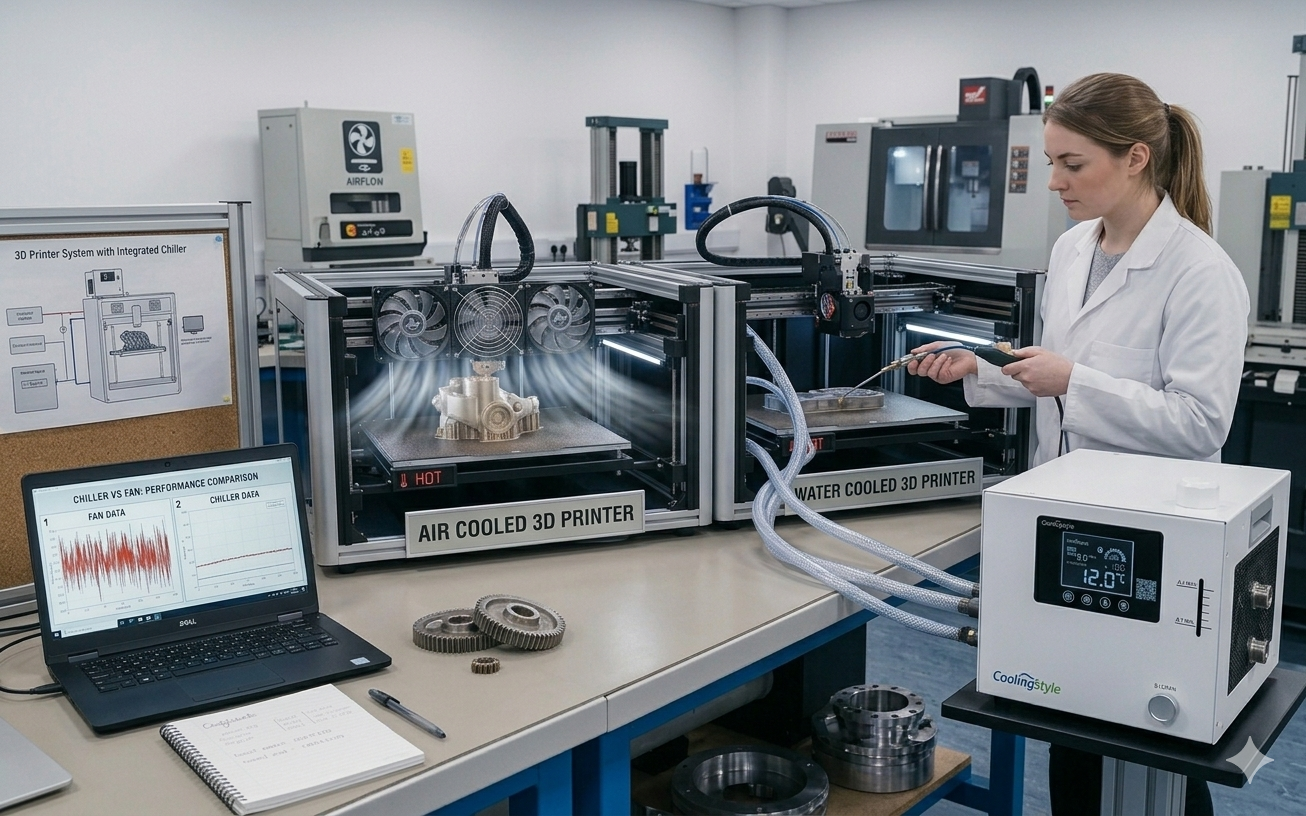
A properly specified 冷却装置 can be the difference between peak performance and costly downtime for precision equipment. 在 冷却风格, we design cooling units not just as off-the-shelf chillers but as modular, instrument-aware systems that integrate with control networks, minimize lifecycle cost, and protect sensitive processes. Below is a practical guide you can paste directly into WordPress — focused on real selection criteria, integration tips, and measurable benefits.
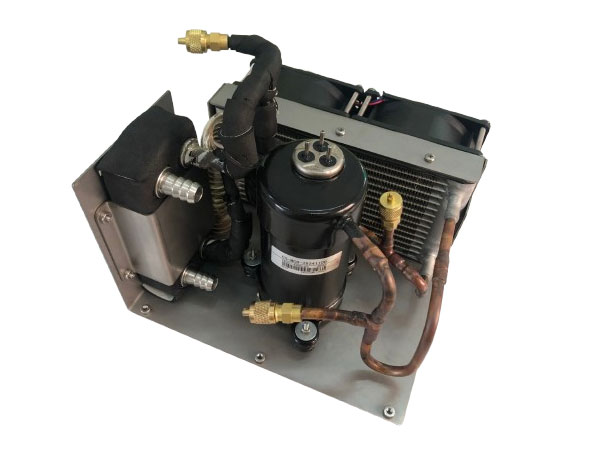
What a Modern Cooling Unit Actually Does
A contemporary 冷却装置 removes process heat while maintaining a stable, monitored temperature at the point of use. Beyond simple refrigeration, Coolingstyle units provide:
- 精准控制 — tight setpoint hold (typical models support ±0.05°C for micro applications).
- Flow and pressure management — correct pump sizing and flow stability for heat exchangers and tools.
- Intelligent protection — alarms, auto-shutdown, and anti-freeze logic for seasonal changes.
- Communication — RS485/Modbus, Ethernet, or MQTT for remote monitoring and factory integration.
Why Selecting the Right Cooling Unit Matters
When you invest in a cooling unit, you’re buying process stability. The right system reduces rework, minimizes measurement drift, and lowers the total cost of ownership (总拥有成本). Consider these typical consequences of underspecified cooling:
- Optical misalignment in laser systems
- Increased calibration frequency of measurement instruments
- Shortened component life for pumps, compressors, and optics
- Unexpected downtime during peak production
Coolingstyle’s Design Principles for Cooling Units
Coolingstyle engineers each cooling unit with a systems-first mindset. Key design pillars include:
- Modularity — plug-and-play modules for pump, heat exchanger, and control so you can scale or service with minimal disruption.
- Process-aware control — PID tuning for the specific thermal inertia of your equipment (laser head, wafer chuck, MRI coil, etc.).
- Serviceability — front-access filters, quick-disconnect plumbing, and swappable electronics for fast field repair.
- Energy efficiency — variable-speed compressors and EC pumps to lower electrical draw at partial load.
How to Choose a Cooling Unit — Practical Checklist
Use this checklist before you buy or specify a unit:
- Heat load (瓦): Calculate peak dissipation plus margin (20–30%).
- Required temperature band: 例如, 20.0–25.0°C or tighter (±0.05°C if needed).
- Flow & pressure requirements: GPM/LPM and head (米) for your tool’s heat exchanger.
- Fluid compatibility: DI water, glycol mixes, or specialized dielectric fluids.
- Integration: Do you need Modbus/SCADA/BMS connectivity?
- Footprint & mounting: bench, rack, wall, or embedded chassis options.
- Redundancy: Is N+1 required for critical processes?
- 噪音 & 振动: Required dBA limits for clinical or lab environments.
安装 & Commissioning Best Practices
A correctly installed cooling unit maximizes uptime. Follow these best practices:
- Pre-fill and de-gas the cooling loop to prevent cavitation.
- Use soft-start or VFD for pumps to avoid hydraulic shocks.
- Calibrate temperature probes in-situ after installation.
- Implement remote alerting and daily automated health checks.
- Document flow paths and label quick-disconnects for faster servicing.
Case Use — Where Cooling Units Deliver Clear ROI
Coolingstyle units are common in these high-value scenarios:
- Fiber laser cutting cells — consistent cut quality and less consumable wear.
- Wafer probe stations — reduction in measurement drift increases yield.
- Medical imaging peripherals — improved patient throughput with fewer thermal trips.
- Analytical instruments — longer stable runs between recalibrations.
Operational Monitoring — Don’t Ignore Data
A cooling unit that reports data becomes part of your instrument intelligence. We recommend:
- Logging temperature, flow, and power at 1–5 minute intervals.
- Setting predictive thresholds to trigger maintenance before failures.
- Integrating alerts with your maintenance ticketing system.
维护 & Lifecycle Tips
Planned maintenance keeps your cooling unit running efficiently:
- Quarterly: inspect filters, check fluid quality, verify pump curves.
- Annually: leak test, check refrigerant charge (if applicable), validate sensor accuracy.
- Keep a consumable parts kit (filters, seals, pump bearings) onsite to reduce mean time to repair (MTTR).
Selecting Coolingstyle — What Sets Us Apart
Coolingstyle builds cooling units with real-world industrial concerns in mind:
- Custom control profiles tuned for your process dynamics
- 袖珍的, serviceable mechanical design for constrained sites
- Integration-ready interfaces for Industry 4.0 environments
- Optional extended warranties and regional field support
FAQ — Quick Answers About Cooling Units
问: Can a single cooling unit serve multiple machines?
一个: Yes — but only if you design for aggregate heat load, plumbing complexity, and fault isolation (例如, per-tool valves or local accumulators). Coolingstyle helps design shared-loop systems with proper segmentation and redundancy.
问: Which fluids are recommended?
一个: For most precision applications we recommend deionized (DI) water or a propylene glycol mix where freeze protection is required. For dielectric-sensitive environments, ask about specialized low-conductivity coolants.
问: How quickly can Coolingstyle deliver a custom unit?
一个: Typical lead times depend on complexity. Off-the-shelf micro units ship within weeks; custom modules often require 6–12 weeks including testing. We provide rapid prototyping for urgent OEM projects.
Conclusion — Make the Cooling Unit a Strategic Choice
一个 冷却装置 is no longer a peripheral accessory — it is a strategic component that protects process integrity, reduces TCO, and enables better product quality. If your operation relies on tight thermal control, 冷却风格 offers engineered cooling units that combine precision, modularity, and smart monitoring to keep your systems running at peak performance.
Ready to specify a cooling unit for your process? 接触 冷却风格 for a free consultation and configuration quote.