
Femtosecond laser technology represents a groundbreaking advancement in light amplification and ultrashort pulse generation. Capable of producing pulses as short as 10⁻15秒, these lasers offer unparalleled precision, energy concentration, and versatility across various industries, from material processing to medical diagnostics.
This article delves into the history, mechanism, advantages, 和 applications of femtosecond lasers, highlighting their transformative impact on technology and science.
Unlocking the Potential of Femtosecond Lasers: Revolutionary Technology and Applications
Femtosecond laser technology represents a groundbreaking advancement in light amplification and ultrashort pulse generation. Capable of producing pulses as short as 10⁻15秒, these lasers offer unparalleled precision, energy concentration, and versatility across various industries, from material processing to medical diagnostics.
This article delves into the history, mechanism, advantages, 和 applications of femtosecond lasers, highlighting their transformative impact on technology and science.
What is a Femtosecond Laser?
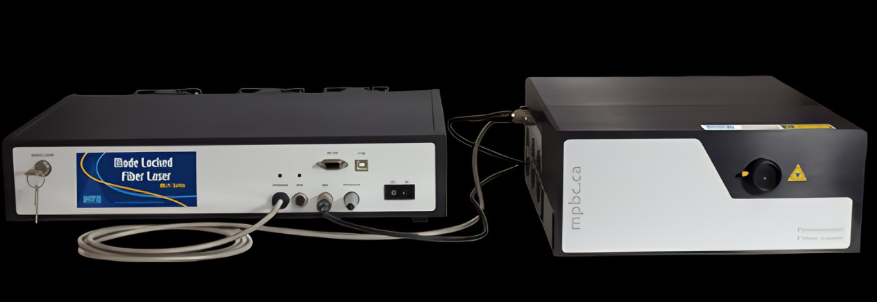
一个 femtosecond laser is a highly advanced instrument that generates ultrashort pulses of infrared (和) light. These pulses, lasting just a few femtoseconds, deliver high peak powers—often reaching petawatt (PW) levels—with exceptional speed and precision.
Key components like chirped pulse amplification (CPA) enable femtosecond lasers to achieve such extraordinary performance, making them indispensable in applications requiring intense and localized energy delivery.
History of Femtosecond Lasers
Femtosecond laser technology emerged in the 1960s and 1970s, building on foundational research into progressively shorter laser pulses.
Key Milestones:
- 1982: The invention of the titanium-sapphire laser marked a significant leap, allowing for the first practical femtosecond laser systems.
- 1990s: The integration of mode-locking and CPA systems led to commercially viable femtosecond lasers.
- Nobel Prize: Groundbreaking work in CPA technology earned researchers the Nobel Prize, cementing the importance of femtosecond lasers in science and industry.
Types of Femtosecond Lasers
Femtosecond lasers come in various configurations, tailored for specific applications:
- Solid-State Bulk Lasers
- Pulse duration: 30 fs to 30 ps
- Repetition frequency: 50 MHz to 500 MHz
- 应用领域: High-power precision processing
- Fiber Lasers
- Pulse duration: 50 到 500 fs
- Compact and cost-effective for large-scale production
- Challenges: Complex operating principles
- Dye Lasers
- Early pioneers in femtosecond pulse generation
- Now largely replaced by titanium-sapphire lasers due to limitations
- Semiconductor Lasers
- Pulse duration: A few hundred femtoseconds
- High repetition rates (10s to 100s of GHz)
- 应用领域: Telecommunications and compact devices
How Femtosecond Lasers Work
Femtosecond laser pulses are generated using a process called mode-locking, where multiple resonator modes oscillate in unison. This synchronization produces ultrashort, high-intensity pulses that exit the laser system as coherent beams.
The combination of high repetition frequencies 和 short pulse durations enables femtosecond lasers to deliver precise energy bursts with minimal thermal impact.
Advantages of Femtosecond Lasers
- High Peak Power
- Concentrates energy in extremely short durations, enabling efficient material ablation and precision.
- Minimal Thermal Damage
- Reduces heat transfer to surrounding areas, preserving material integrity.
- 多功能性
- Effective for a wide range of materials, 包括金属, 聚合物, ceramics, and biological tissues.
- Ultrafast Interaction
- Suitable for studying and influencing rapid processes in chemistry, biology, 和材料科学.
Applications of Femtosecond Laser Technology
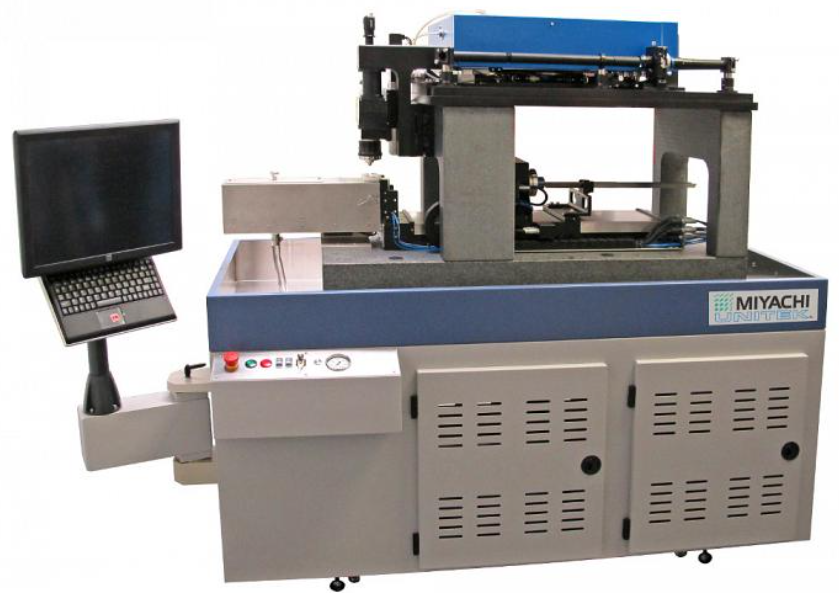
- Laser Material Processing
- Precision Cutting: Ideal for intricate designs in metals, plastics, and glass.
- Nonlinear Effects: Enables processing of transparent materials like crystals and glasses.
- Medical Applications
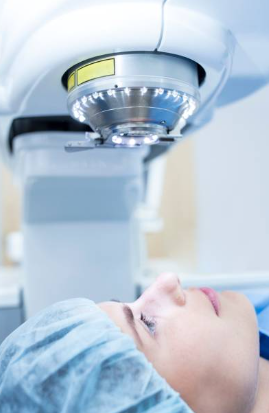
- Eye Surgery: Procedures like Femto-LASIK rely on the precision of femtosecond lasers.
- Tissue Diagnostics: Facilitates advanced imaging techniques, such as laser microscopy.
- Laser Microscopy
- Fluorescence Imaging: Multiphoton excitation enables high-resolution imaging for biological studies.
- Spectroscopy: Analyzes material properties at microscopic scales.
- Measurements
- Optical Clocks: Serve as reliable frequency standards.
- LIDAR: Precise distance measurements for industrial and environmental applications.
- Telecommunications
- Wavelength Division Multiplexing: Enhances data transmission capacity.
- High-Speed Data: Enables transmission rates exceeding 1 Tbit/s.
Future Prospects of Femtosecond Lasers
As femtosecond laser technology advances, its applications are expanding into emerging fields like quantum computing, advanced manufacturing, 和 renewable energy research. The development of industrial-grade femtosecond lasers promises even greater reliability, accessibility, and versatility.
结论
Femtosecond laser technology has transformed industries by offering unparalleled precision, power, and versatility. From medical breakthroughs to high-speed telecommunications, femtosecond lasers are paving the way for innovation across diverse sectors.
As the technology evolves, it will continue to unlock new possibilities, solidifying its place as a cornerstone of modern science and engineering.
2人评论了“Unlocking the Potential of Femtosecond Lasers: Revolutionary Technology and Applications”
Keep on working, great job!
回拨: Advancements in Femtosecond Laser Technology and Its Impact on Medical Frontiers – MedTechNews