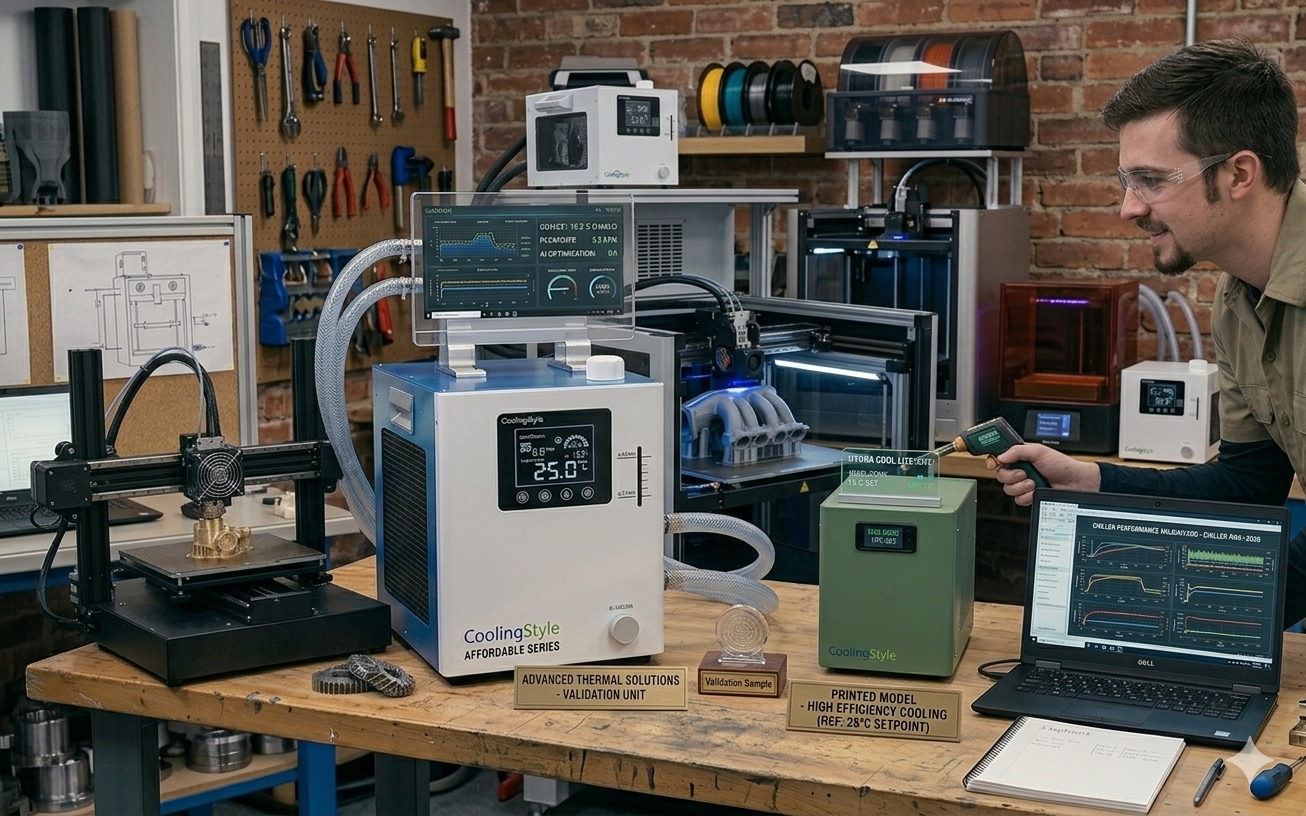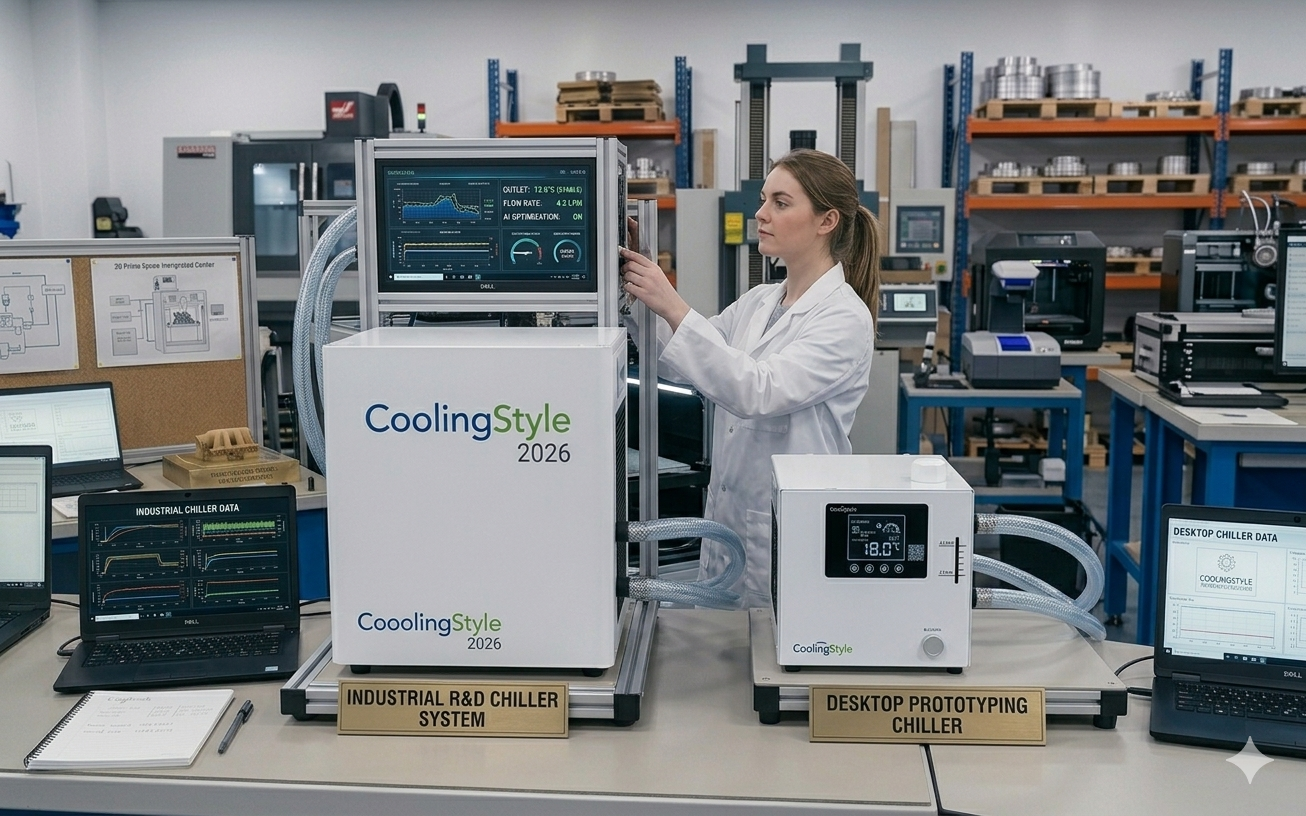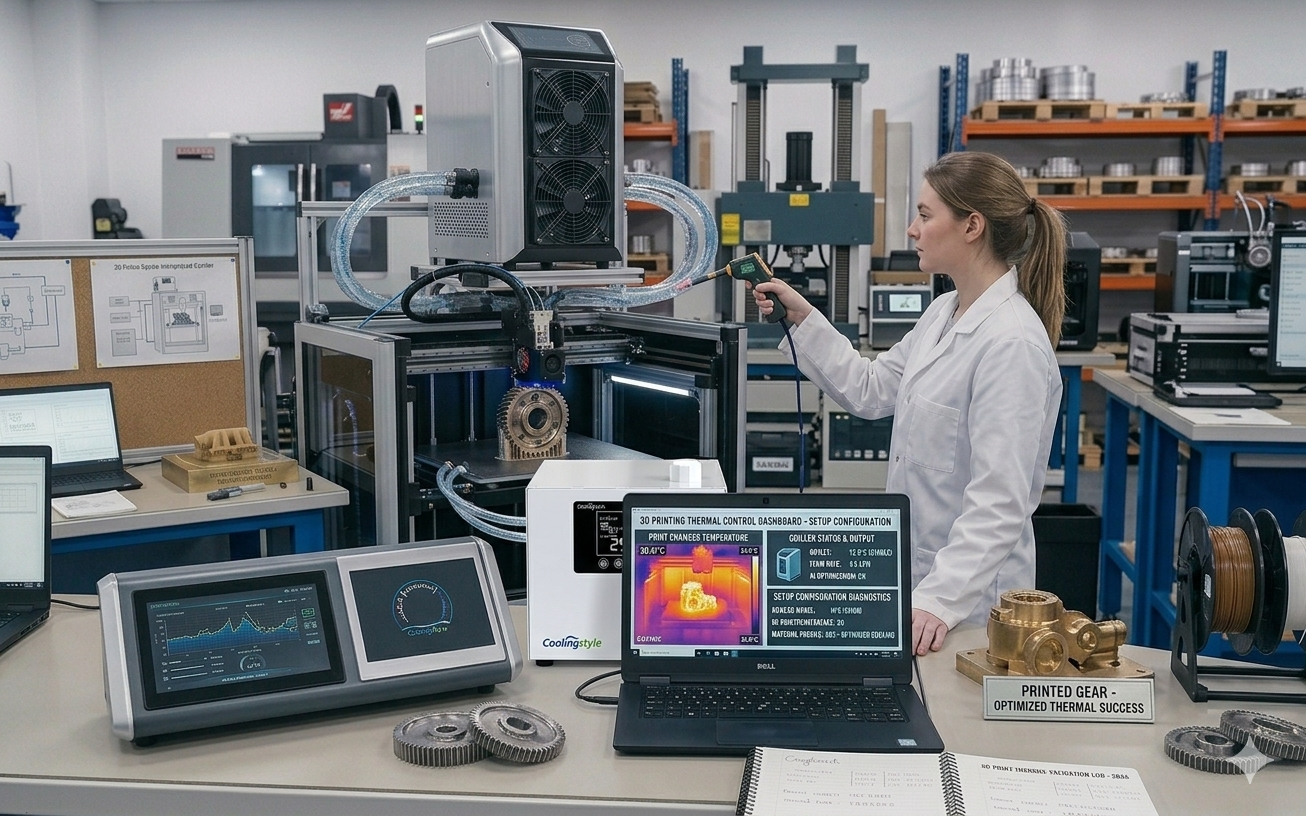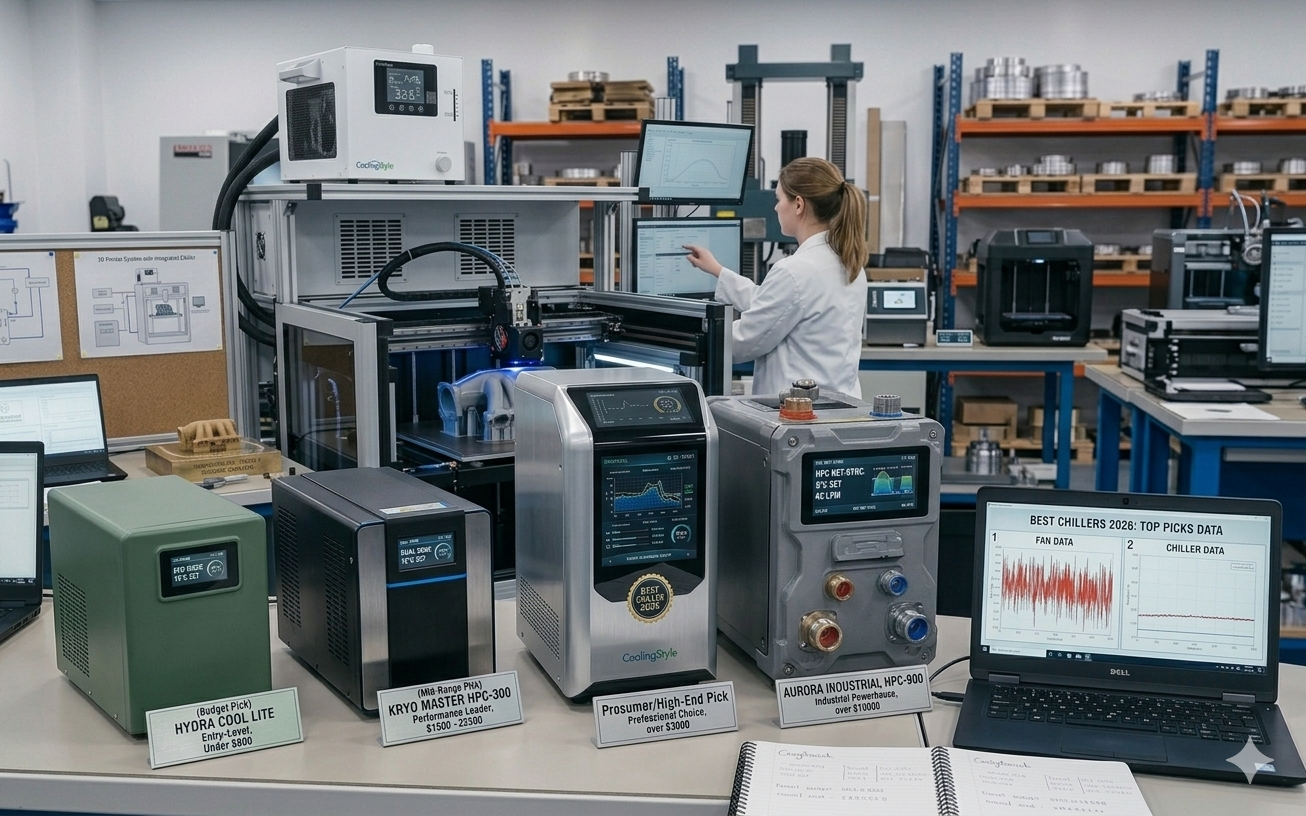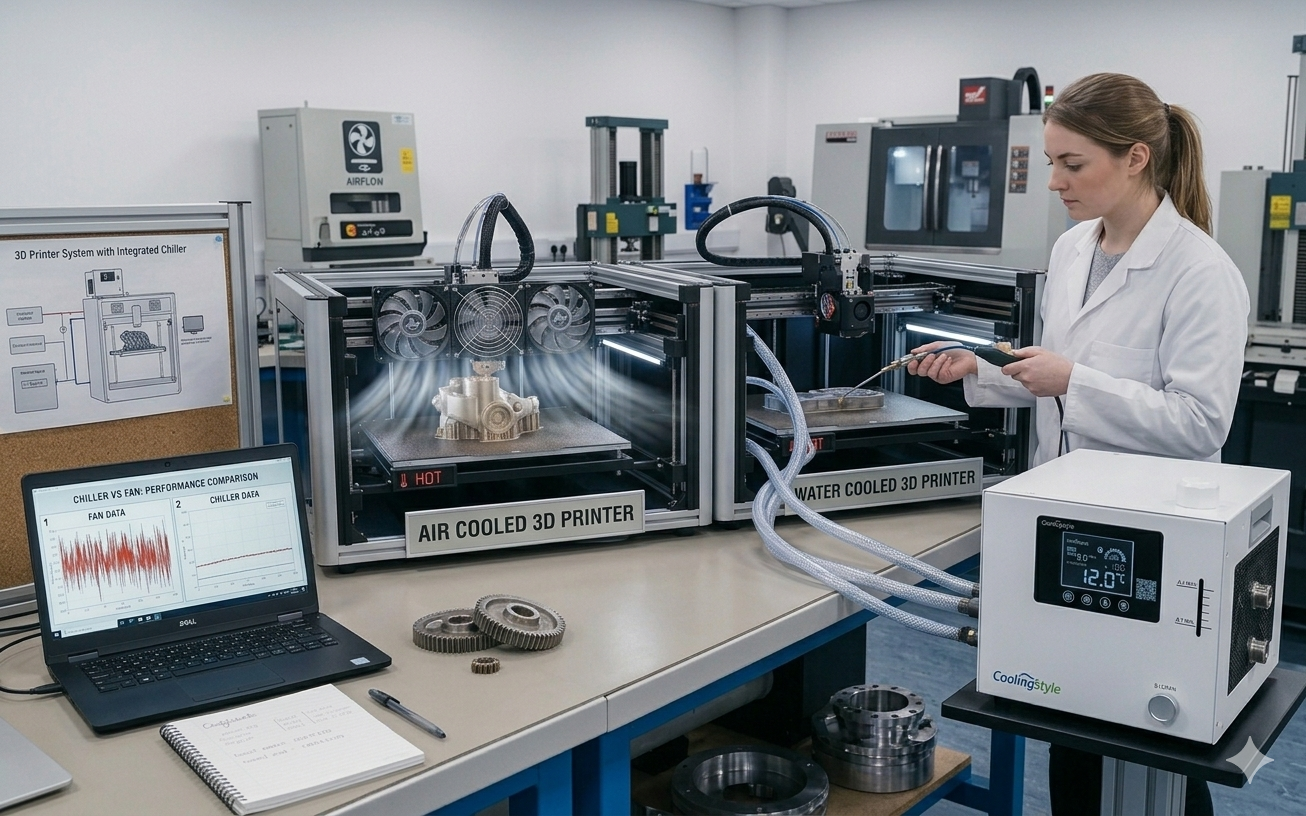
Definition: 一个 微型激光冷水机 is a compact industrial water chiller specifically designed for fiber lasers, 紫外激光器, and semiconductor laser systems. Its primary function is to provide high-stability temperature control, preventing laser power degradation, wavelength drift, and reduced service life caused by overheating. It is widely used in laser processing, medical laser equipment, and laboratory instruments.

Publish Date: (Auto-generated by WordPress upon publishing)
Core Functions & Industry Problems Solved
- ✅ Solves high heat-density dissipation issues in laser systems.
- ✅ Prevents laser power and wavelength instability caused by temperature fluctuations.
- ✅ Extends laser source lifespan by reducing thermal stress.
- ✅ Replaces bulky and inefficient cooling methods with a compact, energy-saving solution.
- ✅ Meets the ultra-high precision temperature control demands of modern laser equipment.
Working Principle (Step-by-Step)
- 步 1: Cooling water absorbs heat from the laser device and transfers it to the refrigerant through the evaporator.
- 步 2: The refrigerant vapor is compressed by the compressor into a high-pressure, high-temperature gas.
- 步 3: The hot refrigerant releases heat to the surrounding air or external water system through the condenser and condenses into liquid.
- 步 4: The liquid refrigerant passes through the expansion valve, reducing pressure and returning to the evaporator to complete the cycle. Sensors and controllers maintain closed-loop temperature control.
Key Technical Specifications
| Parameter | Typical Range / 描述 |
|---|---|
| 制冷量 | 300 W – 3000 瓦 |
| 控温精度 | ±0.1°C – ±0.5°C |
| Compatible Laser Power | 50 W – 3000 瓦 (depending on load) |
| 电源 | 110 V / 220 V Optional |
| Operating Temperature Range | 5°C – 35°C (outlet water) |
| Cooling Method | Air-cooled / Small water-cooled |
| 控制系统 | Microprocessor / PLC / Touchscreen |
| Operating Mode | 24/7 Continuous Operation |
Typical Applications
- Fiber laser marking machines
- UV laser cutting and drilling systems
- Semiconductor laser welding and testing platforms
- Medical and aesthetic laser equipment
- Laboratory laser instruments
- Compact 3D laser printing systems
Technical Comparison: Miniature Laser Chiller vs Traditional Cooling Methods
| 物品 | 微型激光冷水机 | Traditional Fan Cooling |
|---|---|---|
| 控温精度 | ±0.1℃ | ±3–5°C |
| Laser Stability | 高的 | Medium |
| High-Power Laser Support | 是的 | No |
| Continuous Operation | 24/7 稳定的 | Overheating Risk |
| Laser Lifespan | Significantly Extended | Shortened by Heat |
| Maintenance Cost | 低的 (Long-Term) | 高的 |
Selection Guidelines
- Cooling Capacity Matching: Select the cooling capacity based on actual laser heat load with 20–30% safety margin.
- Temperature Accuracy Requirement: Wavelength-sensitive lasers require ≤±0.2°C precision.
- Flow Rate & Interface: Confirm required flow rate (升/分钟) and pipe size.
- Ambient Environment: Ensure sufficient ventilation for air-cooled models.
- Protection Functions: Choose models with low-water, overload, and high-temperature protection.
- Customization Needs: Voltage, dimensions, control protocol, and connectors can be customized.
常见问题解答 (常问问题)
Q1: What types of lasers are suitable for a Miniature Laser Chiller?
一个: 光纤激光器, 紫外激光器, 半导体激光器, and some CO₂ lasers depending on cooling requirements.
Q2: What temperature stability can be achieved?
一个: High-end models achieve ±0.1°C, standard models ±0.2°C–±0.5°C.
第三季度: Can it operate continuously 24 hours a day?
一个: 是的. Industrial-grade units are designed for 24/7 non-stop operation.
Q4: How do you maintain a Miniature Laser Chiller?
一个: Regularly check coolant quality, clean the condenser, replace filters, and perform annual inspections.
Q5: Is customization available?
一个: 是的. Voltage, 尺寸, interfaces, and control communication can be customized.
结论
The Miniature Laser Chiller is an essential cooling solution for precision laser systems. Compared with traditional air cooling or large chillers, it offers superior temperature stability, compact structure, continuous operation, and lower long-term maintenance costs. It is particularly suitable for laser processing, medical laser equipment, and laboratory-grade laser instruments.