As 3D printing technology continues to advance, achieving consistent print quality and precision has become more important than ever. While users often focus on materials, slicer settings, and hardware upgrades, one critical factor is frequently underestimated: cooling.
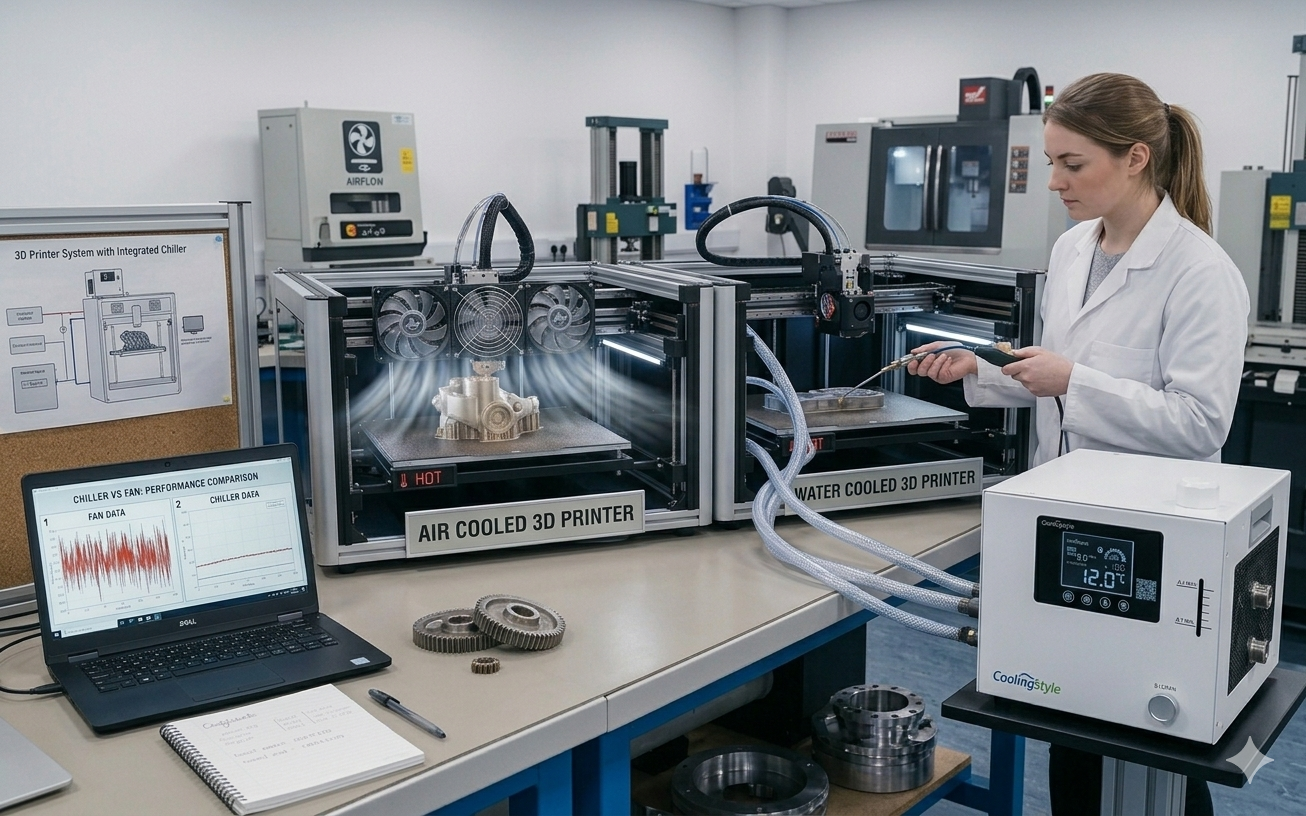
Cooling directly influences layer adhesion, print accuracy, surface finish, and overall reliability. Whether you’re a hobbyist or an industrial manufacturer, choosing the right cooling system can significantly impact your results.
Two main cooling approaches dominate the 3D printing world: air cooling 和 water cooling. Each has its own strengths and limitations. 在本文中, we will explore both systems in depth and help you determine which solution best fits your needs—while also examining how advanced technologies from 冷却风格 are redefining precision temperature control.
Understanding the Role of Cooling in 3D Printing
Cooling is essential in controlling how molten material solidifies after extrusion. Proper cooling ensures:
- Strong layer bonding
- Reduced warping and shrinkage
- Improved surface quality
- Accurate dimensional control
Inconsistent cooling can lead to defects such as stringing, sagging, or cracking. This makes choosing the right cooling method a key decision in optimizing print performance.
What Is Air Cooling?
Air cooling is the most common cooling method used in 3D printers. It relies on fans to direct airflow toward the printed object or hotend.
Advantages of Air Cooling
- Simple and cost-effective: Most printers come with built-in fans
- Easy maintenance: Minimal components and low complexity
- Lightweight design: Does not add significant weight to the system
- Suitable for common materials: Works well with PLA and PETG
Limitations of Air Cooling
- Limited precision: Difficult to control exact temperature
- Environmental sensitivity: Affected by ambient airflow and room temperature
- Uneven cooling: Can cause warping or inconsistent layer bonding
- 噪音: High-speed fans can be loud
While air cooling is sufficient for basic applications, it often struggles in high-precision or industrial scenarios.
What Is Water Cooling?
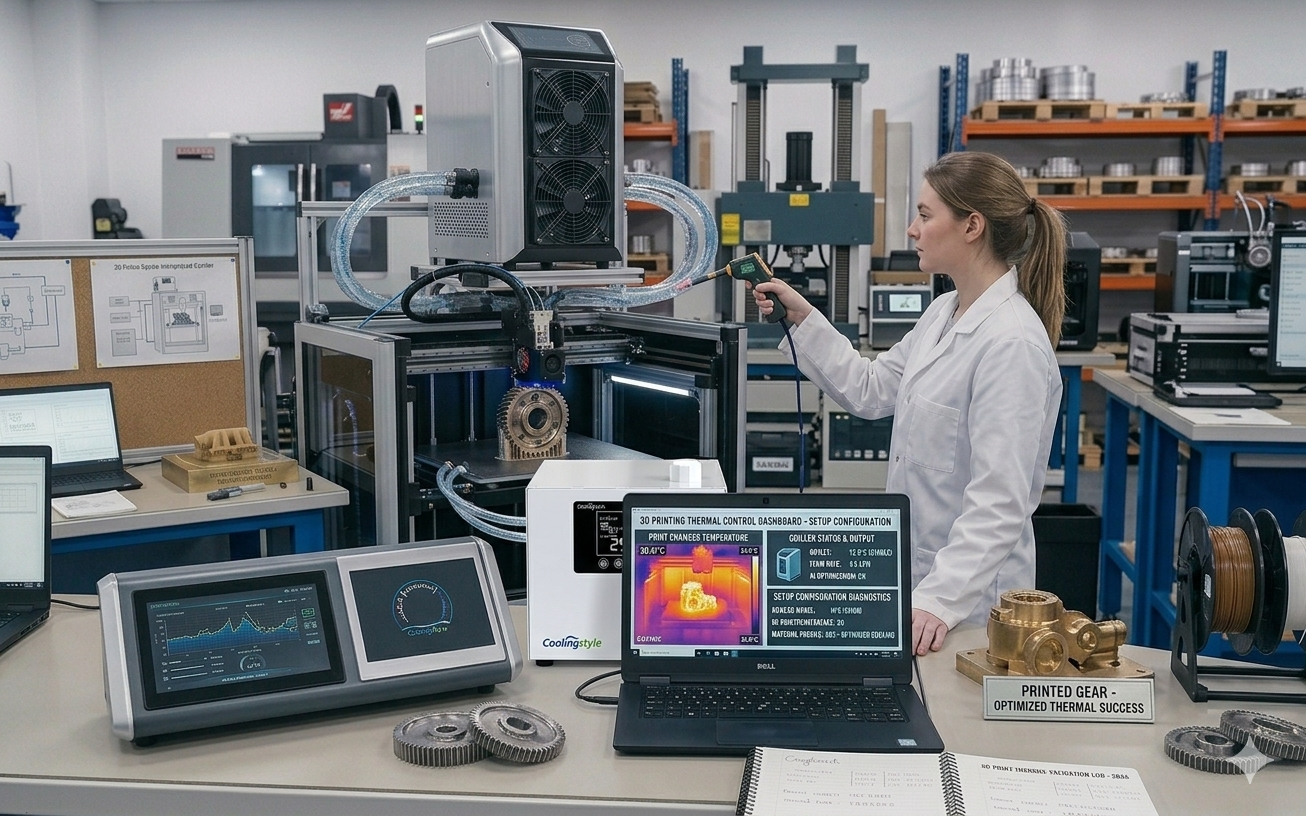
水冷 (or liquid cooling) uses a coolant to absorb and transfer heat away from critical components such as the hotend or chamber. The heat is then dissipated through a radiator or chiller system.
水冷的优点
- High thermal efficiency: Water transfers heat more effectively than air
- Stable temperature control: Maintains consistent thermal conditions
- Reduced noise: Operates quieter than fan-based systems
- Better for high-performance printing: Ideal for engineering materials
Limitations of Water Cooling
- Higher cost: More components required
- Complex setup: Installation and maintenance are more involved
- Potential leakage risk: Requires proper system design
Despite these challenges, water cooling is increasingly preferred for demanding applications.
主要差异: Water Cooling vs Air Cooling
| 特征 | 风冷 | Water Cooling |
|---|---|---|
| 冷却效率 | 缓和 | 高的 |
| 温度稳定性 | Variable | Highly stable |
| 精准控制 | 有限的 | 出色的 |
| Noise Level | 更高 | Lower |
| System Complexity | 简单的 | 先进的 |
| Best Use Case | Basic printing | High-precision & industrial printing |
Why Water Cooling Is Gaining Popularity
As 3D printing moves toward higher precision and industrial applications, the limitations of air cooling become more apparent. Water cooling offers superior performance in areas that matter most:
- Consistent thermal control
- Reduced print defects
- Improved mechanical strength
- Better repeatability in production
For applications such as aerospace components, 医疗器械, and micro-manufacturing, stable temperature control is not optional—it is essential.
How coolingstyle Elevates Water Cooling Performance
Not all water cooling systems are created equal. 冷却风格 stands out by offering cutting-edge solutions designed for precision and efficiency.
0.01°C Ultra-High Precision
coolingstyle systems provide temperature control accuracy up to ±0.01°C, ensuring unmatched stability for high-end 3D printing applications.
Compact and Micro Design
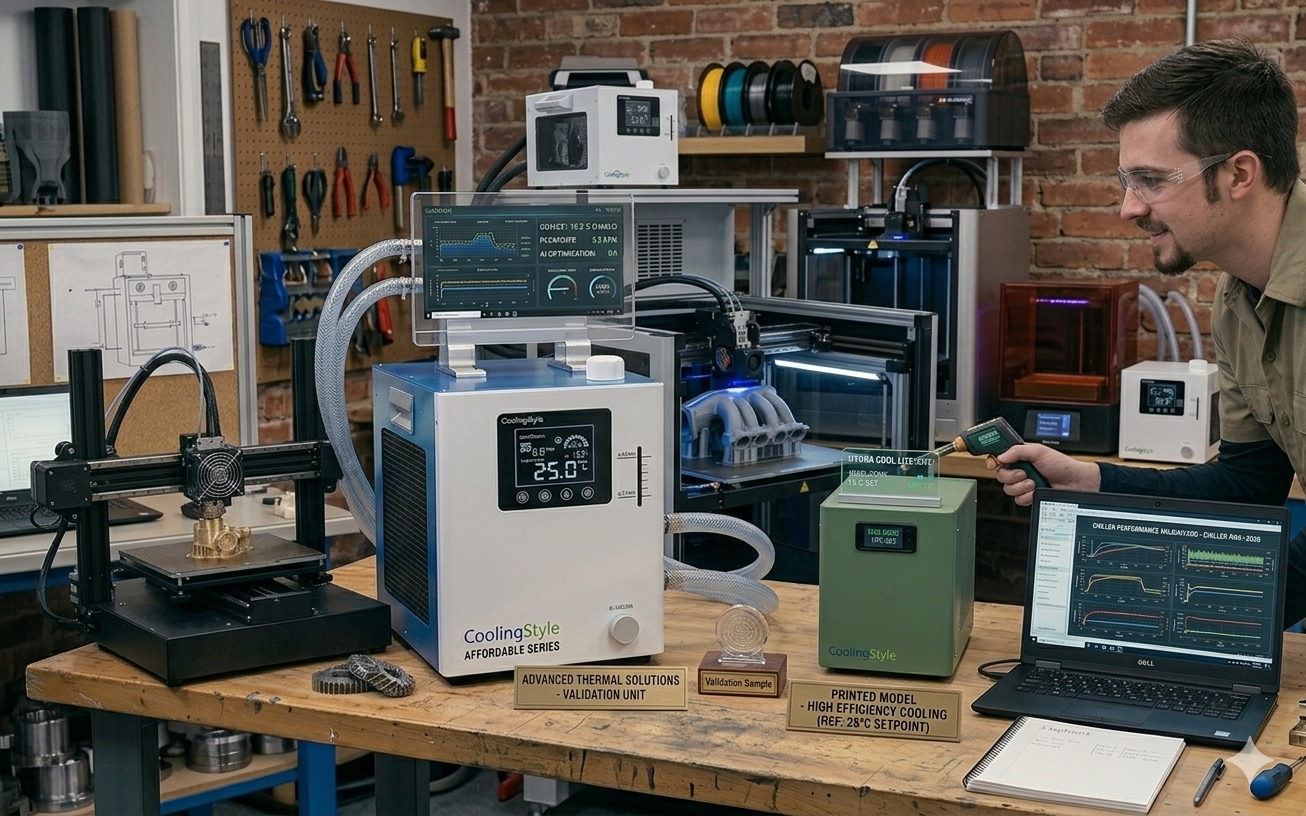
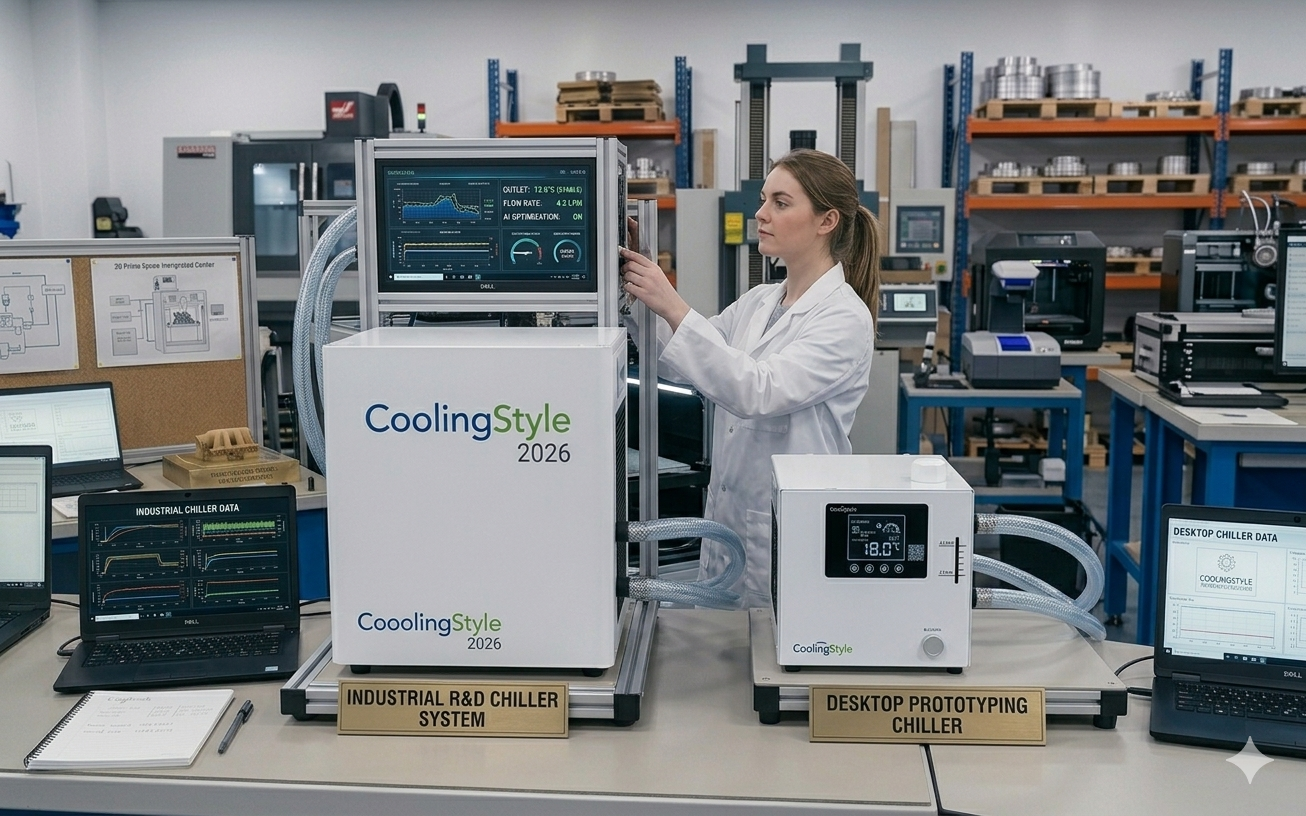
Unlike traditional bulky chillers, coolingstyle products feature a 袖珍的, micro-scale design, making them easy to integrate into limited spaces.
Eco-Friendly R290 Refrigerant
Coolingstyle adopts R290制冷剂, a natural and environmentally friendly solution with low global warming potential and high energy efficiency.
Microchannel Heat Exchange Technology
使用 microchannel heat exchangers allows faster heat transfer, improved efficiency, and reduced energy consumption compared to conventional systems.
Key Benefits of coolingstyle Cooling Systems:
- Ultra-precise temperature stability (±0.01°C)
- Space-saving compact structure
- Eco-friendly and energy-efficient operation
- Advanced microchannel heat exchange technology
Which Cooling System Should You Choose?
Choose Air Cooling If:
- You are a beginner or hobbyist
- You mainly print PLA or simple materials
- You prefer low cost and easy setup
Choose Water Cooling If:
- You require high precision and consistency
- You work with engineering-grade materials
- You operate in industrial or professional environments
- You want long-term performance and reliability
For users seeking the highest level of performance, water cooling—especially with advanced systems like coolingstyle—is the superior choice.
Future Trends in 3D Printer Cooling
- Smart cooling systems with real-time monitoring
- Integration with AI for automatic adjustments
- Eco-friendly refrigerants like R290 becoming standard
- Miniaturized cooling units for compact devices
These trends highlight the growing importance of advanced cooling technologies in additive manufacturing.
结论
Both air cooling and water cooling have their place in 3D printing. Air cooling remains a practical option for beginners and basic applications, while water cooling offers superior performance for demanding use cases.
With its 0.01°C precision, 紧凑的设计, eco-friendly R290 refrigerant, and microchannel heat exchange technology, 冷却风格 represents the future of high-performance temperature control.
If you are serious about improving print quality, consistency, 和效率, upgrading to a professional water cooling system is a smart investment.