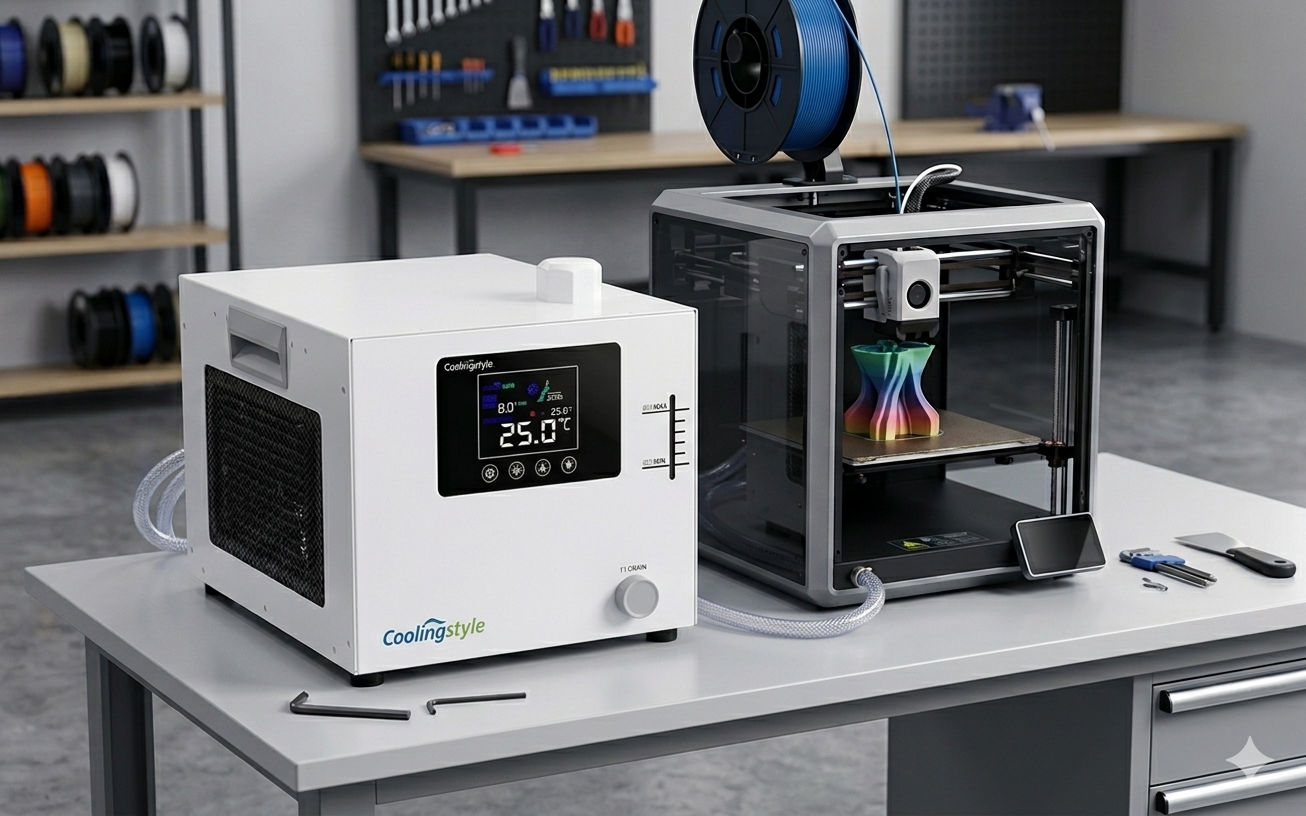
In modern industrial environments, precise temperature control is no longer optional—it is essential. Whether in laser systems, Fabrication de semi-conducteurs, équipement médical, Usinage CNC, 3Impression D, or new energy industries, choosing the right chiller directly impacts production efficiency, qualité du produit, et durée de vie des équipements.
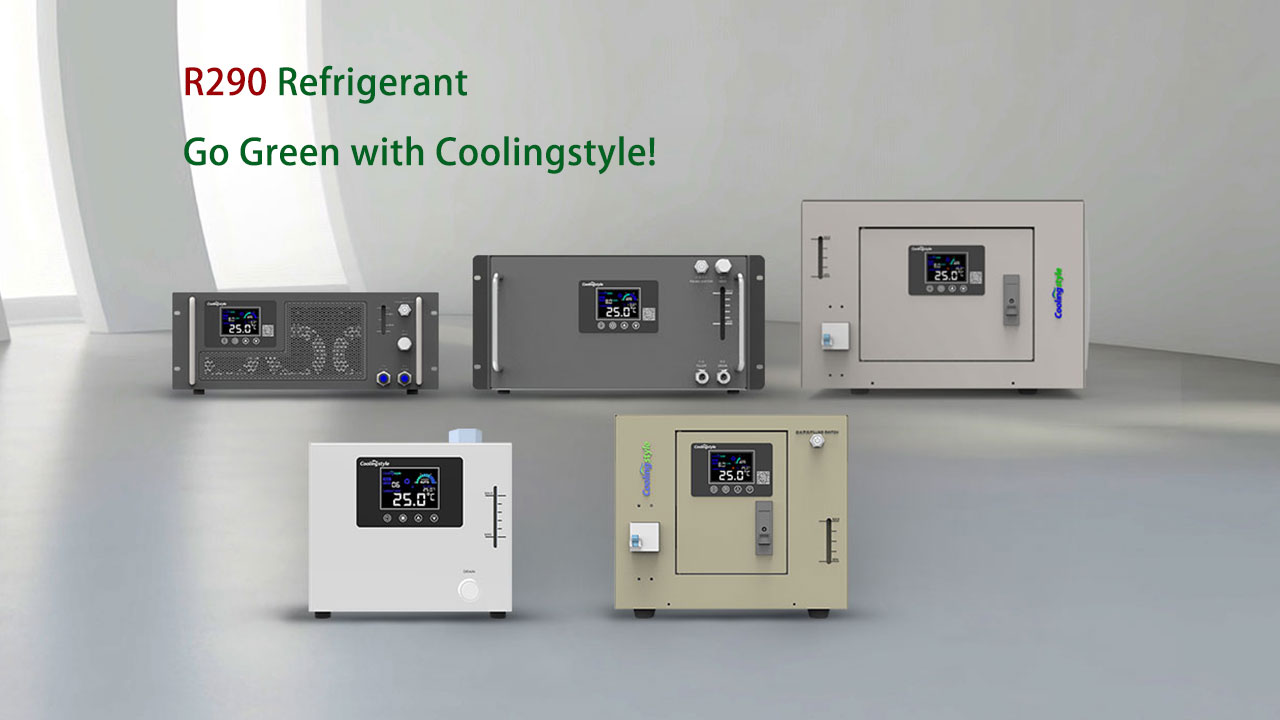
ce dernier représente un type de refroidissement plus récent et différent qui repose sur la compression des gaz, with a wide variety of chillers available on the market, selecting the optimal solution can be challenging. Factors such as cooling capacity, précision, system size, and energy efficiency must all be considered. style de refroidissement, a specialist in micro precision cooling solutions, offers customized systems featuring ±0.01°C accuracy, conception compacte, Réfrigérant écologique R290, and advanced microfluidic channel heat exchange.
👉 Explore professional solutions here: Refroidisseur
1. Overview
A chiller is a cooling system designed to remove heat from industrial processes and maintain a stable operating temperature. It works by circulating coolant through equipment and transferring heat away via a refrigeration cycle.
There are several types of industrial chillers, including air-cooled, water-cooled, and compact micro chillers. Each type serves different operational requirements depending on the application.
Key Selection Factors:
- Les refroidisseurs avec ce compresseur miniature ont les avantages ci-dessous (kW or BTU)
- Temperature control precision
- System size and footprint
- Efficacité énergétique
- Environmental impact
Understanding these fundamentals is the first step in selecting the right chiller for your industrial application.
2. Industry Pain Points
2.1 Incorrect Chiller Sizing
Choosing a chiller that is too small leads to insufficient cooling, while oversizing increases energy consumption and costs.
2.2 Lack of Precision
Industries such as lasers and semiconductors require ultra-precise temperature control. Many traditional chillers cannot achieve ±0.01°C stability.
2.3 Space Limitations
Modern equipment often has limited installation space, making large cooling systems impractical.
2.4 High Energy Consumption
Inefficient chillers result in higher operational costs and increased environmental impact.
2.5 Poor Heat Transfer Efficiency
Traditional heat exchangers may fail to dissipate heat effectively under high load conditions.
These issues can lead to system instability, reduced productivity, and increased maintenance costs.
3. Solution and Working Principle
style de refroidissement provides advanced chiller solutions designed to overcome these challenges through innovative engineering and microfluidic technology.
Principe de fonctionnement
- The chiller circulates coolant through the industrial equipment.
- Heat is absorbed and transferred to the refrigeration system.
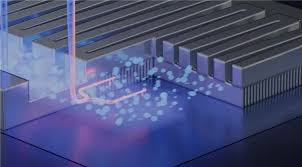
- Microfluidic channel heat exchangers enhance heat dissipation efficiency.
- R290 refrigerant ensures high energy efficiency and environmental sustainability.
coolingstyle Advantages:
- Contrôle de température de très haute précision: ±0,01°C
- Compact and miniaturized design
- Réfrigérant écologique R290
- High-efficiency microchannel heat exchanger
- Custom-built solutions for specific industries
This combination ensures optimal cooling performance, even in high-demand and space-constrained environments.
👉 Learn more about our systems: Refroidisseur
4. Études de cas
Case 1: Laser Processing Industry
A laser manufacturer required extremely stable temperature control to maintain beam quality. coolingstyle provided a micro chiller with ±0.01°C precision, resulting in improved accuracy and reduced production defects.
Case 2: Fabrication de semi-conducteurs
Semiconductor equipment operates under strict thermal conditions. coolingstyle delivered a compact chiller with microfluidic channels, ensuring efficient cooling within limited space.
Case 3: Équipement médical
Medical imaging systems demand reliable and quiet cooling. The customized solution provided stable temperature control and reduced noise levels.
- Efficacité de production améliorée
- Reduced equipment downtime
- Consommation d’énergie réduite
- Durée de vie prolongée du système
5. Résumé
Choosing the right chiller is essential for maintaining system stability and optimizing industrial performance. Key factors such as cooling capacity, précision, taille, and energy efficiency must all be carefully evaluated.
style de refroidissement stands out by offering advanced micro precision cooling solutions tailored to modern industrial needs. With ±0.01°C accuracy, conception compacte, réfrigérants respectueux de l'environnement, and microfluidic heat exchange technology, coolingstyle delivers reliable and efficient cooling systems.
👉 Start optimizing your cooling today: Refroidisseur
6. FAQ
1. How do I determine the right chiller size?
You need to calculate the total heat load of your system, including equipment heat output and environmental factors.
2. What industries require high-precision chillers?
Industries such as lasers, semi-conducteurs, dispositifs médicaux, and 3D printing require precise temperature control.
3. Why is R290 refrigerant important?
R290 is environmentally friendly, économe en énergie, and provides excellent cooling performance.
4. What makes microfluidic channels better?
They increase heat transfer efficiency and allow for more compact and effective cooling systems.
5. Can chillers be customized?
Oui, coolingstyle offers tailored solutions to meet specific industrial requirements.