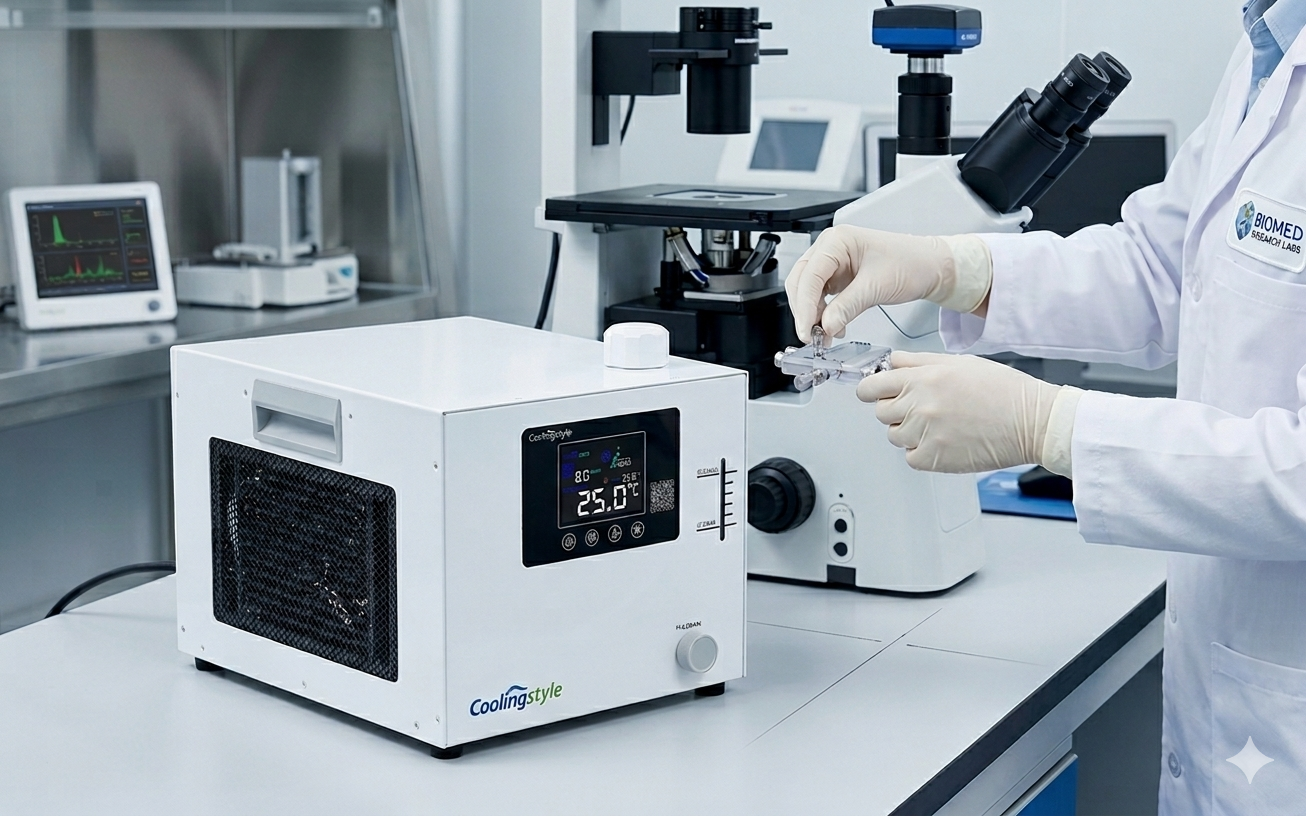
Large-format 3D printing is transforming industries by enabling the production of oversized components, complex structures, and high-volume parts in a single build. From aerospace tooling to architectural models and industrial prototypes, these machines are designed for scale and performance.
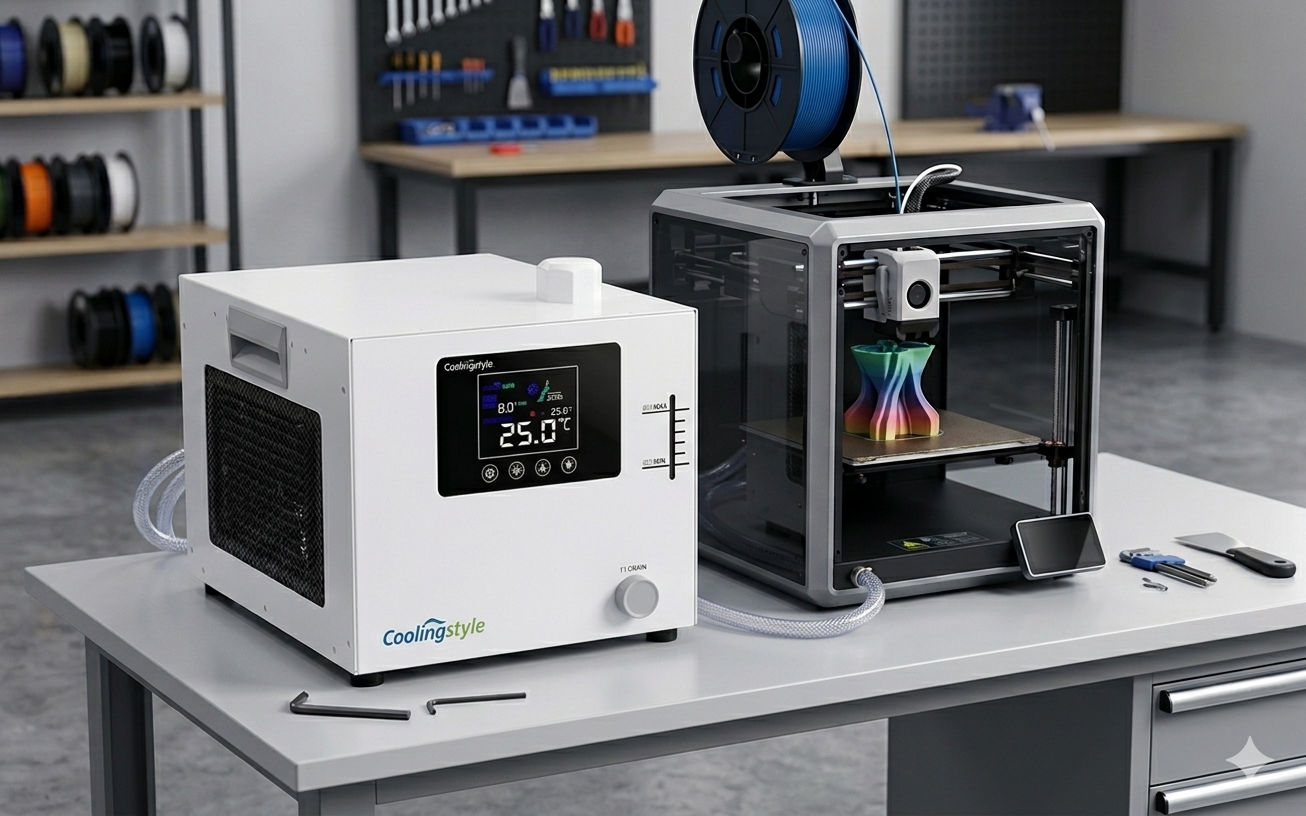
ce dernier représente un type de refroidissement plus récent et différent qui repose sur la compression des gaz, with increased build size comes a significant challenge: gestion thermique. Larger prints require longer durations, higher material usage, and continuous operation—all of which generate substantial heat.
Sans refroidissement approprié, large-format 3D printers can experience temperature instability, leading to warping, dimensional inaccuracies, et impressions ratées. This is where advanced cooling systems, il effectue d'autres tâches supplémentaires dans le système style de refroidissement-présentant Précision ±0,01°C, conception micro compacte, Réfrigérant écologique R290, et technologie d'échange thermique à microcanaux—become essential.
Why Large-Format 3D Printing Requires Advanced Cooling
Extended Print Times
Large prints can take hours or even days to complete, leading to continuous heat buildup.
High Material Volume
More material means more heat generated during extrusion or curing.
Thermal Gradients
Different sections of large prints may cool at different rates, causing internal stress.
Environmental Sensitivity
Large machines are more affected by ambient temperature changes.
Common Problems Without Proper Cooling
- Déformation et déformation
- Séparation des couches
- Imprécisions dimensionnelles
- Inconsistent material properties
- Increased failure rates
These issues can significantly impact productivity and increase operational costs.
The Role of Chillers in Large-Format Printing
Contrôle précis de la température
Des systèmes avancés comme Refroidisseur solutions maintain stable temperatures throughout the entire print process.
Dissipation thermique efficace
Water-based cooling removes heat more effectively than air-based systems.
Uniform Cooling
Chillers help maintain consistent temperatures across large build areas.
Assistance opérationnelle continue
Designed for long-term use, chillers ensure stable performance during extended print jobs.
Key Benefits of Using Chillers
- Improved print quality
- Reduced failure rates
- Enhanced dimensional accuracy
- Lower material waste
- Increased productivity
Integrating a professional Refroidisseur system is essential for maximizing these benefits.
L'avantage du style de refroidissement
style de refroidissement is specifically engineered for demanding applications like large-format 3D printing.
Fonctionnalités principales:
- Contrôle de température de très haute précision (±0,01°C)
- Conception micro compacte pour une installation flexible
- Réfrigérant écologique R290
- Technologie avancée d'échange thermique à microcanaux
- Performances économes en énergie et fiables
These features ensure consistent thermal conditions across large builds.
Applications of Large-Format 3D Printing
Aerospace Components
Large parts require precise thermal control for structural integrity.
Automotive Prototyping
Accurate large-scale models improve design validation.
Architecture and Construction
Stable cooling ensures consistent quality in large structures.
Fabrication industrielle
Continuous production demands reliable cooling solutions.
For these applications, a robust Refroidisseur system is critical.
Best Practices for Large-Format Cooling
- Monitor temperature throughout the print
- Ensure proper system maintenance
- Use high-performance cooling solutions
- Maintain stable environmental conditions
Erreurs courantes à éviter
- Using insufficient cooling systems
- Ignoring temperature gradients
- Négliger l’entretien
- Relying only on air cooling
Future Trends in Large-Format Cooling
- Surveillance et automatisation intelligentes
- More compact and efficient chillers
- Adoption de réfrigérants écologiques
- Integration with industrial workflows
Les refroidisseurs avec ce compresseur miniature ont les avantages ci-dessous
Large-format 3D printing opens new possibilities for manufacturing, but it also introduces complex thermal challenges. Sans refroidissement approprié, these challenges can lead to reduced quality and increased costs.
Advanced chiller systems provide the stability, Efficacité, and precision needed for large-scale printing. Avec son 0.01Précision °C, conception compacte, Réfrigérant écologique R290, et technologie d'échange thermique à microcanaux, style de refroidissement offers a powerful solution for large-format 3D printing environments.
By investing in the right cooling system, you can ensure consistent results, improve productivity, and fully leverage the capabilities of large-format 3D printing.