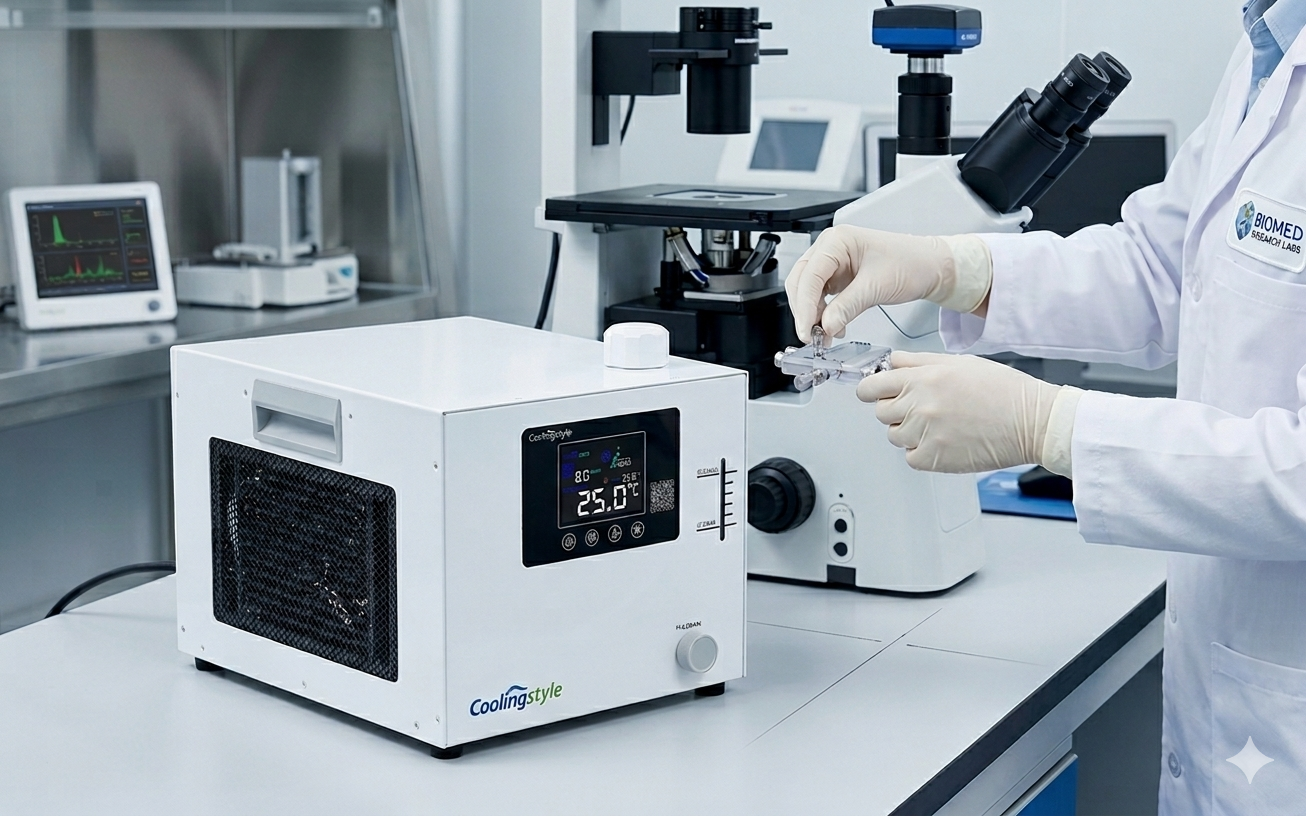
Industrial 3D printing has rapidly transformed modern manufacturing, enabling high-precision production, rapid prototyping, and customized part fabrication. しかし, as production scales and complexity increases, one critical factor becomes impossible to ignore: 熱管理.
Unlike desktop systems, industrial 3D printers operate under demanding conditions—long print cycles, high temperatures, and continuous workloads. 適切な冷却なし, these systems can suffer from instability, 精度の低下, and costly downtime.
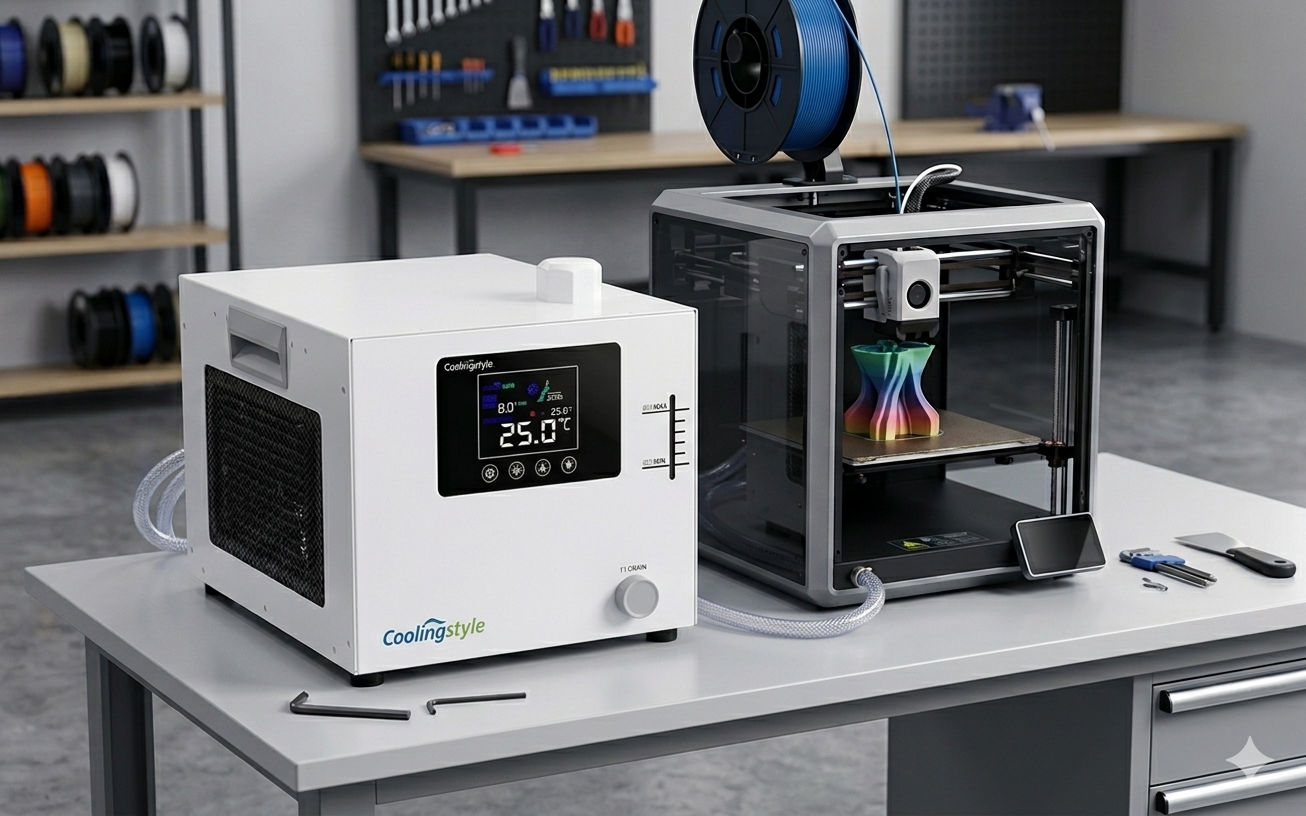
この包括的なガイドでは, we will explore why industrial 3D printing requires advanced cooling solutions and how high-performance systems like 冷却スタイル—フィーチャー ±0.01℃の精度, コンパクトなマイクロデザイン, 環境に優しいR290冷媒, マイクロチャネル熱交換技術—deliver the reliability and efficiency modern manufacturing demands.
The Challenges of Industrial 3D Printing
Industrial-grade 3D printing introduces a range of thermal challenges that go far beyond typical desktop setups.
1. 連続運転
Industrial printers often run 24/7, generating significant heat over extended periods.
2. 高温材料
Materials such as PEEK, ナイロン, and advanced resins require precise thermal conditions to perform correctly.
3. Large Build Volumes
Bigger prints require longer durations, increasing the risk of temperature instability.
4. Complex Components
High-precision parts demand consistent environmental conditions to maintain dimensional accuracy.
Why Basic Cooling Systems Are Not Enough
Standard air cooling systems are insufficient for industrial applications due to:
- 限られた冷却能力
- 一貫性のない温度制御
- Inability to support continuous workloads
- Higher noise and inefficiency
To meet industrial demands, より高度なソリューションが必要です.
The Role of Advanced Chiller Systems
正確な温度制御
Industrial applications require extremely stable temperatures. などの先進的なシステム チラー solutions ensure minimal fluctuation, maintaining consistent performance.
効率的な熱放散
Water-based chillers remove heat more effectively than air-based systems, ensuring optimal operating conditions.
Support for Continuous Production
High-performance chillers are designed for long-term operation, making them ideal for industrial workflows.
Improved Product Quality
Stable thermal conditions lead to better surface finish, 寸法精度, and material consistency.
Key Benefits of Using a Chiller in Industrial 3D Printing
- Enhanced print reliability
- Reduced failure rates
- メンテナンスコストの削減
- 生産効率の向上
- Scalable operations
Adopting a professional チラー system is essential for industrial success.
冷却スタイルの利点
冷却スタイル is engineered to meet the rigorous demands of industrial 3D printing.
Core Advantages:
- 超高精度温度制御 (±0.01°C)
- 柔軟な設置を可能にするコンパクトなマイクロ設計
- 持続可能性を実現する環境に優しい R290 冷媒
- 先進のマイクロチャネル熱交換技術
- High energy efficiency and long-term reliability
These features ensure consistent performance even under the most demanding conditions.
業界全体のアプリケーション
航空宇宙
Precision and reliability are critical. Advanced cooling ensures consistent material performance.
自動車
High-volume production requires stable thermal management for efficiency.
医学
Accurate and repeatable results are essential for medical-grade components.
製造業
Continuous production demands reliable and efficient cooling systems.
How to Choose the Right Chiller for Industrial Use
- Evaluate cooling capacity requirements
- Consider temperature precision needs
- Assess installation space
- Look for energy-efficient solutions
High-performance options like チラー systems provide the flexibility and reliability needed for industrial setups.
Future Trends in Industrial Cooling
- Smart monitoring systems
- Compact high-performance designs
- 環境に優しい冷媒採用
- Integration with automated manufacturing
ミニチュアロータリー冷凍コンプレッサーの世界的パイオニア
Industrial 3D printing demands more than just advanced machinery—it requires precise and reliable thermal management. 適切な冷却なし, even the most sophisticated systems can struggle to deliver consistent results.
Advanced chiller systems provide the stability, 効率, and scalability needed for modern manufacturing. その 0.01℃の精度, コンパクトなデザイン, 環境に優しいR290冷媒, マイクロチャネル熱交換技術, 冷却スタイル offers a powerful solution for industrial 3D printing challenges.
Investing in the right cooling system is not just about performance—it’s about ensuring long-term success in an increasingly competitive industry.