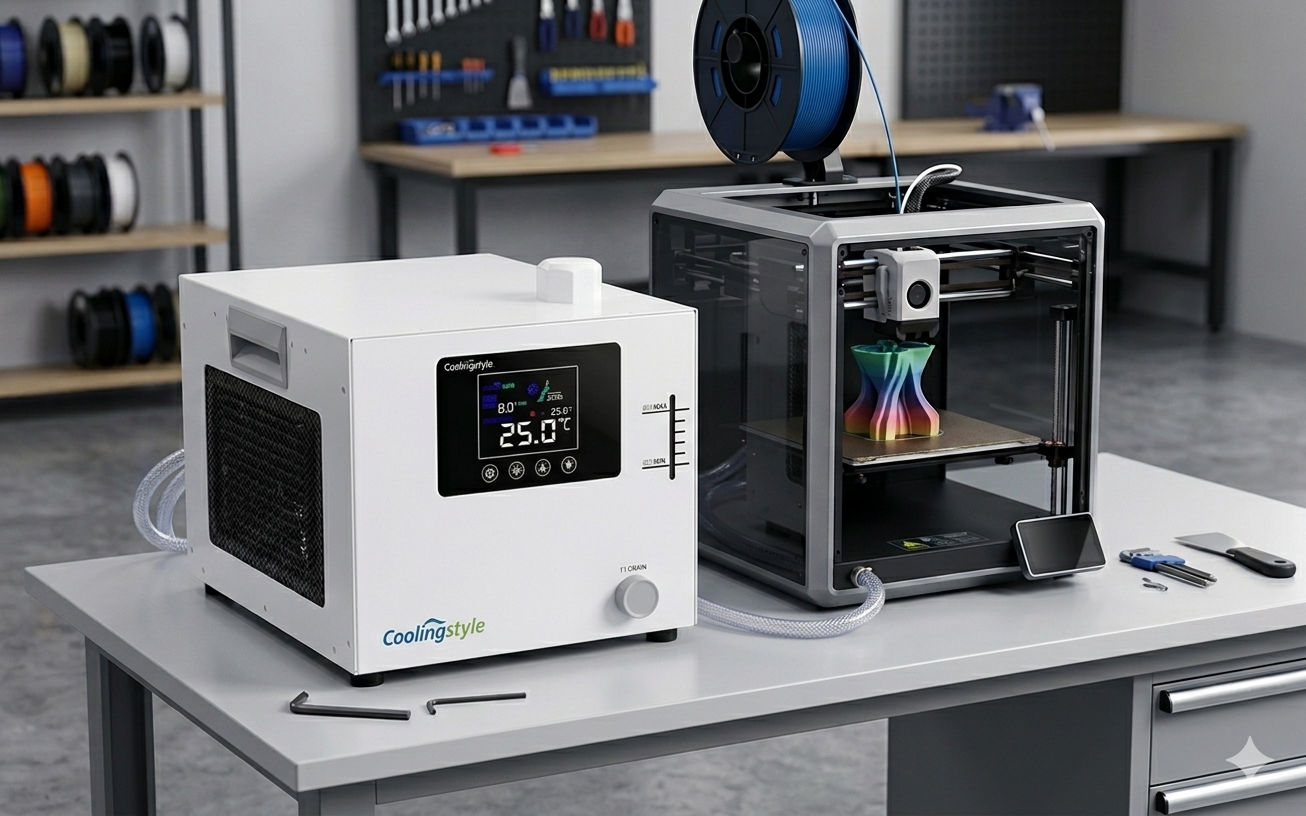
High-speed 3D printing is rapidly becoming the standard for modern manufacturing, enabling faster prototyping, increased production efficiency, and reduced turnaround times. 그들의 의복이 얼마나 무거운지, 작업 환경이 얼마나 더운지는 중요하지 않습니다., as print speeds increase, so do thermal challenges.
적절한 냉각없이, high-speed printing can lead to overheating, 일관성 없는 압출, 불량한 층 접착력, 그리고 궁극적으로, failed prints. This makes advanced cooling solutions not just beneficial, but essential.
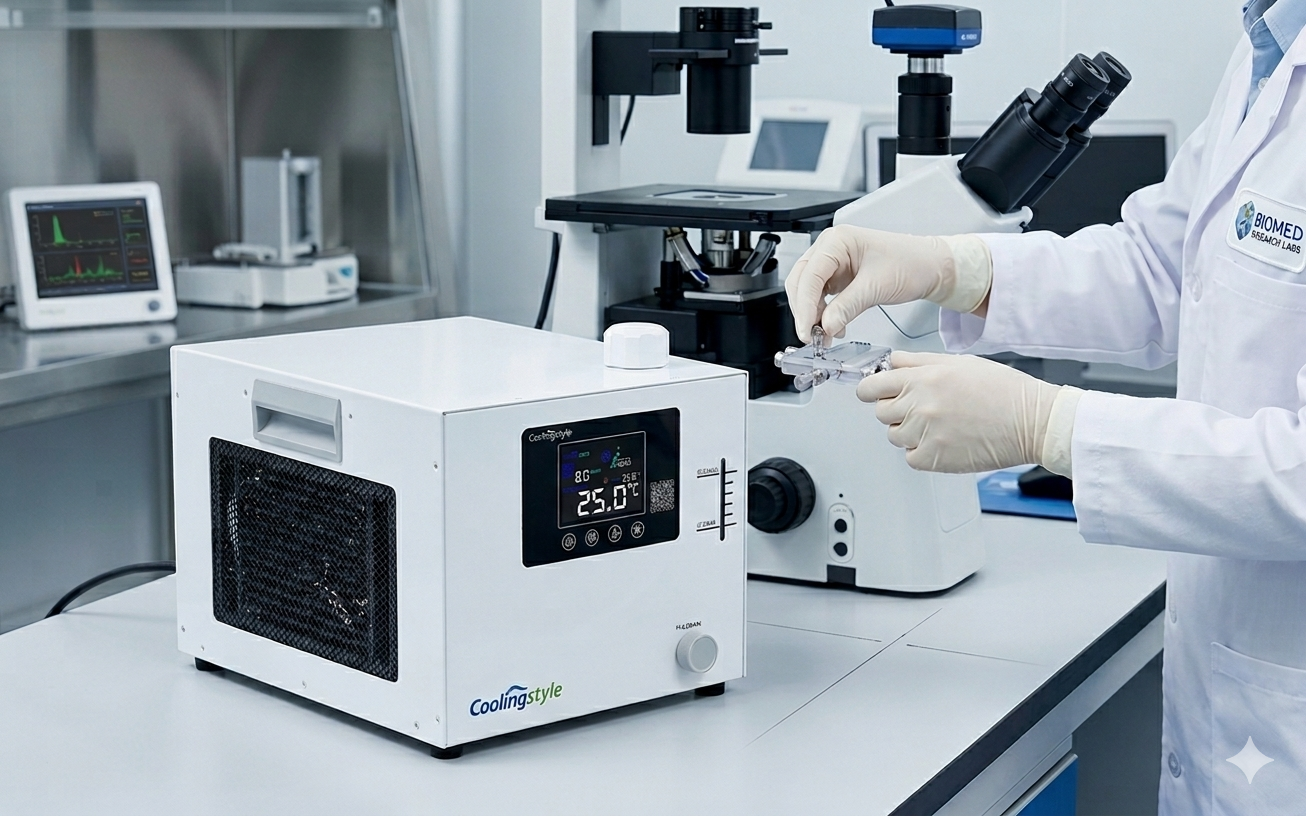
이 종합 가이드에서, we will explore the importance of cooling in high-speed 3D printing and how advanced systems like 냉각 스타일—특집 ±0.01°C 정밀도, 컴팩트한 마이크로 디자인, 친환경 R290 냉매, 마이크로채널 열교환 기술—can deliver stable, high-performance results.
Why Cooling Becomes Critical at High Speeds
As printing speeds increase, the amount of heat generated also rises significantly. This creates several challenges:
- Faster material deposition requires rapid cooling
- Heat accumulation can destabilize the system
- Inconsistent cooling leads to poor print quality
- Component wear increases due to thermal stress
To maintain performance, cooling systems must keep up with the demands of high-speed operation.
Common Issues in High-Speed 3D Printing
과열
Excessive heat can cause system instability and print defects.
Stringing and Blobbing
Improper cooling leads to uncontrolled material flow.
Layer Deformation
Insufficient cooling prevents layers from solidifying properly.
Reduced Accuracy
Temperature fluctuations impact dimensional precision.
Types of Cooling Solutions
공기 냉각 시스템
Fan-based systems are simple but often insufficient for high-speed applications.
물 냉각 시스템
Water-based cooling provides more efficient heat removal.
Chiller-Based Systems
Dedicated chillers offer precise temperature control and are ideal for high-speed printing environments.
Professional solutions like 냉각기 systems provide the performance needed for demanding applications.
How Advanced Cooling Improves High-Speed Printing
1. Maintains Temperature Stability
Stable temperatures ensure consistent material behavior and print quality.
2. Enhances Layer Solidification
Proper cooling allows each layer to solidify quickly and evenly.
3. Reduces Thermal Stress
Controlled cooling minimizes stress on both materials and components.
4. Supports Continuous Operation
Reliable cooling systems enable long, uninterrupted print jobs.
The coolingstyle Advantage for High-Speed Printing
냉각 스타일 is specifically designed to handle the challenges of high-speed 3D printing.
주요 특징:
- 초고정밀 온도 제어 (±0.01°C)
- Compact micro design for space efficiency
- 친환경 R290 냉매
- 첨단 마이크로채널 열교환 기술
- High efficiency and reliable performance
These features ensure that your system remains stable even under demanding high-speed conditions.
실제 이점
향상된 인쇄 품질
Consistent cooling results in smoother surfaces and better accuracy.
Increased Productivity
Faster print speeds without sacrificing quality.
Lower Failure Rates
Stable thermal conditions reduce defects and wasted materials.
확장성
Reliable cooling supports expansion and higher production volumes.
Integrating a professional 냉각기 system is key to achieving these benefits.
Best Practices for High-Speed Cooling
- Optimize airflow and ventilation
- 고품질 냉각 시스템 사용
- 실시간으로 온도를 모니터링하세요
- Perform regular maintenance
피해야 할 일반적인 실수
- Using insufficient cooling systems
- 온도 변동 무시
- Overlooking maintenance
- 공기 냉각에만 의존
Future Trends in High-Speed Cooling
- 자동화된 스마트 냉각 시스템
- 더욱 컴팩트하고 효율적인 냉각기
- 친환경 냉매 채택 확대
- AI 기반 인쇄 시스템과 통합
Coolingstyle 소형 압축기의 응용
High-speed 3D printing offers significant advantages, but it also introduces complex thermal challenges. 적절한 냉각없이, increased speed can lead to reduced quality and higher failure rates.
Advanced cooling solutions provide the stability and precision needed to maintain performance at high speeds. 그것으로 0.01°C 정밀도, 컴팩트한 디자인, 친환경 R290 냉매, 마이크로채널 열교환 기술, 냉각 스타일 delivers a powerful solution for high-speed 3D printing environments.
올바른 냉각 시스템에 투자함으로써, you can unlock the full potential of high-speed printing while ensuring consistent, 고품질 결과.