As 3D printing continues to evolve across industries, maintaining precise temperature control has become essential for achieving consistent, high-quality results. Among the most effective solutions are chiller systems, which play a critical role in thermal management.
然而, not all chillers are created equal. One of the most common questions professionals face is: Should you choose an air-cooled or water-cooled chiller?
在这份综合指南中, we break down the differences between air-cooled and water-cooled 3D printer chillers, compare their performance, and explain how advanced solutions like 冷却风格——特色 ±0.01℃精度, 紧凑的微型设计, 环保R290制冷剂, 和微通道热交换技术—deliver superior results.
What Is a 3D Printer Chiller?
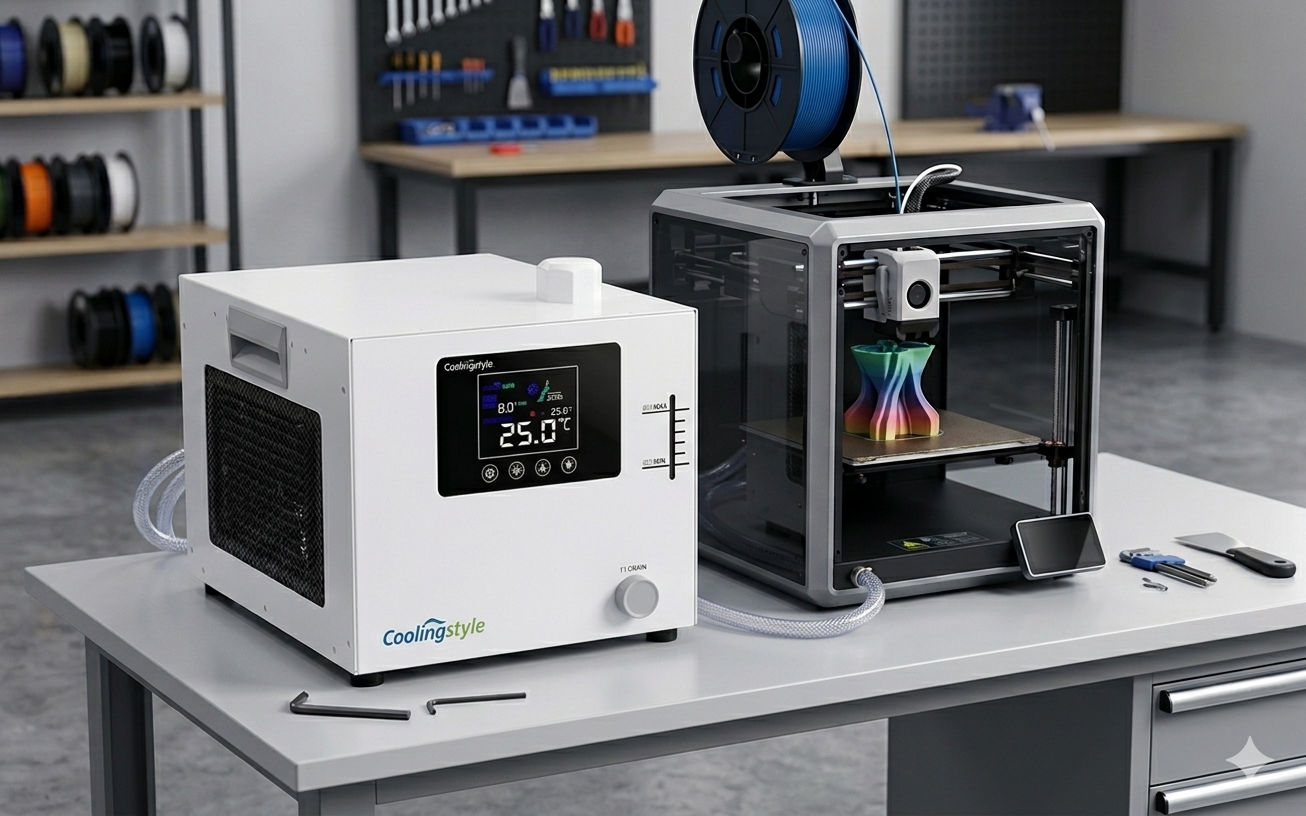
A chiller is a cooling system designed to remove heat from a 3D printer and maintain stable operating temperatures. 先进的系统,如 冷水机 solutions provide precise control, ensuring optimal performance and print quality.
Understanding Air-Cooled Chillers
Air-cooled chillers use fans to dissipate heat into the surrounding air. They are commonly used due to their simplicity and ease of installation.
Advantages of Air-Cooled Chillers
- Easy installation
- No additional water source required
- 降低前期成本
- Compact and portable
Limitations of Air-Cooled Chillers
- Lower cooling efficiency
- Performance affected by ambient temperature
- Higher noise levels
- Less precise temperature control
Understanding Water-Cooled Chillers
Water-cooled chillers use liquid circulation to remove heat more efficiently. These systems are widely used in industrial and high-performance applications.
Professional-grade 冷水机 solutions often utilize advanced water-cooling technology for superior performance.
Advantages of Water-Cooled Chillers
- 更高的冷却效率
- More stable temperature control
- Better performance in high-demand environments
- Lower noise levels
Limitations of Water-Cooled Chillers
- More complex installation
- Higher initial cost
- Requires maintenance
Air-Cooled vs Water-Cooled: 主要差异
| 特征 | Air-Cooled Chiller | Water-Cooled Chiller |
|---|---|---|
| 冷却效率 | 缓和 | 高的 |
| 温度精度 | 有限的 | Ultra-high (±0.01℃) |
| 噪音水平 | 更高 | 降低 |
| 安装 | 简单的 | More complex |
| 最佳用例 | Small-scale printing | Industrial & 高精度 |
Which One Is Better for 3D Printing?
The choice depends on your application:
- Air-cooled systems are suitable for basic or small-scale printing.
- Water-cooled systems are ideal for high-speed, large-format, and precision-critical applications.
For demanding environments, investing in a high-performance 冷水机 system is the best option.
冷却风格的优势
冷却风格 combines advanced engineering with cutting-edge technology to deliver superior cooling performance.
核心特点:
- 超高精度控温 (±0.01℃)
- Compact micro design for flexible integration
- 环保R290制冷剂
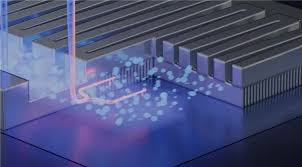
- 先进的微通道换热技术
- 节能高效、性能可靠
These features make coolingstyle an ideal choice for both air-cooled and water-cooled applications.
实际应用
Desktop 3D Printing
Air-cooled systems may be sufficient for low-demand use.
工业生产
Water-cooled systems provide the stability needed for continuous operation.
High-Speed Printing
Efficient cooling is essential to maintain performance at high speeds.
精密应用
Stable temperatures ensure accuracy in medical and engineering prints.
Cost vs Performance Consideration
While air-cooled chillers have lower upfront costs, water-cooled systems offer better long-term value through:
- Reduced failure rates
- Improved efficiency
- Higher productivity
- Lower operational costs
Future Trends in Chiller Technology
- 实时监控的智能冷却系统
- More compact high-performance designs
- 增加环保制冷剂的使用
- 与自动化工作流程集成
结论
Choosing between air-cooled and water-cooled chillers depends on your specific needs, but the importance of proper cooling cannot be overstated. While air-cooled systems offer simplicity, water-cooled solutions provide the performance and precision required for advanced 3D printing.
以其 0.01℃精度, 紧凑的设计, 环保R290制冷剂, 和微通道热交换技术, 冷却风格 delivers a powerful solution that meets the demands of modern 3D printing.
By selecting the right cooling system, you can significantly improve print quality, 减少故障, and enhance overall productivity.