Choosing between air-cooled and water-cooled chillers is a critical decision for industrial cooling applications. Each type offers distinct advantages depending on operating conditions, installation environment, and performance requirements. From laser systems and semiconductor manufacturing to medical devices and CNC machining, selecting the right cooling solution directly impacts efficiency, 成本, 和可靠性.
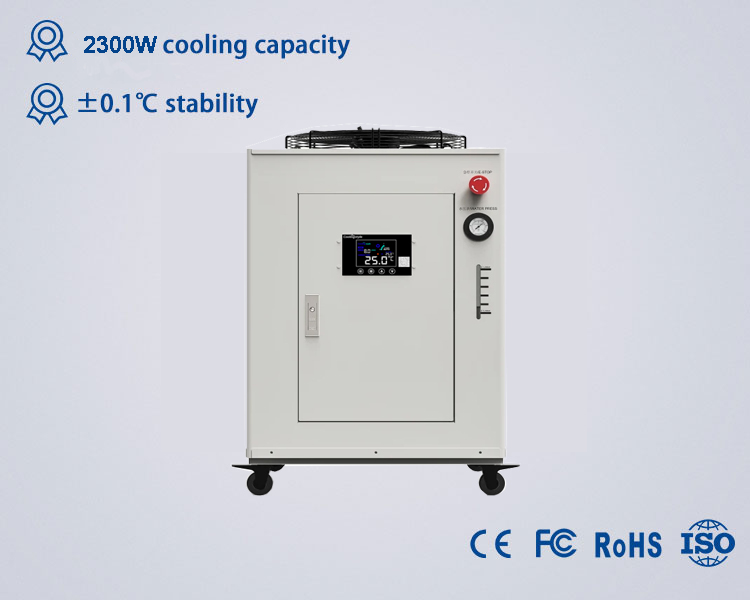
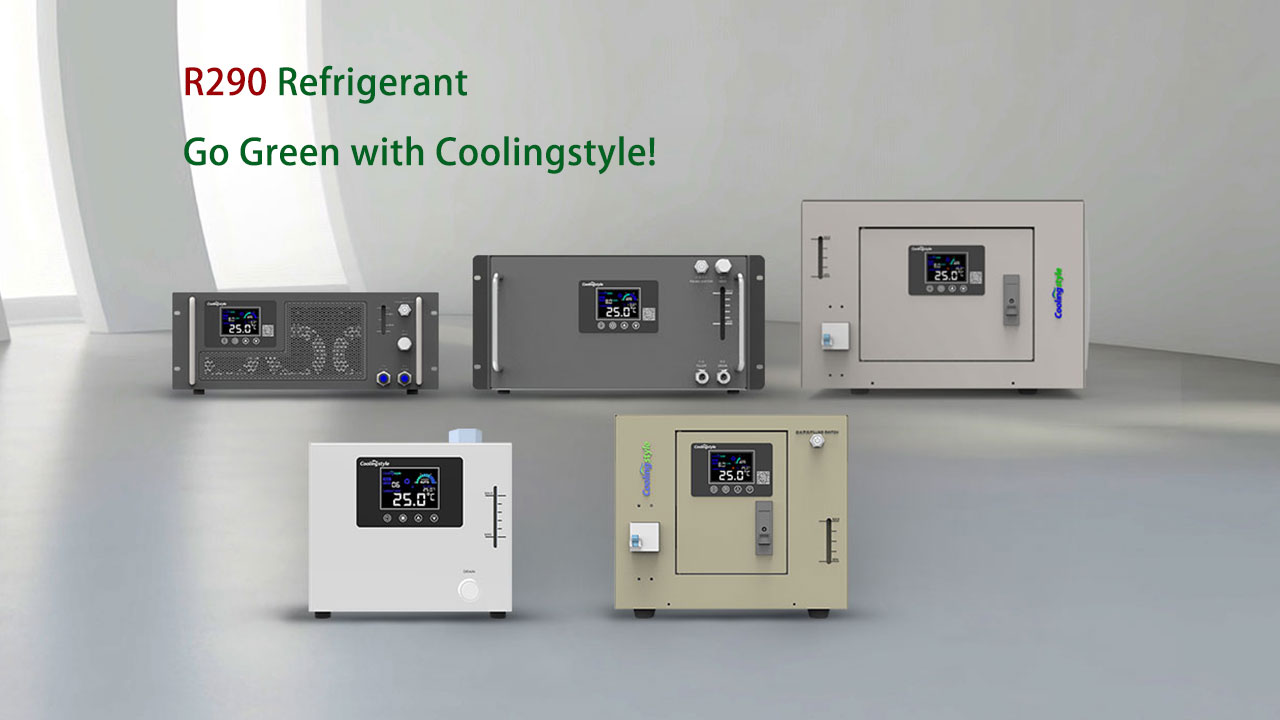
冷却风格, a specialist in micro precision cooling solutions, provides advanced chiller systems tailored to modern industrial needs. With ±0.01°C temperature control accuracy, compact mini design, 环保R290制冷剂, and high-efficiency microfluidic channel heat exchange, coolingstyle delivers optimized solutions regardless of cooling method.
👉 Discover advanced solutions: 冷水机
1. Overview
Chillers are essential systems designed to remove heat from industrial processes. The two most common types are air-cooled and water-cooled chillers, each using a different method to dissipate heat.
风冷式冷水机
Air-cooled chillers use ambient air to remove heat via condenser fans. They are typically easier to install and require less infrastructure.
水冷冷水机
Water-cooled chillers use cooling towers and water circulation systems to dissipate heat more efficiently, especially in large-scale operations.
主要差异:
- Air-cooled: 安装简单, lower upfront cost
- Water-cooled: Higher efficiency, better for large loads
- Air-cooled: Suitable for compact systems
- Water-cooled: Requires additional infrastructure
2. Industry Pain Points
2.1 Confusing Selection Criteria
Many users struggle to determine which chiller type best suits their application due to varying requirements.
2.2 Space Limitations
Water-cooled systems require cooling towers and piping, which may not be feasible in compact environments.
2.3 Energy Efficiency Concerns
Air-cooled systems may consume more energy in high-temperature environments, while water-cooled systems require additional energy for pumps and towers.
2.4 Maintenance Complexity
Water-cooled chillers require regular maintenance, including water treatment and system cleaning.
2.5 Precision Cooling Needs
High-end industries require ultra-precise temperature control that traditional systems may not deliver.
These challenges make it essential to evaluate both options carefully.
3. Solution and Working Principle
冷却风格 offers advanced solutions for both air-cooled and water-cooled chillers, enhanced by microfluidic channel technology.
Air-Cooled Working Principle
- Heat is absorbed by the refrigerant.
- Fans blow ambient air across condenser coils.
- Heat is released into the surrounding air.
Water-Cooled Working Principle
- Heat is transferred to water in the condenser.
- Warm water is sent to a cooling tower.
- Heat is dissipated through evaporation.
coolingstyle Key Advantages:
- ±0.01°C ultra-high precision temperature control
- Compact and miniaturized design
- 环保R290制冷剂
- Advanced microfluidic channel heat exchanger
- Customized solutions for specific industries
Microfluidic channels significantly enhance heat transfer efficiency, allowing even compact air-cooled systems to achieve high performance.
👉 Explore our solutions: 冷水机
4. Case Studies
Case 1: 激光行业 (Air-Cooled)
A compact laser system required precise cooling in a limited space. coolingstyle provided a micro air-cooled chiller with ±0.01°C precision, ensuring stable operation without requiring additional infrastructure.
Case 2: 半导体制造 (水冷)
A large-scale semiconductor facility required high cooling efficiency. coolingstyle implemented a water-cooled system with microchannel heat exchangers, 提高能源效率和稳定性.
Case 3: Medical Equipment
Medical devices required quiet and reliable cooling. A compact air-cooled micro chiller delivered efficient performance with minimal noise.
- Improved system stability
- Reduced energy consumption
- Enhanced equipment lifespan
- Optimized installation flexibility
5. Summary
Both air-cooled and water-cooled chillers have their advantages. Air-cooled systems are ideal for compact and flexible installations, while water-cooled systems excel in large-scale, high-efficiency applications.
The best choice depends on your specific requirements, including space, budget, 冷却能力, and precision needs. 冷却风格 provides tailored solutions that combine compact design, 高精度, and environmental sustainability.
👉 Find the right system for your needs: 冷水机
6. 常问问题
1. Which is more energy-efficient, air-cooled or water-cooled chillers?
Water-cooled chillers are generally more efficient for large-scale applications, while air-cooled systems are more practical for smaller setups.
2. Are air-cooled chillers easier to install?
是的, they do not require cooling towers or complex piping systems.
3. Do water-cooled chillers require more maintenance?
是的, they require water treatment and regular system maintenance.
4. Which type is better for compact equipment?
Air-cooled chillers are better suited for compact and space-limited environments.
5. Can coolingstyle customize both types?
是的, coolingstyle offers customized solutions for both air-cooled and water-cooled systems.