Resin 3D printing technologies such as SLA, DLP, and LCD have become the go-to solutions for applications requiring exceptional detail, smooth surfaces, and tight tolerances. From dental models to industrial prototypes, accuracy is everything.
然而, achieving consistent precision is not just about using high-end printers or premium resins. One of the most critical yet often overlooked factors is 温度控制. Even minor fluctuations can affect resin viscosity, curing behavior, and ultimately, dimensional accuracy.
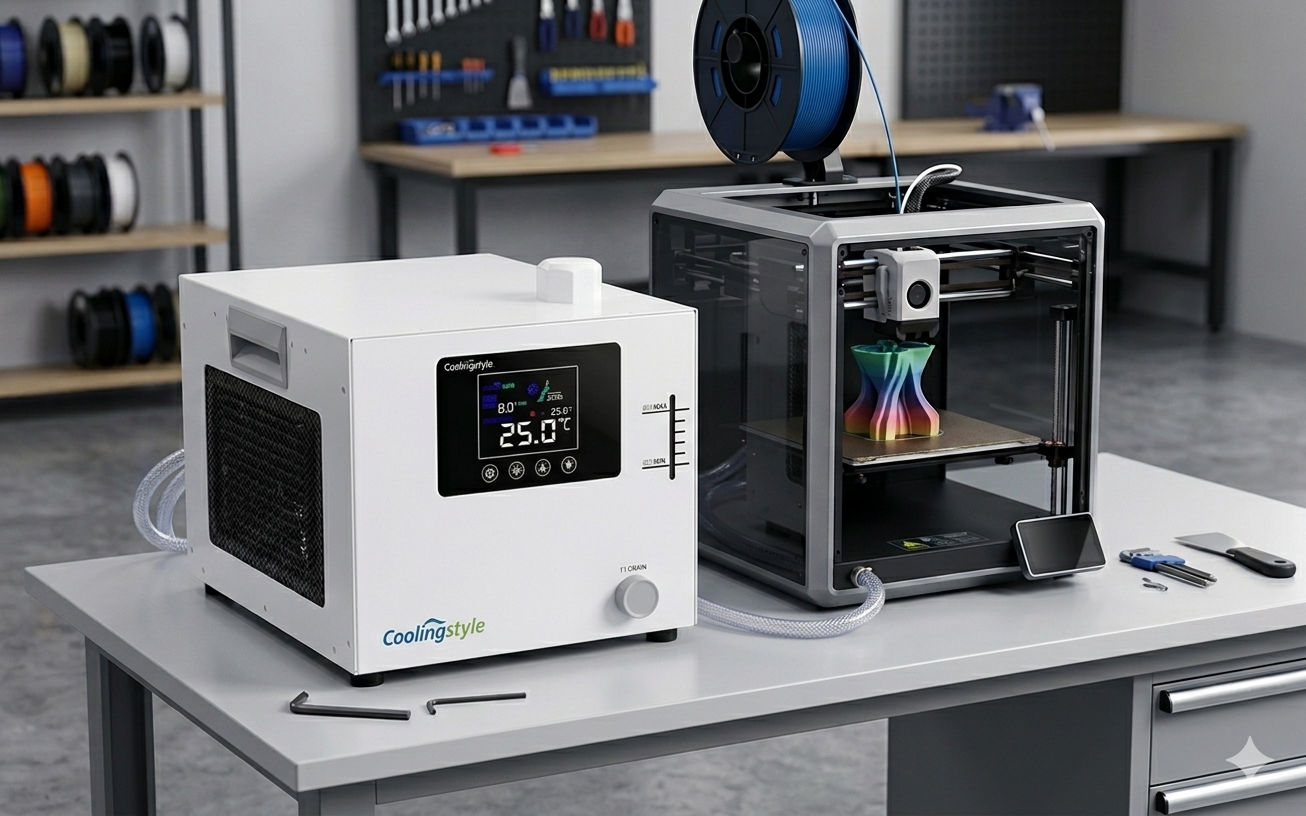
在这份综合指南中, we explore how chillers improve resin 3D printing accuracy and why advanced solutions from 冷却风格——特色 ±0.01℃精度, 紧凑的微型设计, 环保R290制冷剂, 和微通道热交换技术—are essential for high-precision applications.
The Importance of Accuracy in Resin 3D Printing
Accuracy in resin printing is defined by how closely a printed object matches its digital design. This includes:
- Dimensional precision
- Surface smoothness
- Feature detail
- Repeatability
Any inconsistency in temperature can compromise these critical factors.
How Temperature Affects Resin Behavior
Viscosity Changes
Temperature directly impacts resin flow. Higher temperatures reduce viscosity, while lower temperatures increase it, affecting layer formation.
Curing Speed
Temperature influences how quickly resin cures under UV exposure, impacting layer consistency.
Material Stability
Fluctuations can lead to uneven curing, causing distortions and inaccuracies.
Common Accuracy Issues in Resin Printing
- Dimensional deviations
- Layer inconsistencies
- Surface defects
- Warping and shrinkage
Many of these issues can be traced back to unstable thermal conditions.
为什么传统冷却方法存在不足
Standard cooling methods, such as fans or passive airflow, are often insufficient for resin printing:
- Lack of precision
- Inconsistent cooling performance
- Limited effectiveness in controlled environments
For high-accuracy applications, more advanced solutions are required.
How Chillers Improve Accuracy
1. 精确的温度控制
Chillers maintain a stable temperature, eliminating fluctuations that affect resin performance.
先进的系统,如 冷水机 solutions offer ±0.01℃精度, 确保最佳条件.
2. Consistent Resin Behavior
Stable temperatures ensure predictable viscosity and curing, leading to uniform layers.
3. Reduced Warping and Shrinkage
Controlled cooling minimizes internal stress within printed parts.
4. Improved Repeatability
Reliable thermal conditions enable consistent results across multiple prints.
冷却风格的优势
冷却风格 is engineered for precision-critical applications like resin 3D printing.
主要特点:
- 超高精度控温 (±0.01℃)
- 紧凑的微型设计,易于集成
- 环保R290制冷剂
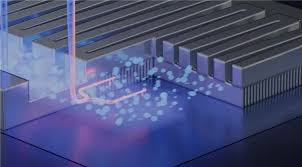
- 先进的微通道换热技术
- Stable and energy-efficient operation
These features ensure a controlled environment for achieving maximum accuracy.
实际应用
Dental Models
High accuracy ensures proper fit and functionality.
Medical Devices
Precision is critical for safety and performance.
Industrial Prototypes
Accurate models reduce development time and costs.
Using a professional 冷水机 system significantly enhances these applications.
Best Practices for Maximizing Accuracy
- Maintain stable ambient conditions
- Use high-quality resins
- Monitor temperature continuously
- Invest in advanced cooling systems
要避免的常见错误
- 忽略温度波动
- Using inadequate cooling systems
- 忽视维护
- Overlooking environmental factors
Future Trends in Resin Printing Accuracy
- Smart temperature control systems
- More compact and efficient chillers
- 采用环保制冷剂
- 与自动化工作流程集成
结论
Achieving high accuracy in resin 3D printing requires precise control over every aspect of the process, especially temperature. Without stable thermal conditions, even the best equipment cannot deliver consistent results.
Advanced chillers provide the precision and reliability needed to optimize resin behavior and improve print quality. 以其 0.01℃精度, 紧凑的设计, 环保R290制冷剂, 和微通道热交换技术, 冷却风格 offers a powerful solution for achieving superior accuracy.
By investing in the right cooling system, you can unlock the full potential of resin 3D printing and achieve consistently high-quality results.