As 3D printing continues to evolve across industries, maintaining precise temperature control has become essential for achieving consistent, hochwertige Ergebnisse. Among the most effective solutions are chiller systems, which play a critical role in thermal management.
jedoch, Nicht alle Kältemaschinen sind gleich. One of the most common questions professionals face is: Should you choose an air-cooled or water-cooled chiller?

In diesem umfassenden Ratgeber, we break down the differences between air-cooled and water-cooled 3D printer chillers, compare their performance, and explain how advanced solutions like Kühlstil– mit ±0,01°C Genauigkeit, kompaktes Mikrodesign, umweltfreundliches Kältemittel R290, und Mikrokanal-Wärmeaustauschtechnologie—deliver superior results.
Was ist ein 3D-Druckerkühler??
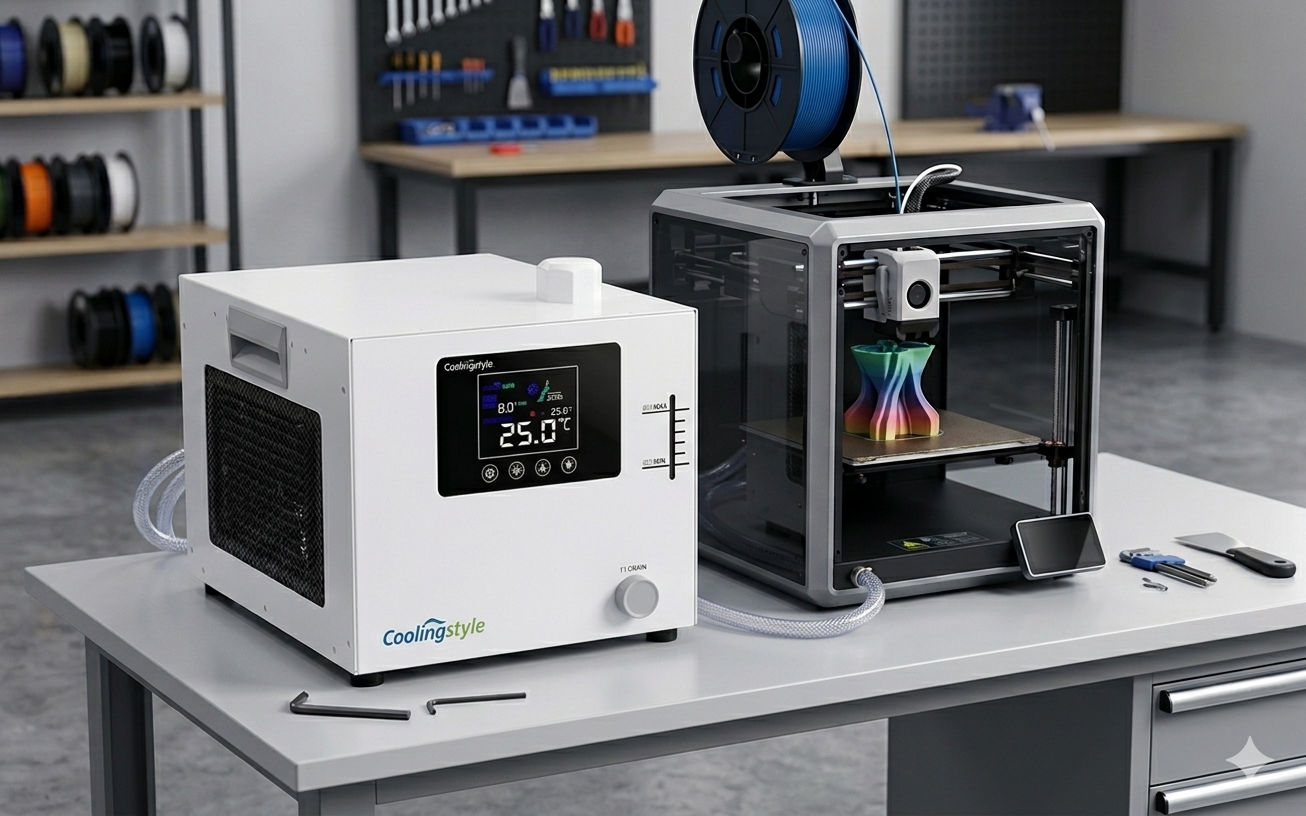
A chiller is a cooling system designed to remove heat from a 3D printer and maintain stable operating temperatures. Fortgeschrittene Systeme wie Kühler solutions provide precise control, ensuring optimal performance and print quality.
Understanding Air-Cooled Chillers
Air-cooled chillers use fans to dissipate heat into the surrounding air. They are commonly used due to their simplicity and ease of installation.
Advantages of Air-Cooled Chillers
- Einfache Installation
- No additional water source required
- Niedrigere Vorabkosten
- Compact and portable
Limitations of Air-Cooled Chillers
- Lower cooling efficiency
- Performance affected by ambient temperature
- Höherer Geräuschpegel
- Less precise temperature control
Understanding Water-Cooled Chillers
Water-cooled chillers use liquid circulation to remove heat more efficiently. These systems are widely used in industrial and high-performance applications.
Professional-grade Kühler solutions often utilize advanced water-cooling technology for superior performance.
Advantages of Water-Cooled Chillers
- Höhere Kühleffizienz
- More stable temperature control
- Better performance in high-demand environments
- Lower noise levels
Limitations of Water-Cooled Chillers
- Komplexere Installation
- Higher initial cost
- Requires maintenance
Air-Cooled vs Water-Cooled: Schlüsselunterschiede
| Besonderheit | Air-Cooled Chiller | Water-Cooled Chiller |
|---|---|---|
| Kühleffizienz | Mäßig | Hoch |
| Temperaturpräzision | Beschränkt | Ultra-high (±0,01°C) |
| Geräuschpegel | Höher | Untere |
| Installation | Einfach | Komplexer |
| Bester Anwendungsfall | Small-scale printing | Industriell & hohe Präzision |
Which One Is Better for 3D Printing?
The choice depends on your application:
- Luftgekühlte Systeme are suitable for basic or small-scale printing.
- Wassergekühlte Systeme are ideal for high-speed, large-format, and precision-critical applications.
For demanding environments, investing in a high-performance Kühler system is the best option.
Der Coolingstyle-Vorteil
Kühlstil combines advanced engineering with cutting-edge technology to deliver superior cooling performance.
Kernfunktionen:
- Ultrapräzise Temperaturregelung (±0,01°C)
- Compact micro design for flexible integration
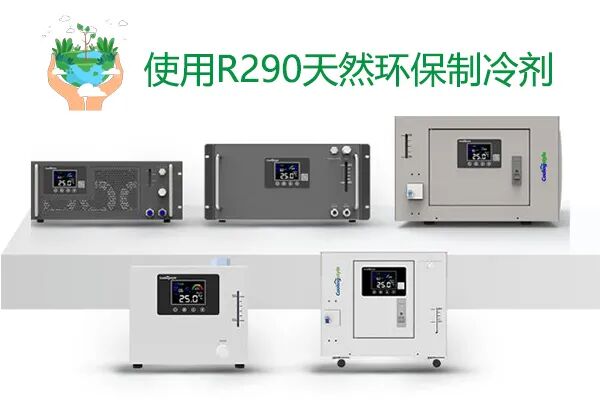
- Umweltfreundliches Kältemittel R290
- Fortschrittliche Mikrokanal-Wärmeaustauschtechnologie
- Energieeffiziente und zuverlässige Leistung
These features make coolingstyle an ideal choice for both air-cooled and water-cooled applications.
Anwendungen aus der Praxis
Desktop 3D Printing
Air-cooled systems may be sufficient for low-demand use.
Industrielle Produktion
Water-cooled systems provide the stability needed for continuous operation.
High-Speed Printing
Efficient cooling is essential to maintain performance at high speeds.
Präzisionsanwendungen
Stable temperatures ensure accuracy in medical and engineering prints.
Cost vs Performance Consideration
While air-cooled chillers have lower upfront costs, water-cooled systems offer better long-term value through:
- Reduzierte Ausfallraten
- Verbesserte Effizienz
- Höhere Produktivität
- Niedrigere Betriebskosten
Future Trends in Chiller Technology
- Intelligente Kühlsysteme mit Echtzeitüberwachung
- More compact high-performance designs
- Verstärkter Einsatz umweltfreundlicher Kältemittel
- Integration mit automatisierten Arbeitsabläufen
Fazit
Choosing between air-cooled and water-cooled chillers depends on your specific needs, but the importance of proper cooling cannot be overstated. While air-cooled systems offer simplicity, water-cooled solutions provide the performance and precision required for advanced 3D printing.
Mit seinem 0.01°C-Präzision, kompaktes Design, umweltfreundliches Kältemittel R290, und Mikrokanal-Wärmeaustauschtechnologie, Kühlstil delivers a powerful solution that meets the demands of modern 3D printing.
By selecting the right cooling system, Sie können die Druckqualität deutlich verbessern, Ausfälle reduzieren, und die Gesamtproduktivität steigern.