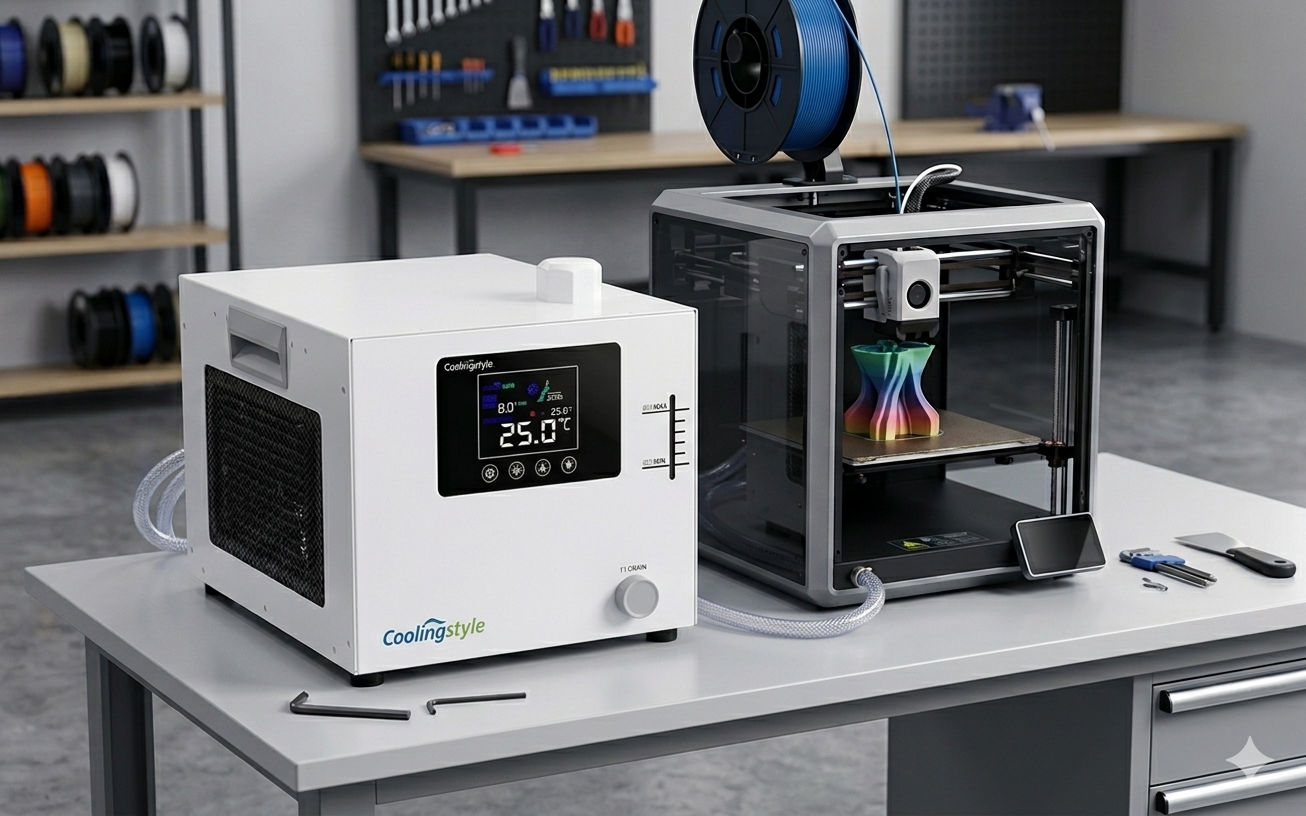
The adoption of 3D printing in dental and medical industries has revolutionized the way professionals design, prototype, and manufacture highly customized solutions. From dental aligners to surgical guides and prosthetics, precision and reliability are non-negotiable.
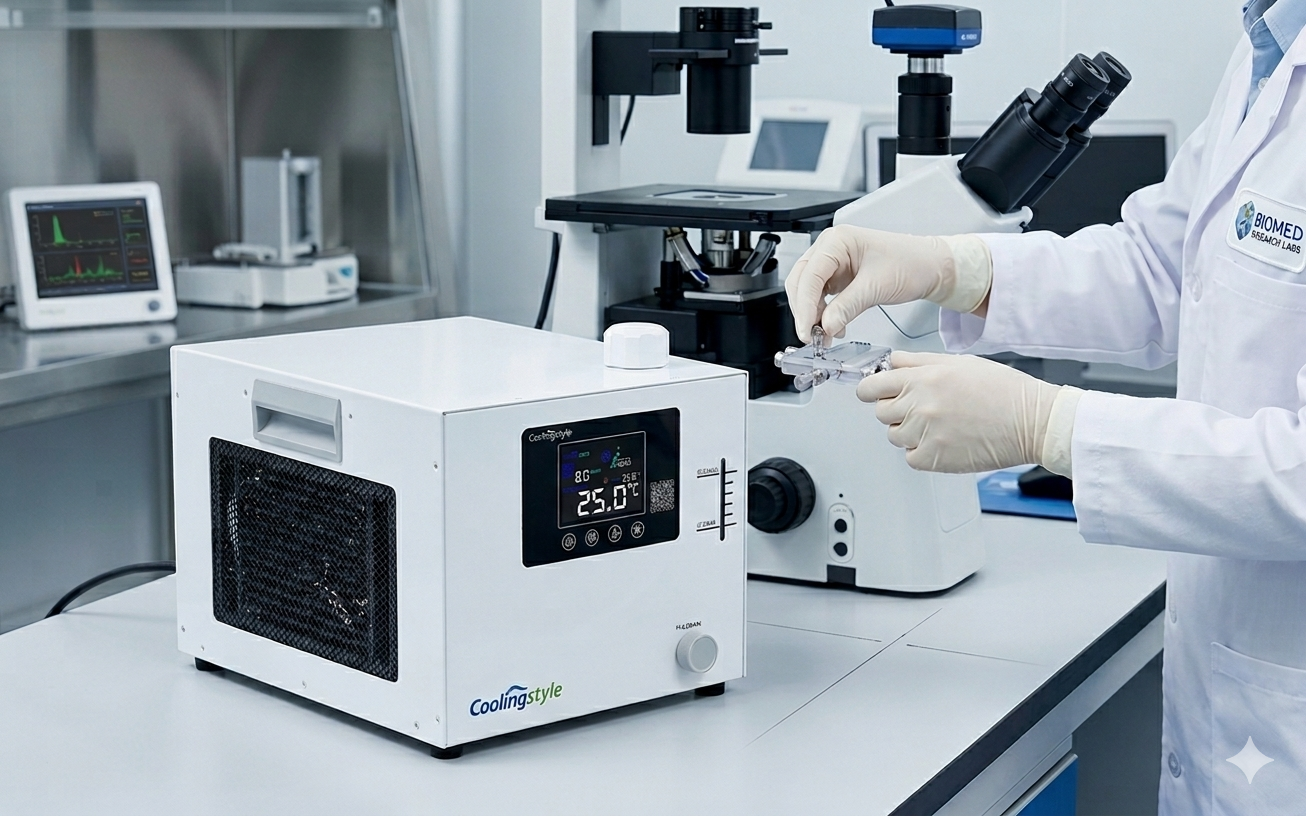
Sin embargo, achieving this level of accuracy requires more than advanced printers and materials—it demands control preciso de la temperatura. Even minor thermal fluctuations can compromise dimensional accuracy, material properties, and overall product quality.
En este articulo, we explore the critical role of 3D printer chillers in dental and medical applications, and how advanced solutions from estilo de enfriamiento—presentando Precisión de ±0,01°C, microdiseño compacto, refrigerante R290 ecológico, y tecnología de intercambio de calor por microcanales—help ensure consistent, high-quality outcomes.
Why Temperature Control Is Critical in Medical 3D Printing
Unlike general-purpose printing, medical and dental applications demand extremely tight tolerances and repeatability.
Key Requirements Include:
- High dimensional accuracy
- Consistent material properties
- Smooth surface finishes
- Reliable repeatability
Temperature instability can disrupt all of these factors, making precise cooling essential.
Common Medical and Dental 3D Printing Applications
Dental Aligners and Models
Accurate models are essential for creating effective orthodontic solutions.
Surgical Guides
Precision is critical to ensure safe and accurate surgical procedures.
Prosthetics and Implants
Consistency and durability are required for long-term patient use.
Custom Medical Devices
Each device must meet strict quality and performance standards.
The Challenges of Thermal Management in Medical Printing
1. Sensitive Materials
Medical-grade resins and polymers require tightly controlled temperature ranges.
2. High Precision Requirements
Even slight temperature variations can lead to dimensional inaccuracies.
3. Operación continua
Labs and clinics often run printers continuously, increasing heat buildup.
4. Regulatory Standards
Medical applications require strict compliance with quality standards.
How Chillers Improve Medical 3D Printing
Stable Temperature Control
Sistemas avanzados como Chiller solutions maintain consistent temperatures, ensuring reliable results.
Enhanced Material Performance
Stable thermal conditions improve resin curing and material behavior.
Reduced Print Failures
Minimizing temperature fluctuations reduces defects and waste.
Improved Workflow Efficiency
Reliable cooling supports continuous production without interruptions.
The coolingstyle Advantage in Medical Applications
estilo de enfriamiento is designed to meet the demanding requirements of medical and dental 3D printing.
Beneficios clave:
- Control de temperatura de ultra alta precisión (±0,01°C)
- Compact micro design for limited lab spaces
- Refrigerante R290 ecológico
- Tecnología avanzada de intercambio de calor por microcanales
- Tranquilo, estable, y operación de eficiencia energética
These features ensure consistent performance in environments where precision is critical.
Real-World Benefits for Dental and Medical Labs
Higher Accuracy
Precise cooling ensures that printed models match digital designs.
Improved Patient Outcomes
Better-fitting devices lead to more effective treatments.
Reduced Material Waste
Fewer failed prints save both time and resources.
Operational Efficiency
Reliable systems reduce downtime and maintenance needs.
Adopting a professional Chiller system is a key step toward achieving these benefits.
Choosing the Right Chiller for Medical Use
- se calienta más y se convierte en gas y finalmente es empujado de regreso al compresor
- Compact design for lab environments
- Eficiencia energética
- Operación de bajo ruido
- Reliable long-term performance
Advanced solutions like Chiller systems meet all these criteria.
Future Trends in Medical 3D Printing Cooling
- Integración con sistemas de monitoreo inteligentes
- Increasing use of eco-friendly refrigerants
- More compact and efficient designs
- Greater automation in medical workflows
Conclusión
3D printing is transforming dental and medical industries, enabling unprecedented levels of customization and precision. Sin embargo, achieving consistent results requires more than advanced printers—it demands reliable temperature control.
High-performance chillers provide the stability and precision needed for these critical applications. con su 0.01Precisión en °C, diseño compacto, refrigerante R290 ecológico, y tecnología de intercambio de calor por microcanales, estilo de enfriamiento offers a powerful solution for modern medical and dental 3D printing challenges.
By investing in proper cooling systems, labs and clinics can improve accuracy, reducir fallas, and deliver better outcomes for patients.