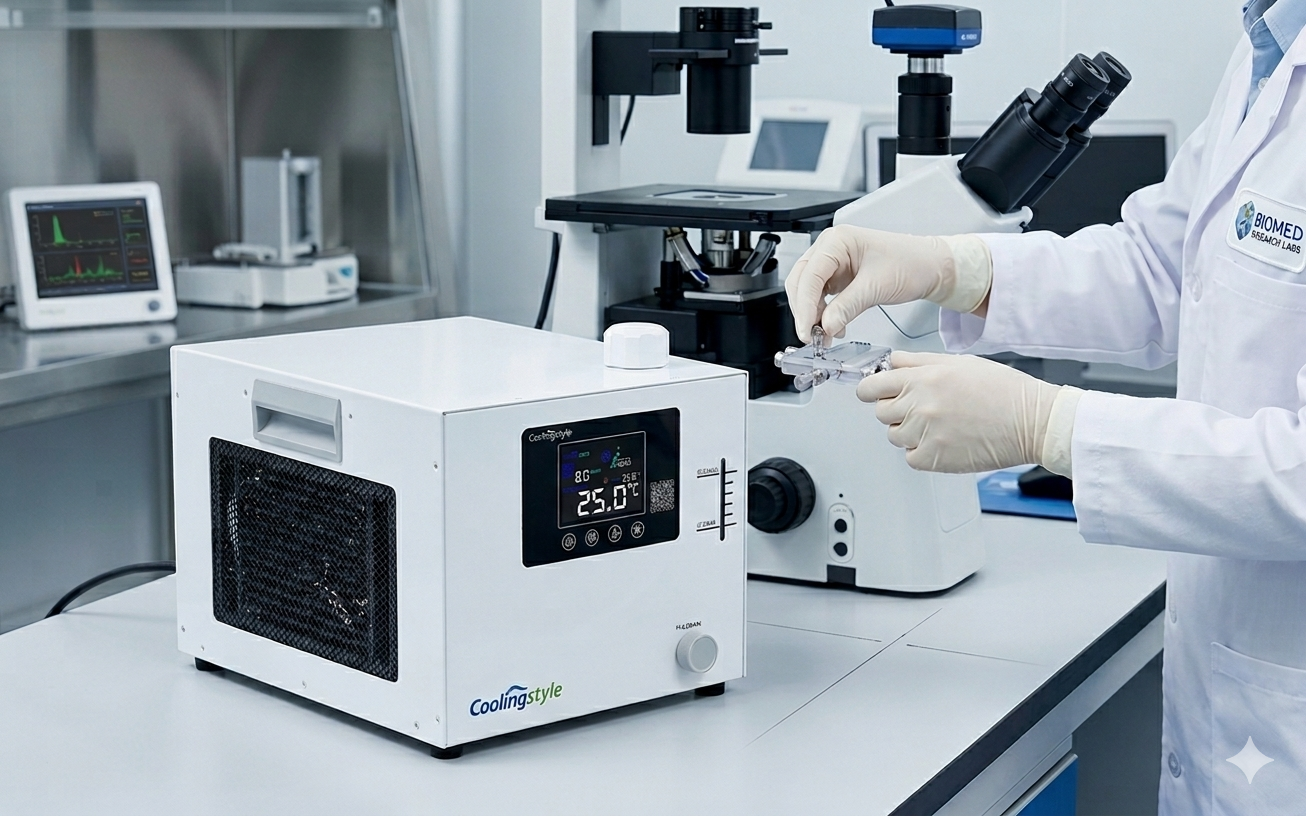
Industrial 3D printing has rapidly transformed modern manufacturing, enabling high-precision production, rapid prototyping, and customized part fabrication. Sin embargo, as production scales and complexity increases, one critical factor becomes impossible to ignore: gestión térmica.
Unlike desktop systems, industrial 3D printers operate under demanding conditions—long print cycles, high temperatures, and continuous workloads. Sin enfriamiento adecuado, these systems can suffer from instability, precisión reducida, and costly downtime.
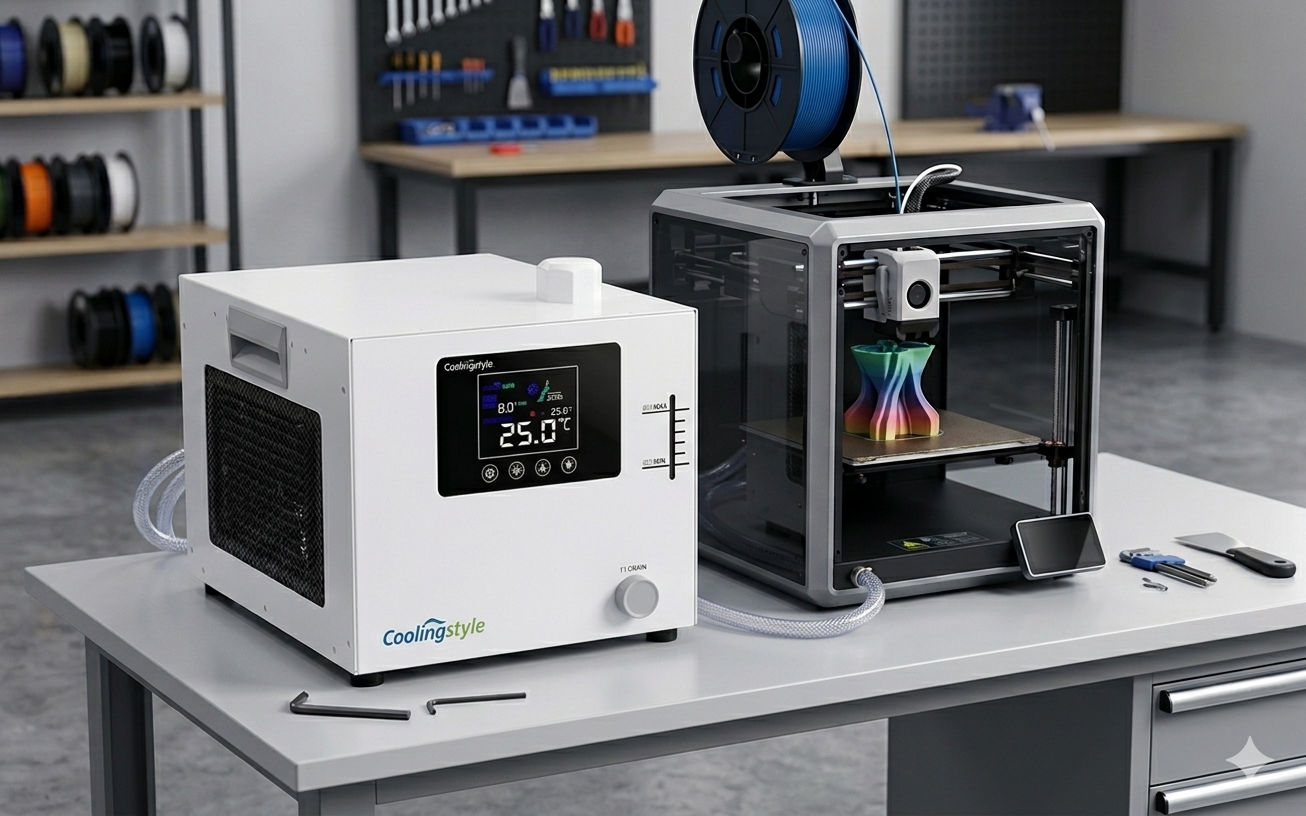
En esta completa guía, we will explore why industrial 3D printing requires advanced cooling solutions and how high-performance systems like estilo de enfriamiento—presentando Precisión de ±0,01°C, microdiseño compacto, refrigerante R290 ecológico, y tecnología de intercambio de calor por microcanales—deliver the reliability and efficiency modern manufacturing demands.
The Challenges of Industrial 3D Printing
Industrial-grade 3D printing introduces a range of thermal challenges that go far beyond typical desktop setups.
1. Operación continua
Industrial printers often run 24/7, generating significant heat over extended periods.
2. Materiales de alta temperatura
Materials such as PEEK, Nylon, and advanced resins require precise thermal conditions to perform correctly.
3. Large Build Volumes
Bigger prints require longer durations, increasing the risk of temperature instability.
4. Complex Components
High-precision parts demand consistent environmental conditions to maintain dimensional accuracy.
Why Basic Cooling Systems Are Not Enough
Standard air cooling systems are insufficient for industrial applications due to:
- Capacidad de refrigeración limitada
- Control de temperatura inconsistente
- Inability to support continuous workloads
- Higher noise and inefficiency
To meet industrial demands, more advanced solutions are required.
The Role of Advanced Chiller Systems
Control de temperatura preciso
Industrial applications require extremely stable temperatures. Sistemas avanzados como Chiller solutions ensure minimal fluctuation, maintaining consistent performance.
Disipación de calor eficiente
Water-based chillers remove heat more effectively than air-based systems, ensuring optimal operating conditions.
Support for Continuous Production
High-performance chillers are designed for long-term operation, making them ideal for industrial workflows.
Improved Product Quality
Stable thermal conditions lead to better surface finish, exactitud dimensional, and material consistency.
Key Benefits of Using a Chiller in Industrial 3D Printing
- Enhanced print reliability
- Reduced failure rates
- Menores costos de mantenimiento
- Eficiencia de producción mejorada
- Scalable operations
Adopting a professional Chiller system is essential for industrial success.
La ventaja del estilo de refrigeración
estilo de enfriamiento is engineered to meet the rigorous demands of industrial 3D printing.
Core Advantages:
- Control de temperatura de ultra alta precisión (±0,01°C)
- Microdiseño compacto para una instalación flexible
- Refrigerante R290 ecológico para la sostenibilidad
- Tecnología avanzada de intercambio de calor por microcanales
- High energy efficiency and long-term reliability
These features ensure consistent performance even under the most demanding conditions.
Aplicaciones en todas las industrias
Aeroespacial
Precision and reliability are critical. Advanced cooling ensures consistent material performance.
Automotive
High-volume production requires stable thermal management for efficiency.
Médico
Accurate and repeatable results are essential for medical-grade components.
Fabricación
Continuous production demands reliable and efficient cooling systems.
How to Choose the Right Chiller for Industrial Use
- Evaluate cooling capacity requirements
- Consider temperature precision needs
- Assess installation space
- Look for energy-efficient solutions
High-performance options like Chiller systems provide the flexibility and reliability needed for industrial setups.
Future Trends in Industrial Cooling
- Smart monitoring systems
- Compact high-performance designs
- Adopción de refrigerantes ecológicos
- Integration with automated manufacturing
Conclusión
Industrial 3D printing demands more than just advanced machinery—it requires precise and reliable thermal management. Sin enfriamiento adecuado, even the most sophisticated systems can struggle to deliver consistent results.
Advanced chiller systems provide the stability, eficiencia, and scalability needed for modern manufacturing. con su 0.01Precisión en °C, diseño compacto, refrigerante R290 ecológico, y tecnología de intercambio de calor por microcanales, estilo de enfriamiento offers a powerful solution for industrial 3D printing challenges.
Investing in the right cooling system is not just about performance—it’s about ensuring long-term success in an increasingly competitive industry.