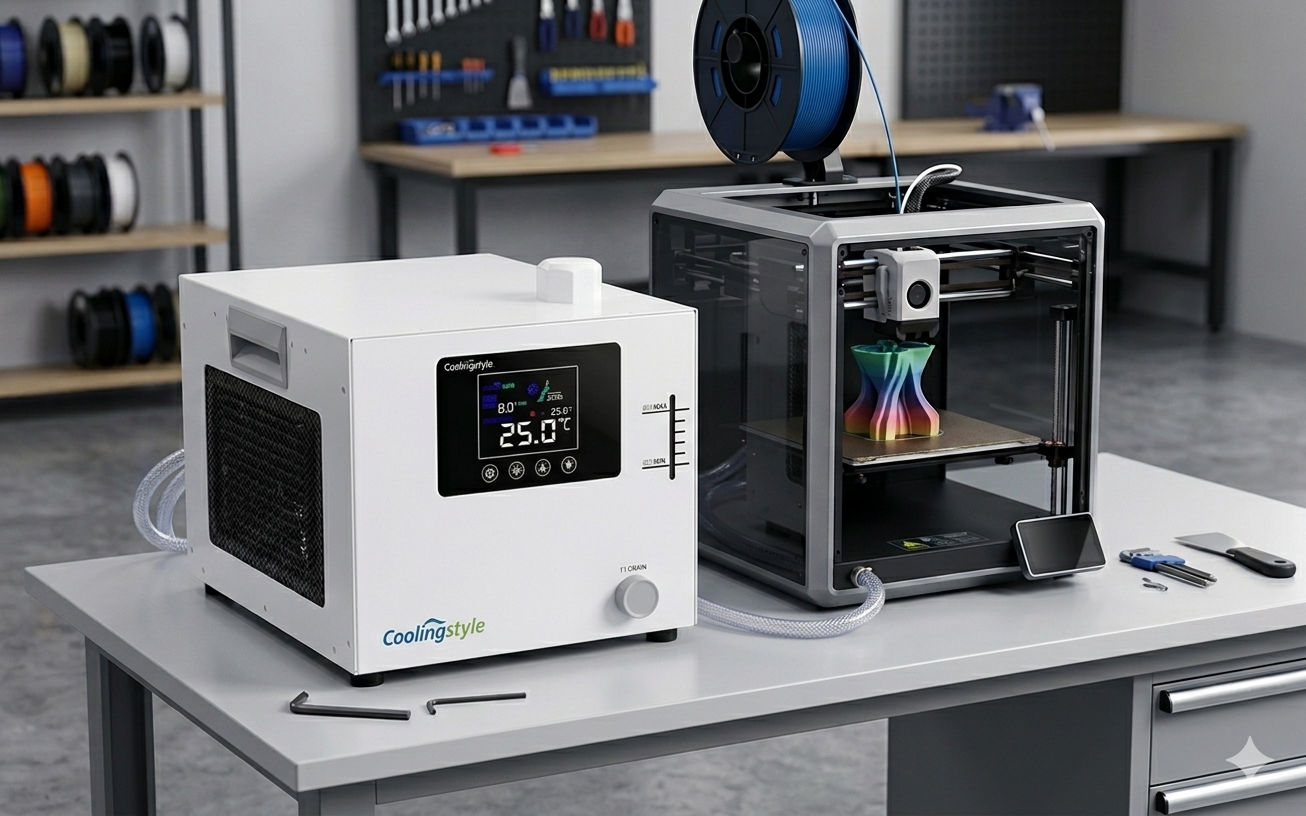
High-speed 3D printing is rapidly becoming the standard for modern manufacturing, enabling faster prototyping, increased production efficiency, and reduced turnaround times. However, as print speeds increase, so do thermal challenges.
Without proper cooling, high-speed printing can lead to overheating, inconsistent extrusion, poor layer adhesion, and ultimately, failed prints. This makes advanced cooling solutions not just beneficial, but essential.
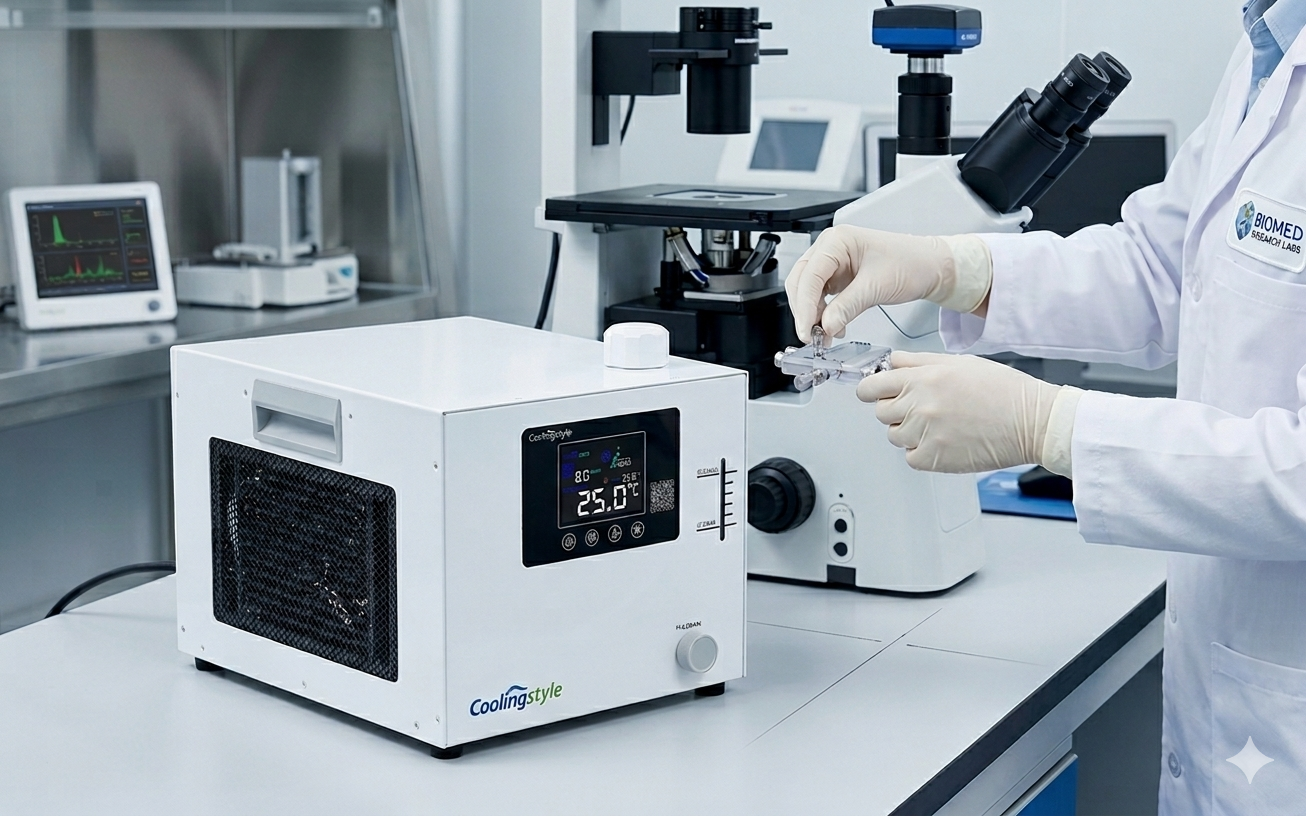
In this comprehensive guide, we will explore the importance of cooling in high-speed 3D printing and how advanced systems like coolingstyle—featuring ±0.01°C precision, compact micro design, eco-friendly R290 refrigerant, and microchannel heat exchange technology—can deliver stable, high-performance results.
Why Cooling Becomes Critical at High Speeds
As printing speeds increase, the amount of heat generated also rises significantly. This creates several challenges:
- Faster material deposition requires rapid cooling
- Heat accumulation can destabilize the system
- Inconsistent cooling leads to poor print quality
- Component wear increases due to thermal stress
To maintain performance, cooling systems must keep up with the demands of high-speed operation.
Common Issues in High-Speed 3D Printing
Overheating
Excessive heat can cause system instability and print defects.
Stringing and Blobbing
Improper cooling leads to uncontrolled material flow.
Layer Deformation
Insufficient cooling prevents layers from solidifying properly.
Reduced Accuracy
Temperature fluctuations impact dimensional precision.
Types of Cooling Solutions
Air Cooling Systems
Fan-based systems are simple but often insufficient for high-speed applications.
Water Cooling Systems
Water-based cooling provides more efficient heat removal.
Chiller-Based Systems
Dedicated chillers offer precise temperature control and are ideal for high-speed printing environments.
Professional solutions like Chiller systems provide the performance needed for demanding applications.
How Advanced Cooling Improves High-Speed Printing
1. Maintains Temperature Stability
Stable temperatures ensure consistent material behavior and print quality.
2. Enhances Layer Solidification
Proper cooling allows each layer to solidify quickly and evenly.
3. Reduces Thermal Stress
Controlled cooling minimizes stress on both materials and components.
4. Supports Continuous Operation
Reliable cooling systems enable long, uninterrupted print jobs.
The coolingstyle Advantage for High-Speed Printing
coolingstyle is specifically designed to handle the challenges of high-speed 3D printing.
Key Features:
- Ultra-high precision temperature control (±0.01°C)
- Compact micro design for space efficiency
- Eco-friendly R290 refrigerant
- Advanced microchannel heat exchange technology
- High efficiency and reliable performance
These features ensure that your system remains stable even under demanding high-speed conditions.
Real-World Benefits
Improved Print Quality
Consistent cooling results in smoother surfaces and better accuracy.
Increased Productivity
Faster print speeds without sacrificing quality.
Lower Failure Rates
Stable thermal conditions reduce defects and wasted materials.
Scalability
Reliable cooling supports expansion and higher production volumes.
Integrating a professional Chiller system is key to achieving these benefits.
Best Practices for High-Speed Cooling
- Optimize airflow and ventilation
- Use high-quality cooling systems
- Monitor temperature in real time
- Perform regular maintenance
Common Mistakes to Avoid
- Using insufficient cooling systems
- Ignoring temperature fluctuations
- Overlooking maintenance
- Relying solely on air cooling
Future Trends in High-Speed Cooling
- Smart cooling systems with automation
- More compact and efficient chillers
- Increased adoption of eco-friendly refrigerants
- Integration with AI-driven printing systems
Conclusion
High-speed 3D printing offers significant advantages, but it also introduces complex thermal challenges. Without proper cooling, increased speed can lead to reduced quality and higher failure rates.
Advanced cooling solutions provide the stability and precision needed to maintain performance at high speeds. With its 0.01°C precision, compact design, eco-friendly R290 refrigerant, and microchannel heat exchange technology, coolingstyle delivers a powerful solution for high-speed 3D printing environments.
By investing in the right cooling system, you can unlock the full potential of high-speed printing while ensuring consistent, high-quality results.