3数码印刷, also known as additive manufacturing, has transformed modern production processes across industries. From rapid prototyping to end-use part manufacturing, this technology offers unmatched flexibility and efficiency. 然而, one critical factor that often determines whether a print succeeds or fails is 温度控制.
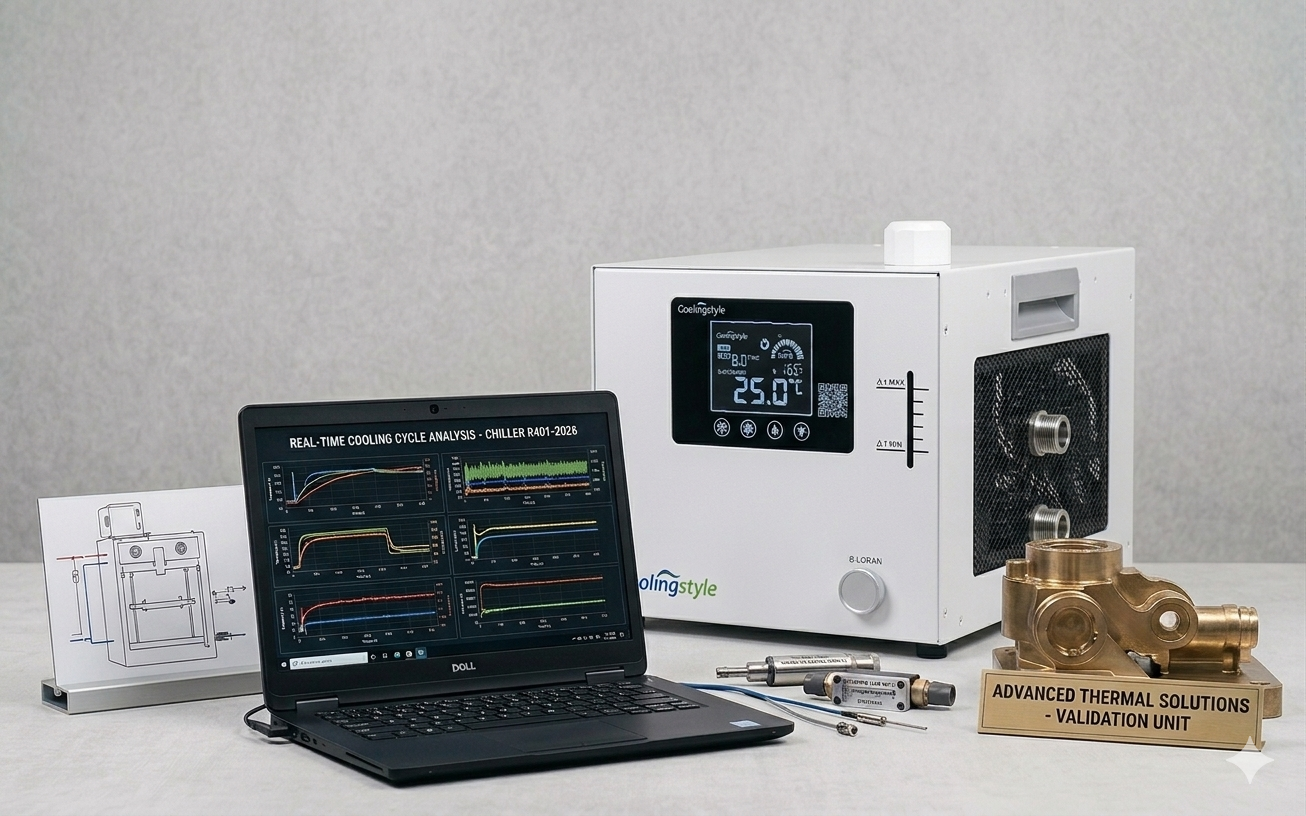
Precise thermal management directly affects material behavior, layer adhesion, dimensional accuracy, and overall print quality. Even minor fluctuations can lead to defects such as warping, cracking, or poor surface finish. 因此, advanced temperature control solutions—like those developed by 冷却风格—are becoming essential in both industrial and high-end desktop 3D printing.
Why Temperature Control Matters in 3D Printing
Material Performance Depends on Temperature
每种 3D 打印材料都有特定的温度范围以实现最佳性能:
- 解放军: 易于打印但对过热敏感
- ABS: 需要稳定的高温以防止翘曲
- 聚对苯二甲酸乙二醇酯: 需要平衡冷却以避免拉丝
- 尼龙: 由于湿度敏感性,需要精确的热稳定性
如果温度太低, 材料无法正确粘合. If too high, prints may deform or string. Maintaining a stable temperature is therefore critical.
Layer Adhesion and Strength
Consistent temperature ensures that each printed layer bonds effectively with the previous one. Poor thermal control leads to weak interlayer bonding, reducing the mechanical strength of the final product.
Warping and Shrinkage Prevention
Warping occurs when uneven cooling causes internal stress within the printed object. Proper temperature regulation ensures uniform cooling, reducing deformation and improving print reliability.
Surface Finish and Accuracy
Temperature fluctuations can result in rough surfaces, 下垂, or dimensional inaccuracies. High-precision applications require extremely stable thermal environments.
温度管理的挑战
Maintaining optimal temperature conditions is not always straightforward. Several challenges can affect performance:
- Environmental factors: Ambient temperature and airflow can disrupt prints
- Heat accumulation: Long printing sessions generate excess heat
- Limited stock cooling: Standard printers often lack precise cooling systems
- High precision demands: Advanced applications require extremely tight tolerances
These challenges highlight the need for professional-grade cooling solutions.
先进冷却系统的作用
Modern 3D printing increasingly relies on external cooling systems to maintain stable temperatures. A high-performance cooling solution should provide:
- Accurate temperature regulation
- Fast response to thermal changes
- 能源效率
- Compact and integrable design
This is where 冷却风格 delivers significant advantages.
Coolstyle 如何增强 3D 打印性能
超高精度温度控制
冷却风格 systems offer temperature accuracy of up to ±0.01℃, ensuring highly stable printing conditions. This level of precision is ideal for applications requiring strict dimensional tolerances.
紧凑和微型设计
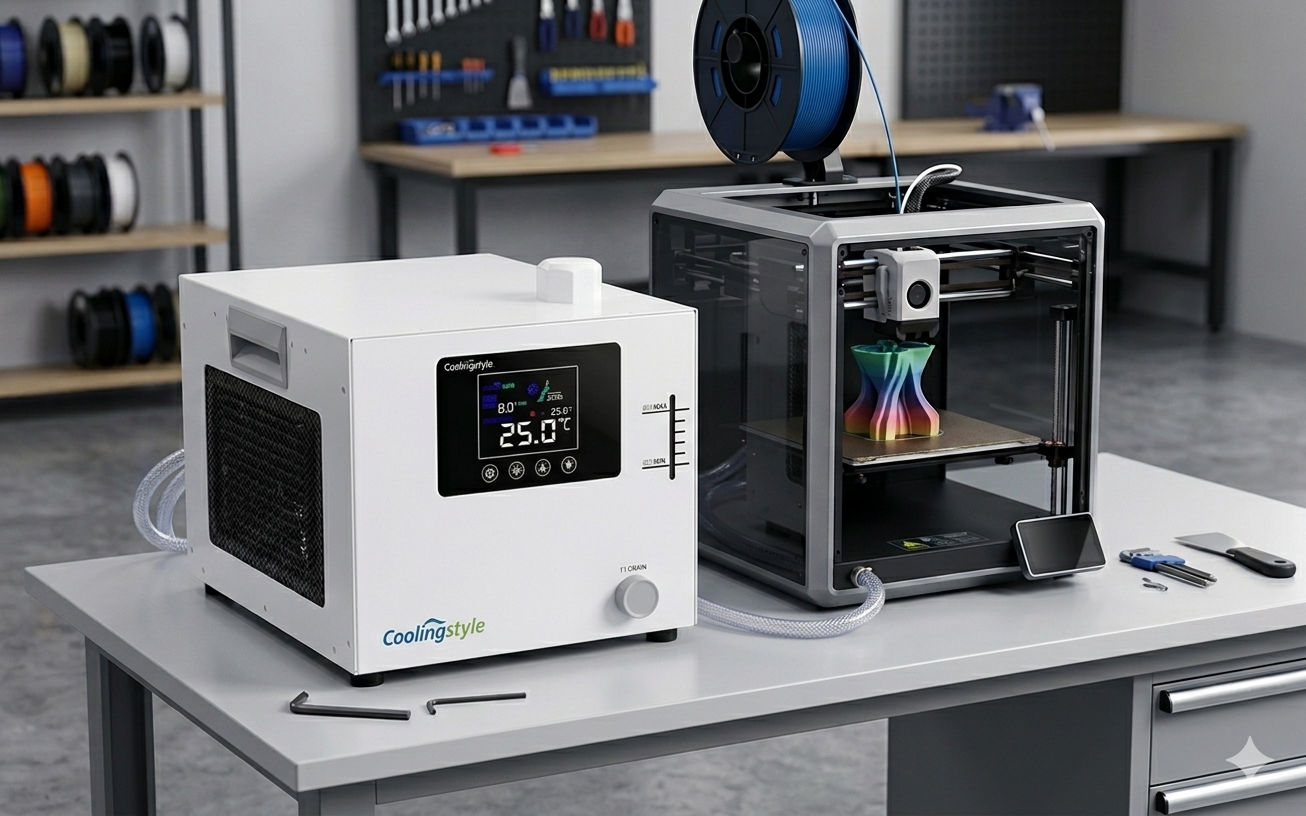
与传统的笨重冷水机不同, coolingstyle solutions feature a 袖珍的, 微尺度设计, 使它们能够轻松集成到桌面和工业 3D 打印设置中.
环保 R290 制冷剂
冷却风格用途 R290制冷剂, 天然环保的冷却介质,全球变暖潜力低且效率高.
微通道热交换技术
使用 微通道换热器 允许更快的热传递并提高冷却效率,同时减少能耗和系统尺寸.
为什么选择冷却风格?
- 0.01°C超精准控温
- 紧凑且节省空间的设计
- 环保R290制冷剂
- 先进的微通道热交换
温度控制在3D打印中的应用
工业制造
温度稳定性确保功能部件批量生产的质量稳定.
医疗和牙科打印
精确的温度控制对于生产精确的种植体和牙科模型至关重要.
电子和微型元件
微型打印需要极其稳定的热环境以防止缺陷.
研究与开发
右&D 环境受益于测试新材料和工艺的受控条件.
温度控制的最佳实践
- Keep your printer in a stable environment
- Optimize nozzle and bed temperature settings
- Monitor temperature in real time
- Upgrade to professional cooling systems like coolingstyle
3D 打印温度控制的未来趋势
- Smart systems: AI-driven real-time adjustments
- Integrated cooling: Built-in advanced systems
- Sustainability: Adoption of eco-friendly refrigerants like R290
- Higher precision: Increasing demand for ultra-precise control
结论
Temperature control is a fundamental factor in 3D printing success. It directly impacts print quality, strength, and accuracy. As technology advances, the need for precise and reliable thermal management continues to grow.
以其 0.01℃精度, 紧凑的设计, 环保R290制冷剂, 和微通道热交换技术, 冷却风格 provides an advanced solution for achieving superior 3D printing performance.
If you are looking to improve print quality and consistency, investing in a professional cooling system is one of the most effective steps you can take.