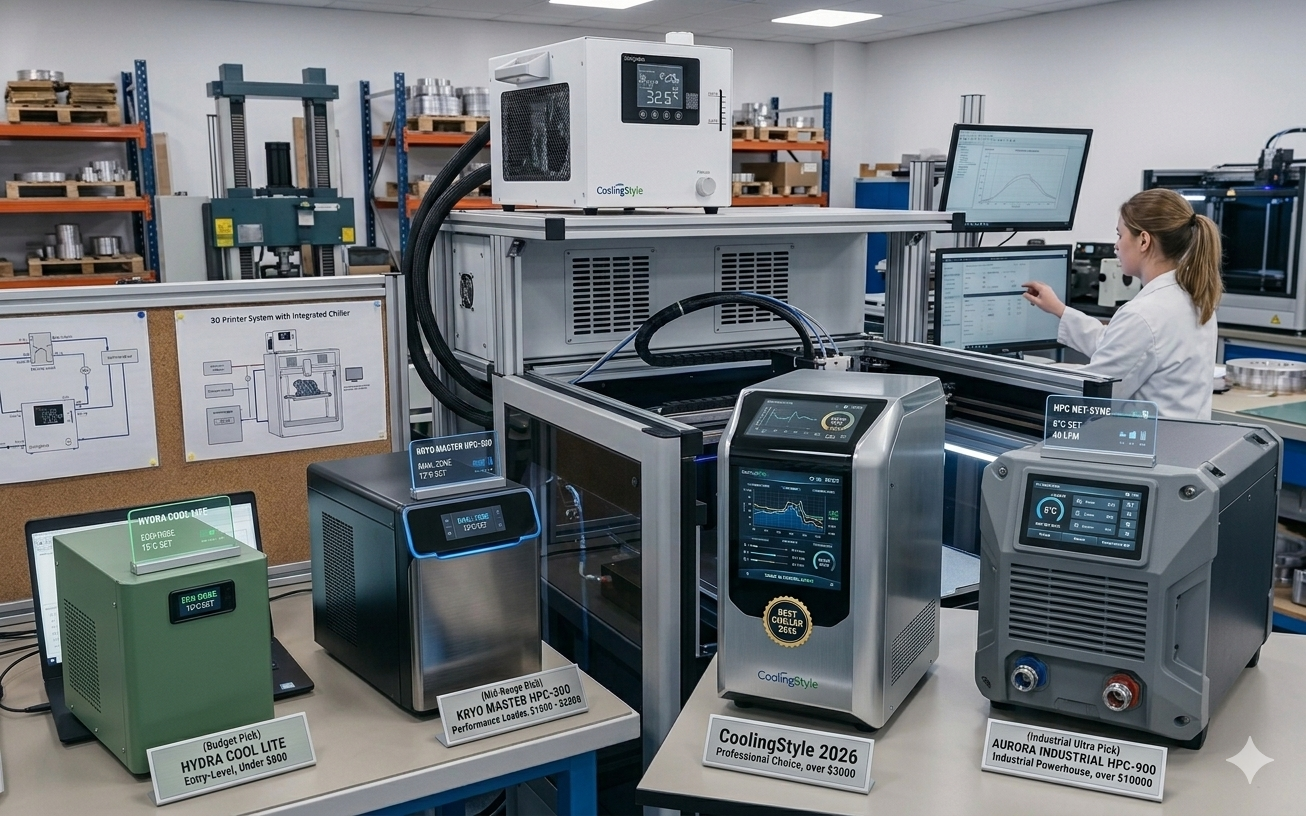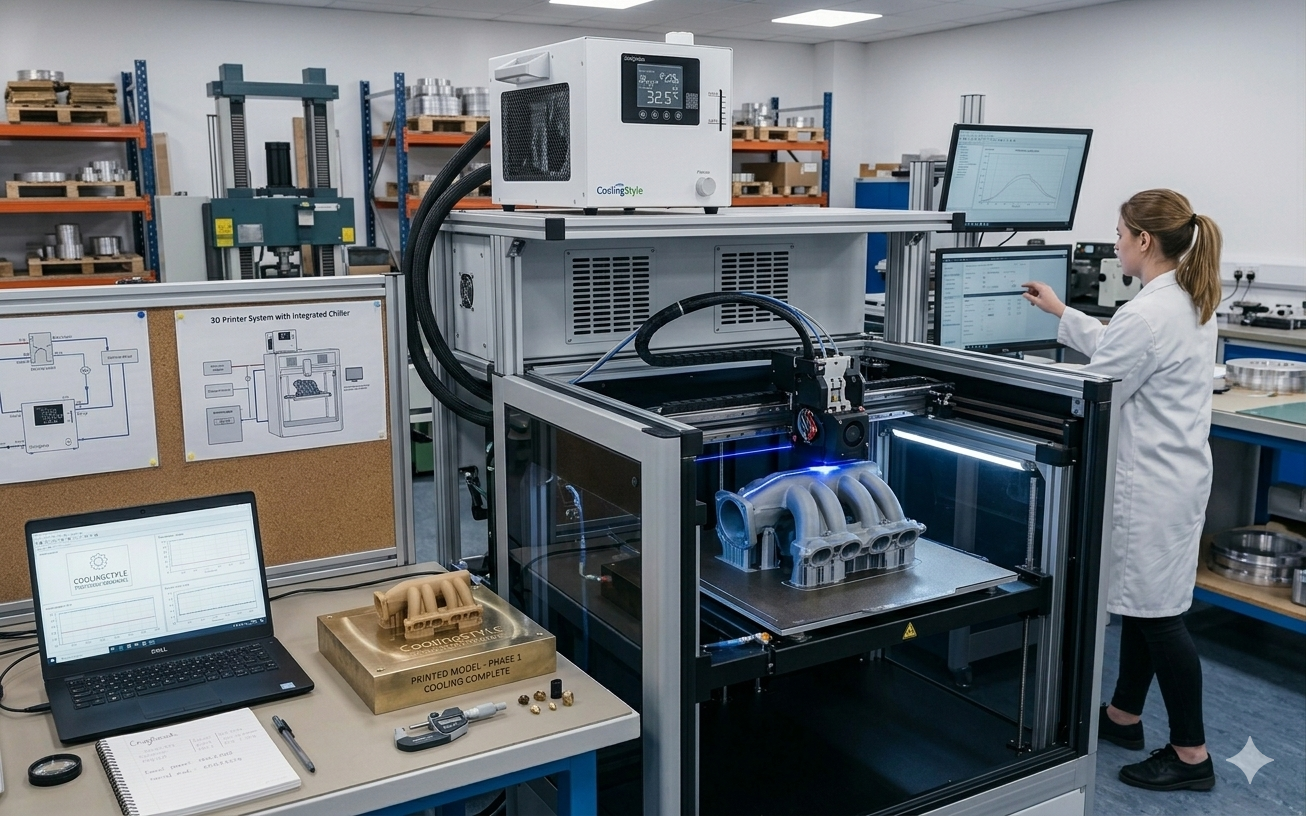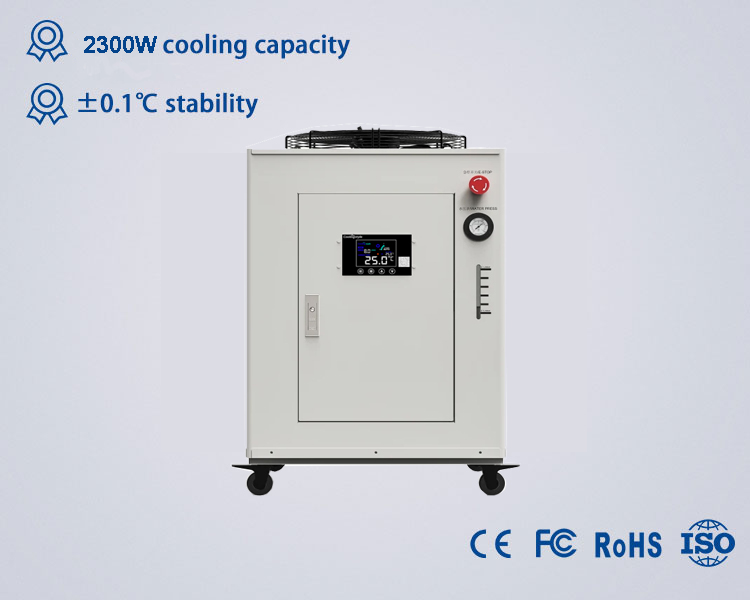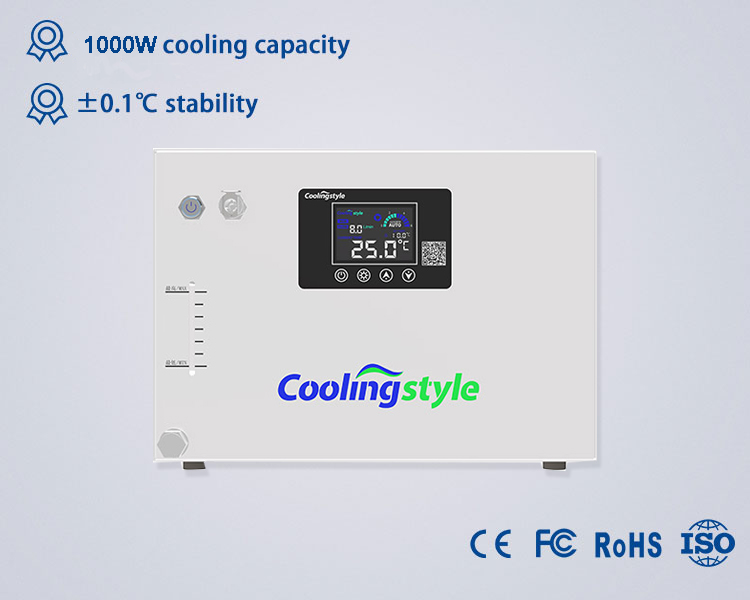
When optimizing a 3D printing setup, one common question is whether a 3D printer chiller or a traditional cooling fan is the better solution. While both serve the purpose of cooling, they differ significantly in performance, precision, and application.
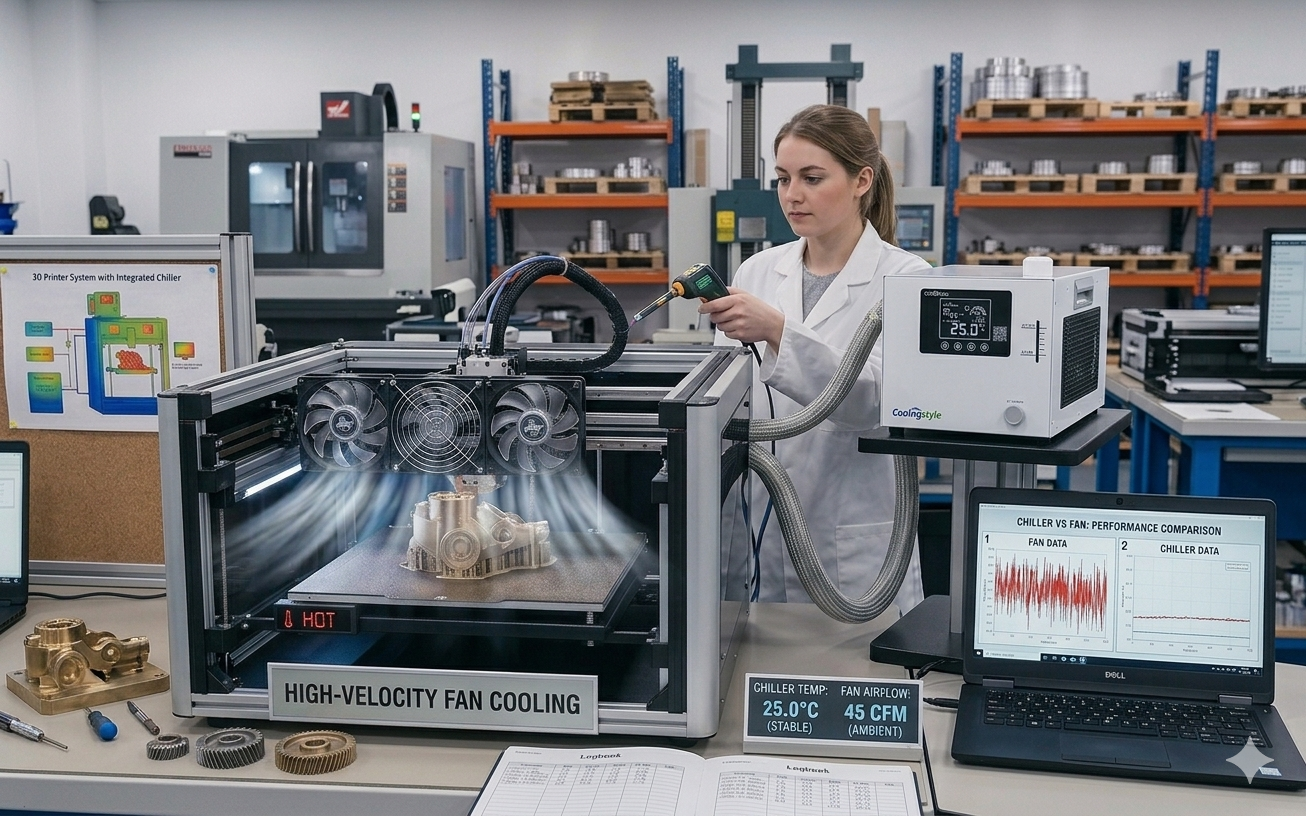
Key Differences
- Cooling Fan: Uses air to dissipate heat, suitable for basic printers.
- 3D Printer Chiller: Uses liquid cooling for precise temperature control.
Which One Should You Choose?
If you are running industrial or resin printers, a Coolingstyle 3D printer chiller offers superior stability and performance. For hobby-level use, fans may be sufficient.
How to Choose the Right 3D Printer Chiller for Your Setup
Selecting the right 3D printer chiller depends on your machine type, workload, and environment. Making the right choice ensures long-term performance and efficiency.
Factors to Consider
- Cooling capacity
- Temperature accuracy
- Energy efficiency
- Compatibility with your printer
Expert Tip
Coolingstyle recommends choosing a chiller with slightly higher capacity than required to handle peak workloads.
Why Your 3D Printer Overheats and How a Chiller Fixes It
Overheating is a common issue in 3D printing, especially in high-speed or industrial environments. Understanding the causes can help you prevent costly downtime.
Common Causes of Overheating
- Insufficient cooling systems
- High ambient temperatures
- Continuous long-duration printing
How a Chiller Solves the Problem
A 3D printer chiller from Coolingstyle provides consistent cooling, preventing overheating and ensuring stable operation.
Investing in a proper cooling system is one of the most effective ways to improve reliability and print quality.