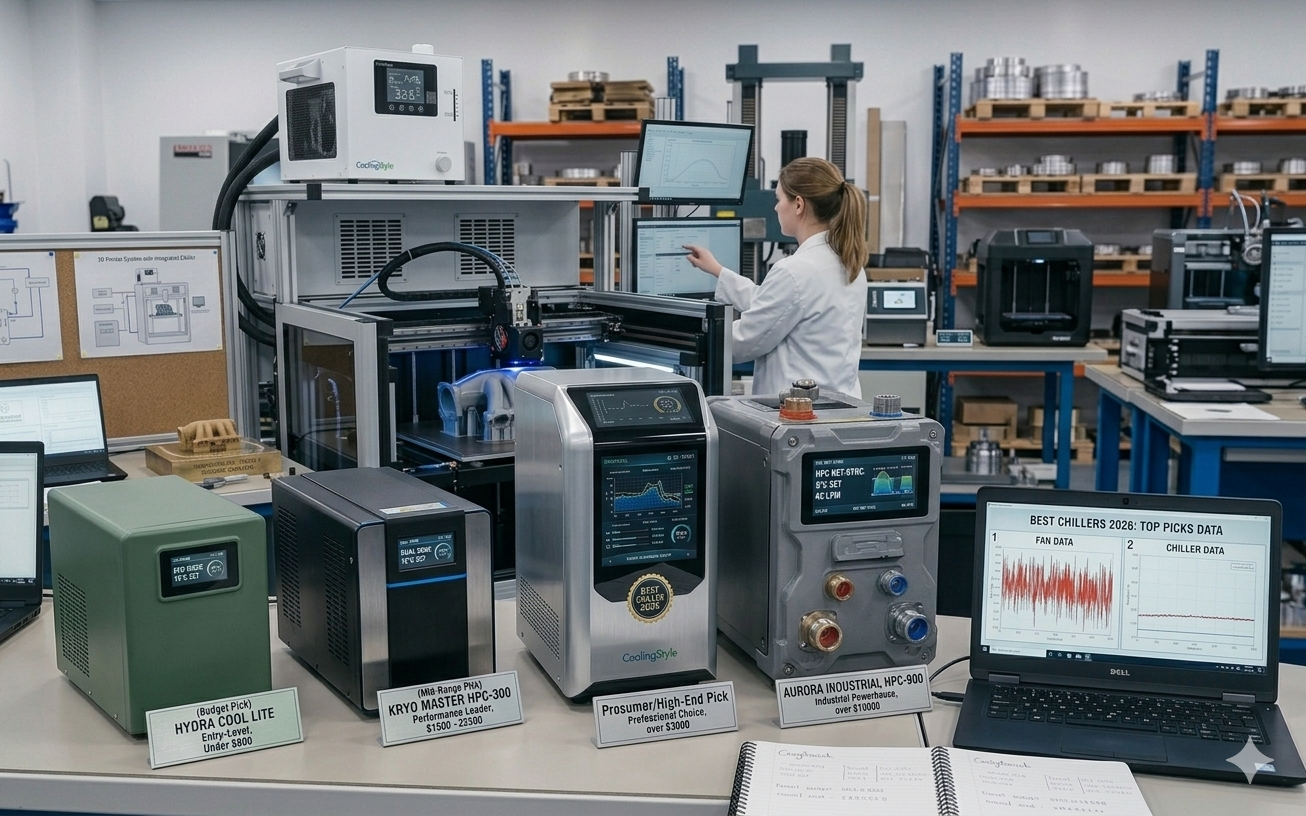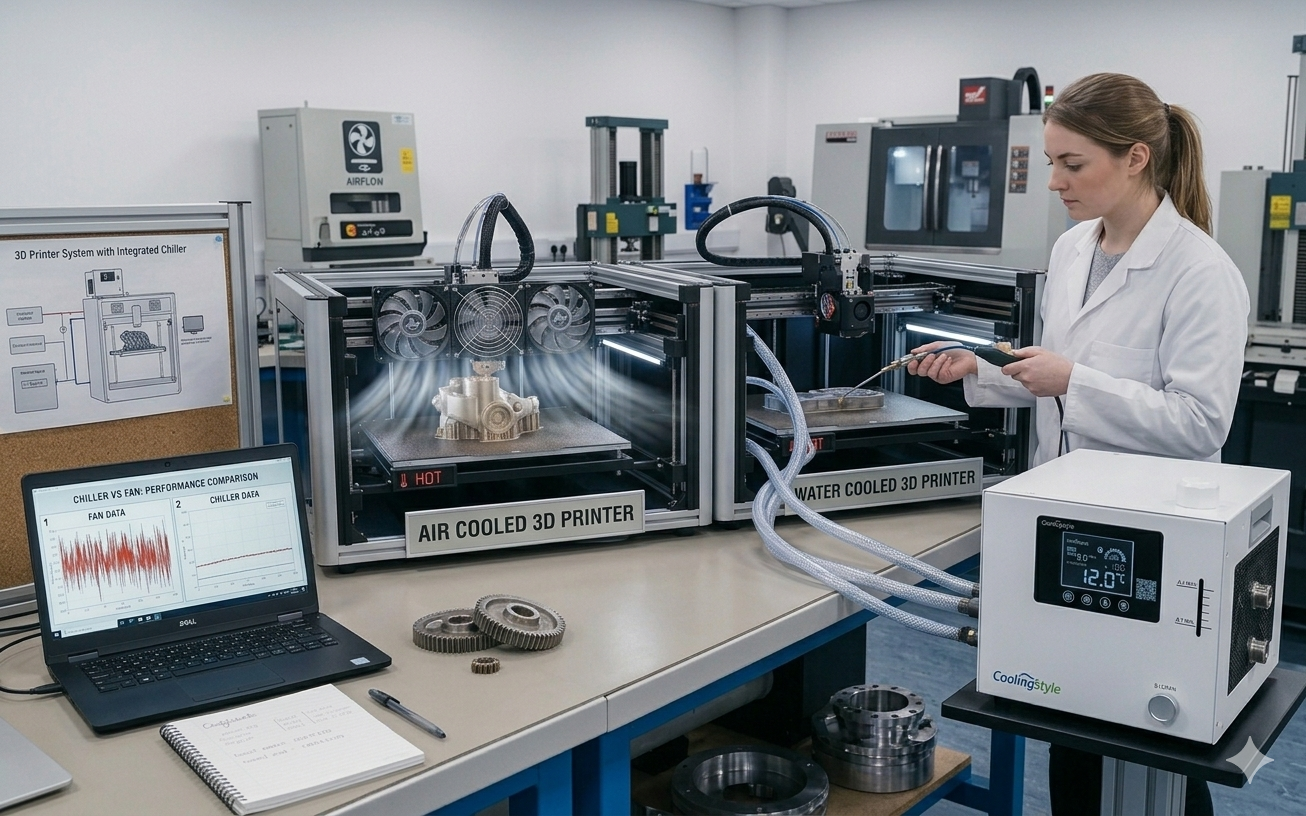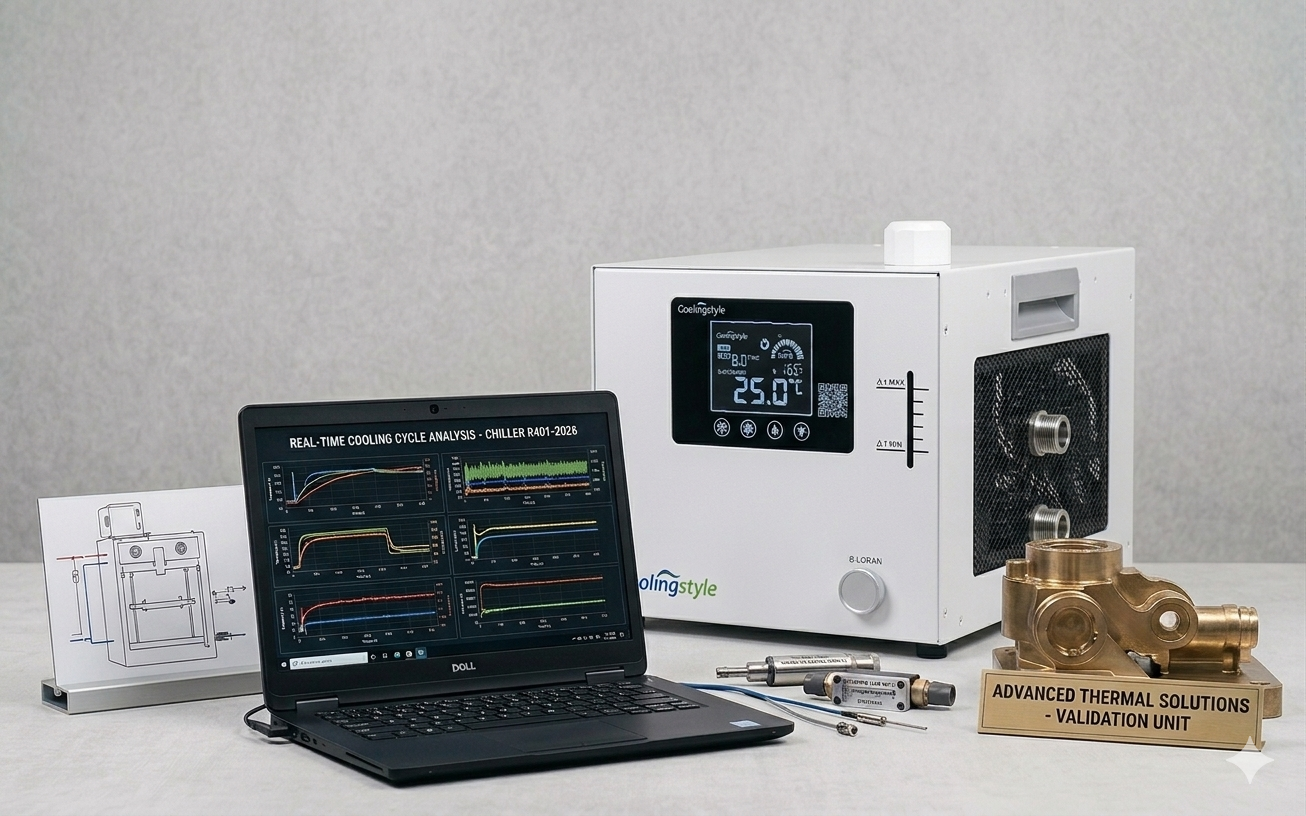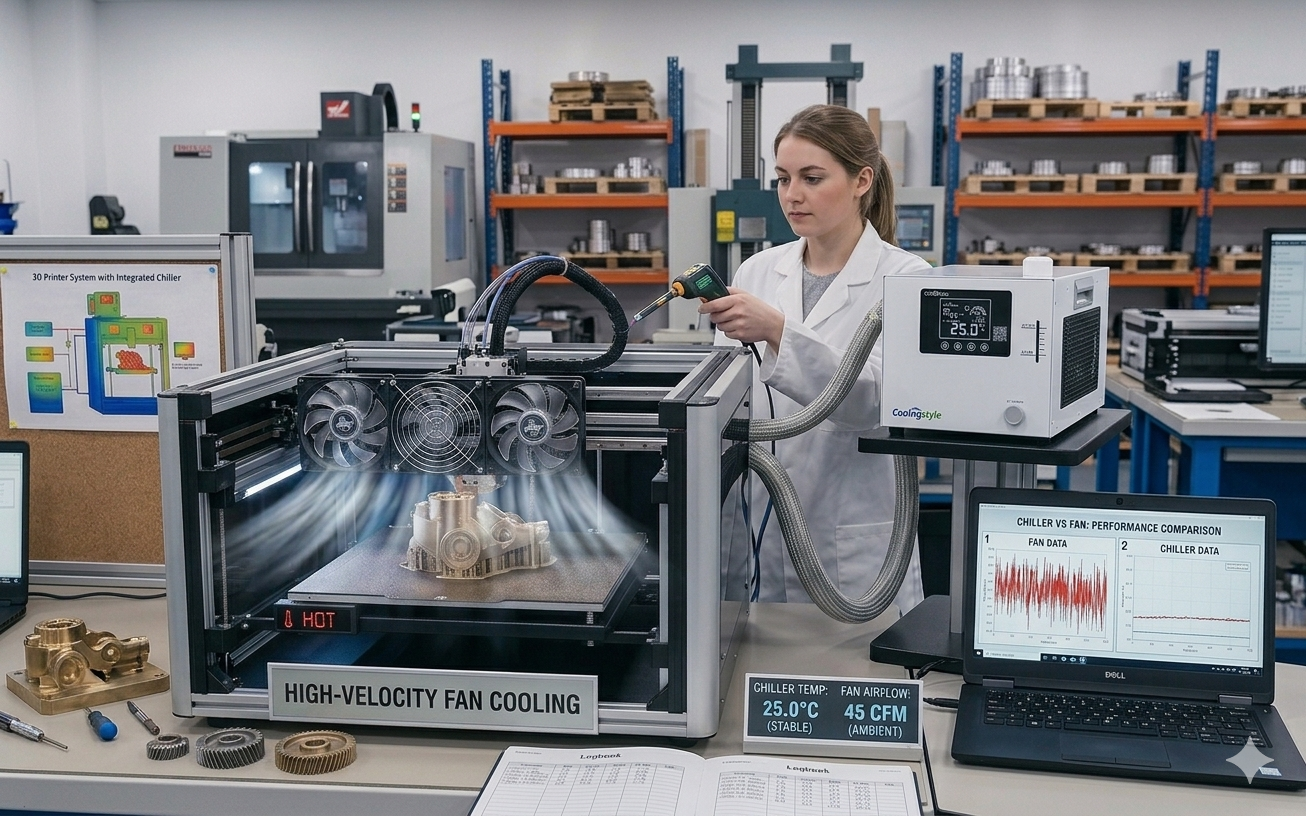
As 3D printing technology continues to advance across industries, maintaining optimal operating conditions has become more important than ever. Among all environmental factors, temperature control plays a critical role in ensuring consistent print quality, dimensional accuracy, and equipment longevity.
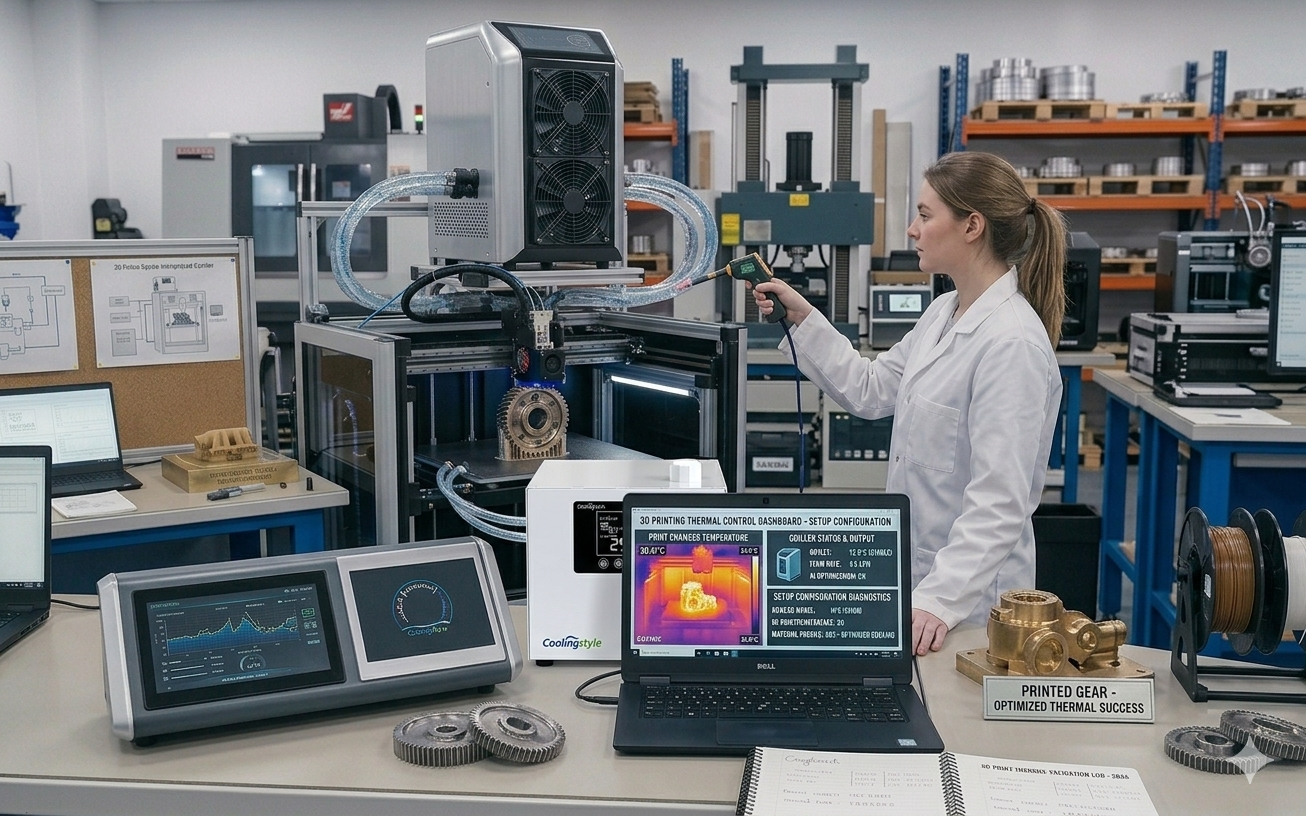
One of the most effective ways to achieve stable temperature control is by using a 3D printer chiller. However, with so many options available—from basic cooling units to high-precision industrial systems—choosing the right chiller for your setup can be challenging.
This comprehensive guide will walk you through everything you need to know about selecting the ideal 3D printer chiller, while also highlighting how coolingstyle is redefining precision cooling with advanced technologies such as ±0.01°C accuracy, compact micro design, eco-friendly R290 refrigerant, and microchannel heat exchange.
Why a 3D Printer Chiller Is Important
3D printers generate heat continuously during operation, especially in high-speed or industrial environments. Without proper cooling, this heat buildup can negatively impact performance in several ways:
- Inconsistent extrusion temperatures
- Poor layer adhesion
- Warping and deformation
- Reduced component lifespan
- Frequent print failures
A dedicated chiller helps regulate temperature, ensuring stable operation and improved print results.
Step 1: Understand Your Printing Requirements
Before choosing a chiller, you need to evaluate your specific use case.
Printer Type
- Desktop FDM printers typically require moderate cooling
- Industrial printers demand high-capacity and precise temperature control
Materials Used
- PLA: Minimal cooling requirements
- ABS: Requires stable temperature to prevent warping
- Nylon & Engineering Materials: Need precise thermal management
Production Volume
Continuous or large-scale printing requires more robust cooling solutions than occasional use.
Step 2: Determine the Required Cooling Capacity
Cooling capacity is one of the most important factors when selecting a chiller. It determines how effectively the system can remove heat.
Key considerations include:
- Heat output of your printer
- Ambient temperature
- Duration of operation
Underestimating cooling capacity can lead to overheating, while oversizing may increase costs unnecessarily.
Step 3: Evaluate Temperature Control Precision
Not all chillers offer the same level of precision. For high-end applications, temperature stability is critical.
Traditional chillers typically offer accuracy in the range of ±0.3°C to ±1°C. However, advanced systems like coolingstyle provide ±0.01°C ultra-high precision, enabling:
- Consistent extrusion behavior
- Improved dimensional accuracy
- Reduced thermal fluctuations
This level of precision is especially valuable in industries such as aerospace, medical, and micro-manufacturing.
Step 4: Consider System Size and Integration
Space constraints are often overlooked when selecting a chiller. Traditional industrial chillers can be bulky and difficult to integrate.
coolingstyle addresses this issue with its compact and micro-scale design, offering:
- Easy installation in limited spaces
- Seamless integration with modern 3D printers
- Flexible deployment across different environments
Step 5: Focus on Energy Efficiency and Sustainability
Energy consumption is an important factor, especially for long-term operation.
Modern cooling systems should prioritize sustainability. coolingstyle uses R290 refrigerant, which provides:
- Low global warming potential (GWP)
- High energy efficiency
- Reduced environmental impact
Choosing an eco-friendly cooling solution not only reduces costs but also supports sustainable manufacturing practices.
Step 6: Examine Heat Exchange Technology
The efficiency of a chiller largely depends on its heat exchange system.
Traditional systems use bulky heat exchangers, which can be less efficient. In contrast, coolingstyle utilizes microchannel heat exchange technology, delivering:
- Faster heat transfer
- Improved cooling performance
- Reduced system size and weight
Step 7: Reliability and Maintenance
A reliable chiller ensures uninterrupted operation. Consider:
- Build quality
- Maintenance requirements
- Availability of support
High-quality systems like coolingstyle are designed for long-term stability and minimal maintenance.
Step 8: Budget vs Performance
Budget is always a consideration, but it should be balanced against performance.
- Low-cost chillers: Suitable for basic applications but limited precision
- Mid-range systems: Balanced performance and cost
- High-end solutions: Maximum precision and reliability
Investing in a high-performance system like coolingstyle can lead to better long-term ROI through improved efficiency and reduced failures.
Common Mistakes to Avoid
- Choosing a chiller based on price alone
- Ignoring precision requirements
- Overlooking system compatibility
- Underestimating cooling capacity
Why coolingstyle Is the Ideal Choice
When it comes to selecting the right 3D printer chiller, coolingstyle offers a comprehensive solution that combines precision, efficiency, and sustainability.
Key Advantages of coolingstyle:
- ±0.01°C ultra-precise temperature control
- Compact and micro-scale design
- Eco-friendly R290 refrigerant
- Advanced microchannel heat exchange technology
- High reliability and long lifespan
Future Trends in 3D Printer Cooling
- AI-driven temperature control systems
- Integration with smart manufacturing platforms
- Greater adoption of eco-friendly refrigerants
- Miniaturized high-performance cooling units
These trends indicate that advanced cooling solutions will play an increasingly important role in the future of 3D printing.
Conclusion
Choosing the right 3D printer chiller is essential for achieving consistent, high-quality results. By considering factors such as cooling capacity, precision, size, efficiency, and technology, you can find the best solution for your needs.
With its 0.01°C precision, compact design, eco-friendly R290 refrigerant, and microchannel heat exchange technology, coolingstyle stands out as a leading choice for modern 3D printing applications.
Whether you are upgrading your current setup or building a new system, investing in the right cooling solution will significantly enhance performance and reliability.