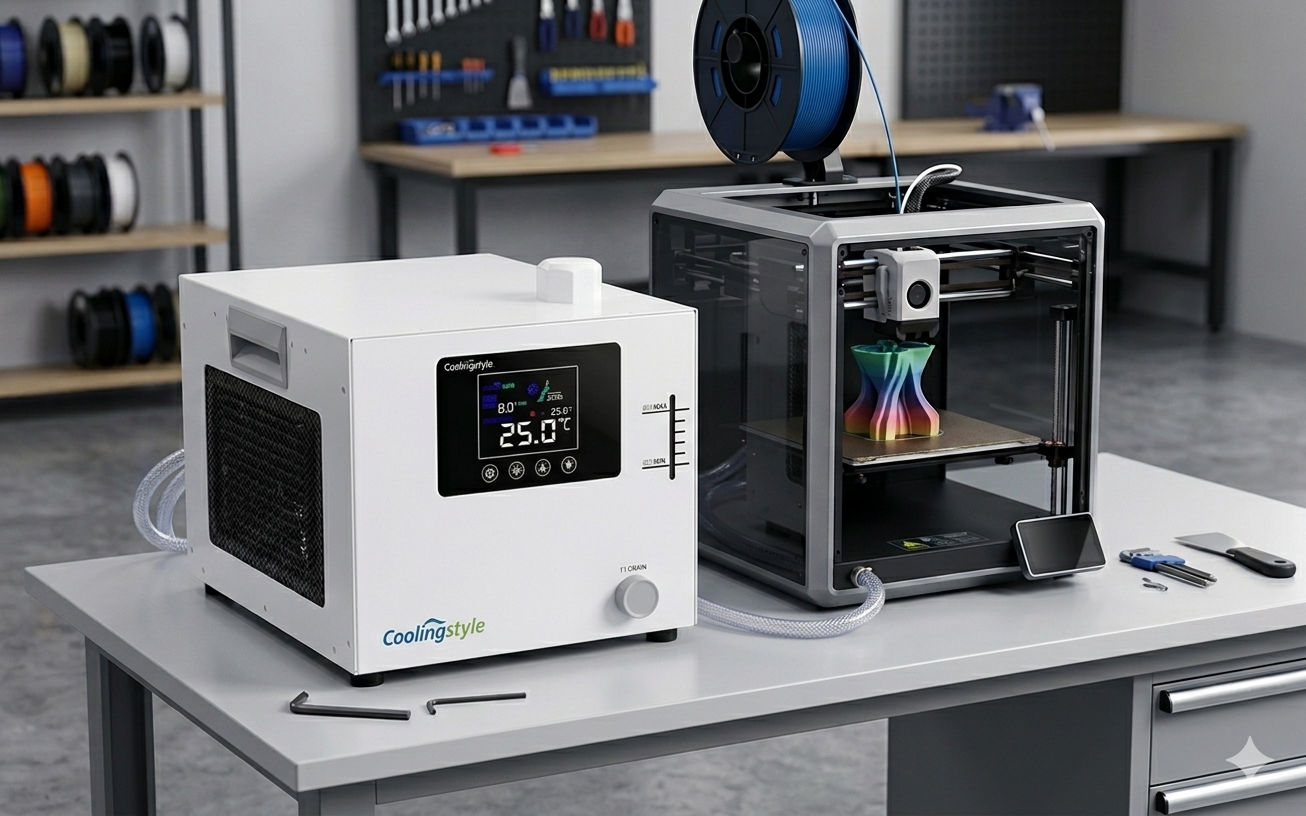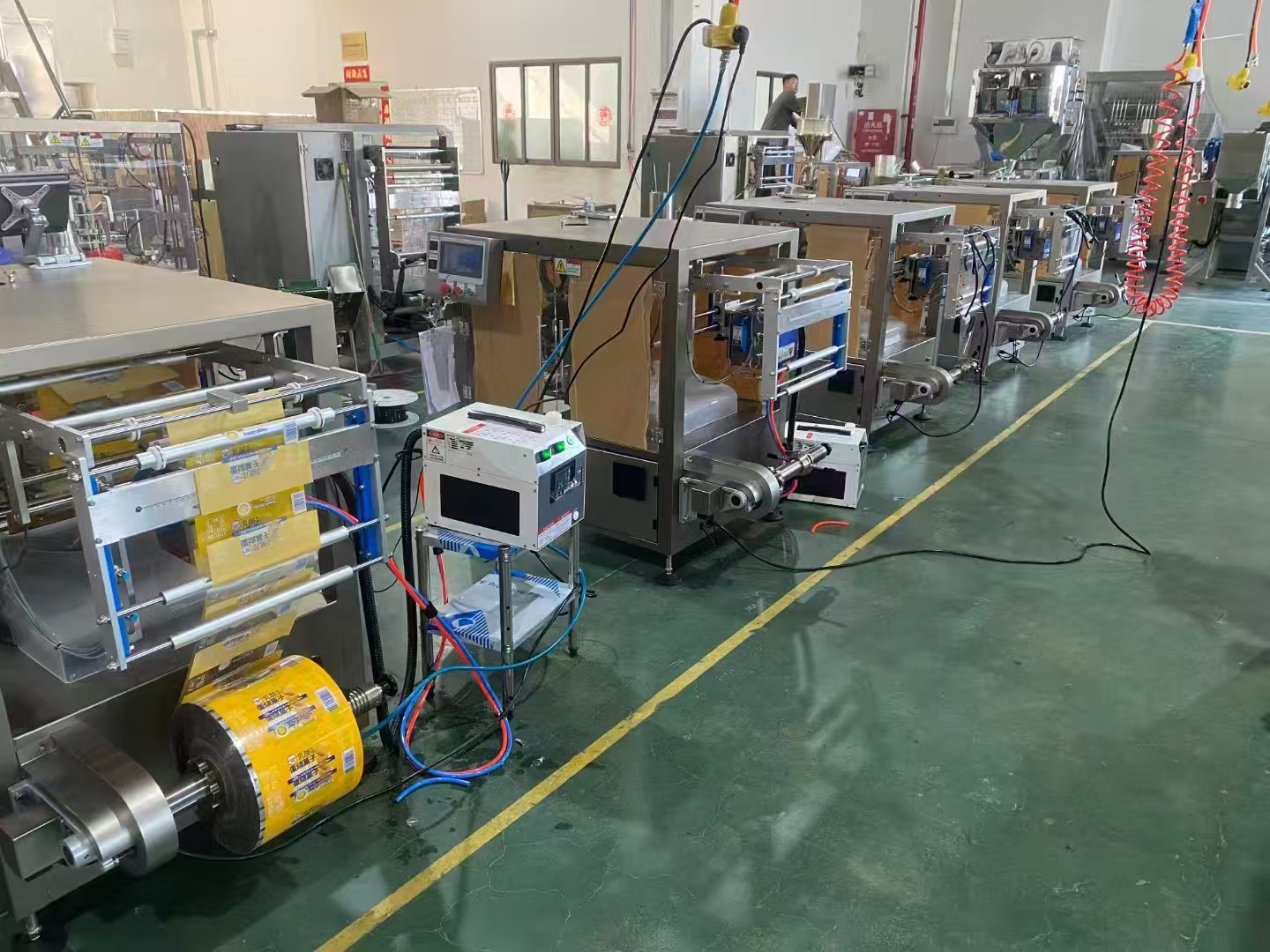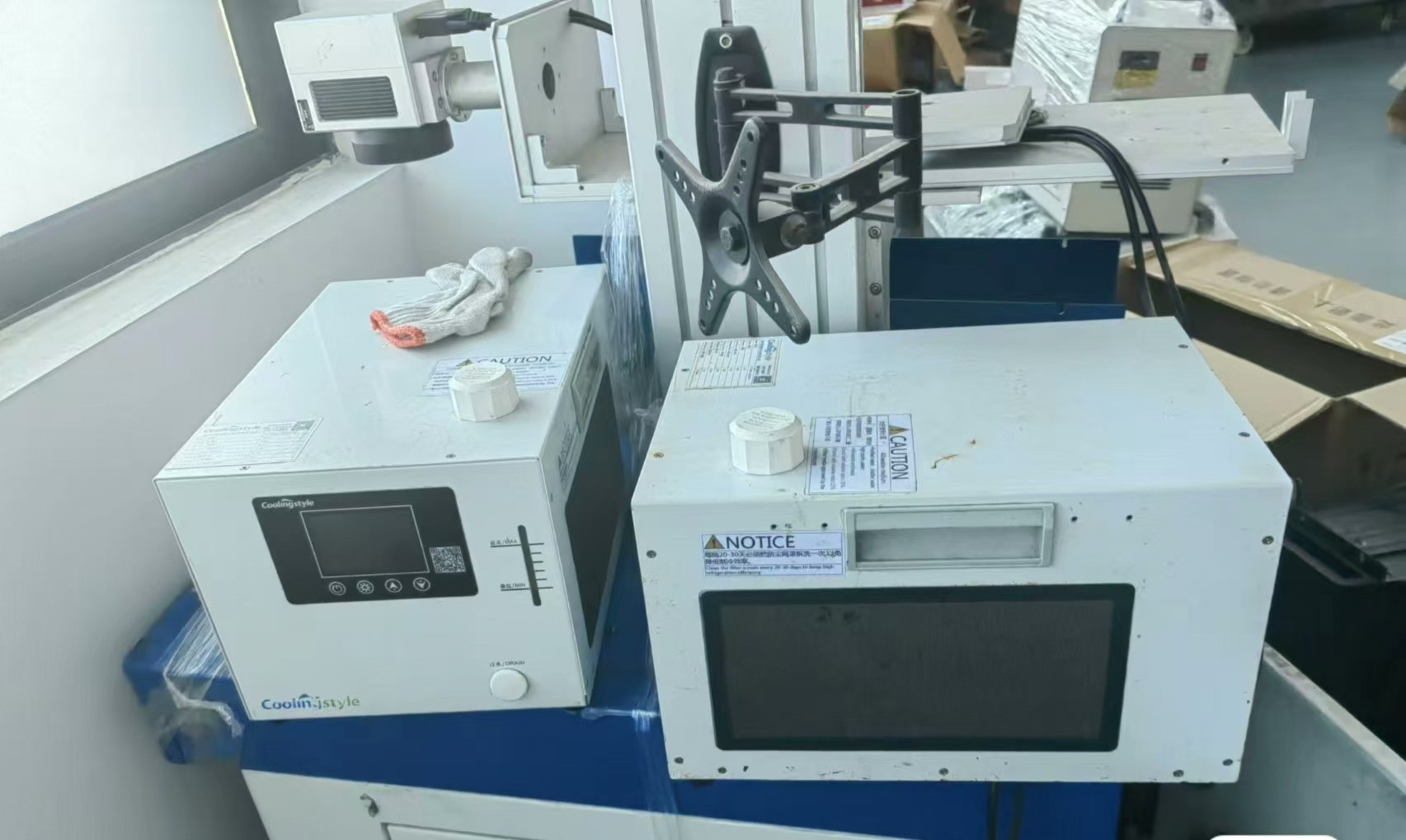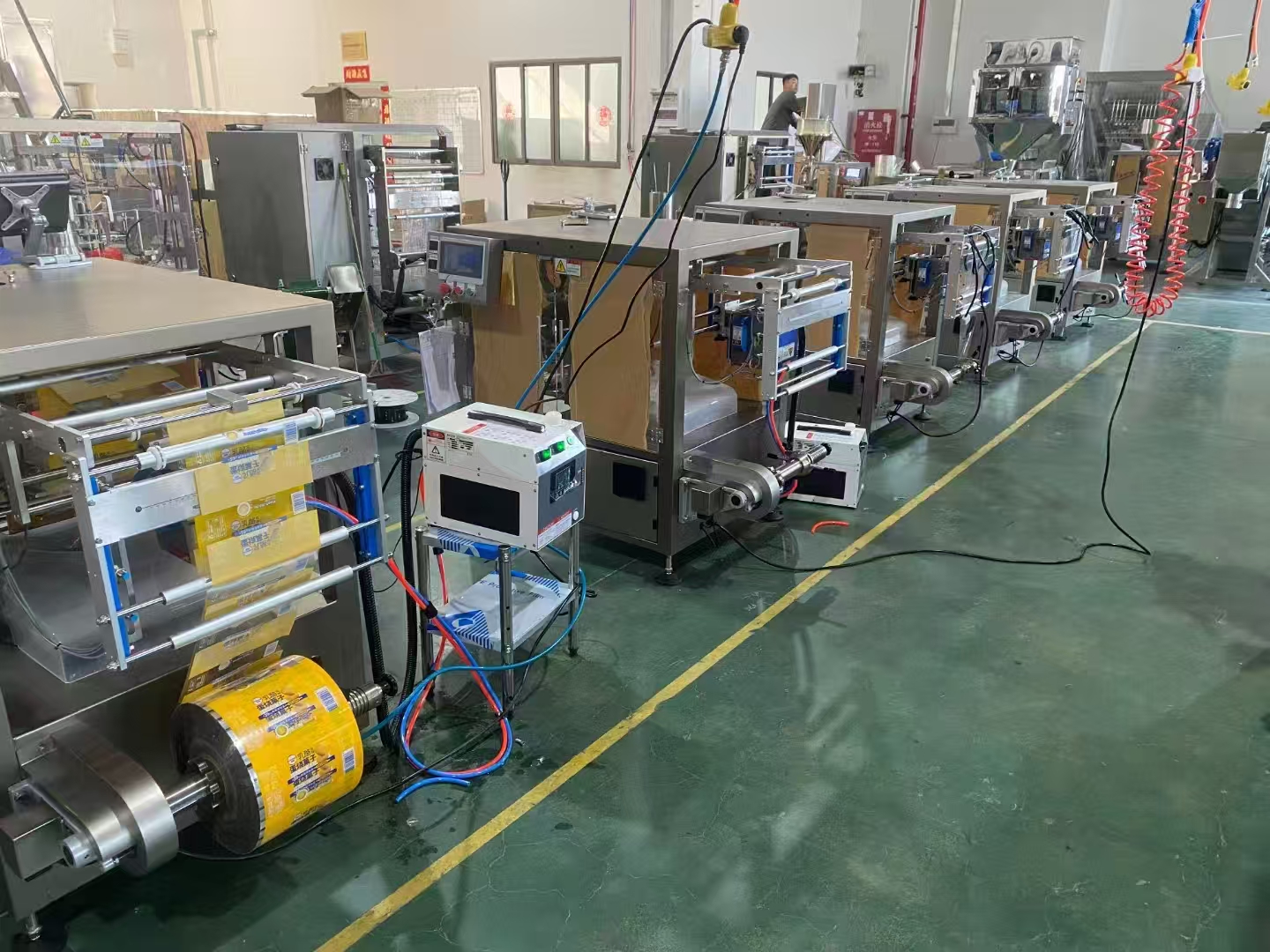
Choosing between an air cooled cooling unit and a water cooled cooling unit is one of the most important decisions when designing an industrial or precision temperature control system. Each cooling method offers unique advantages depending on installation environment, cooling capacity, and operational requirements.
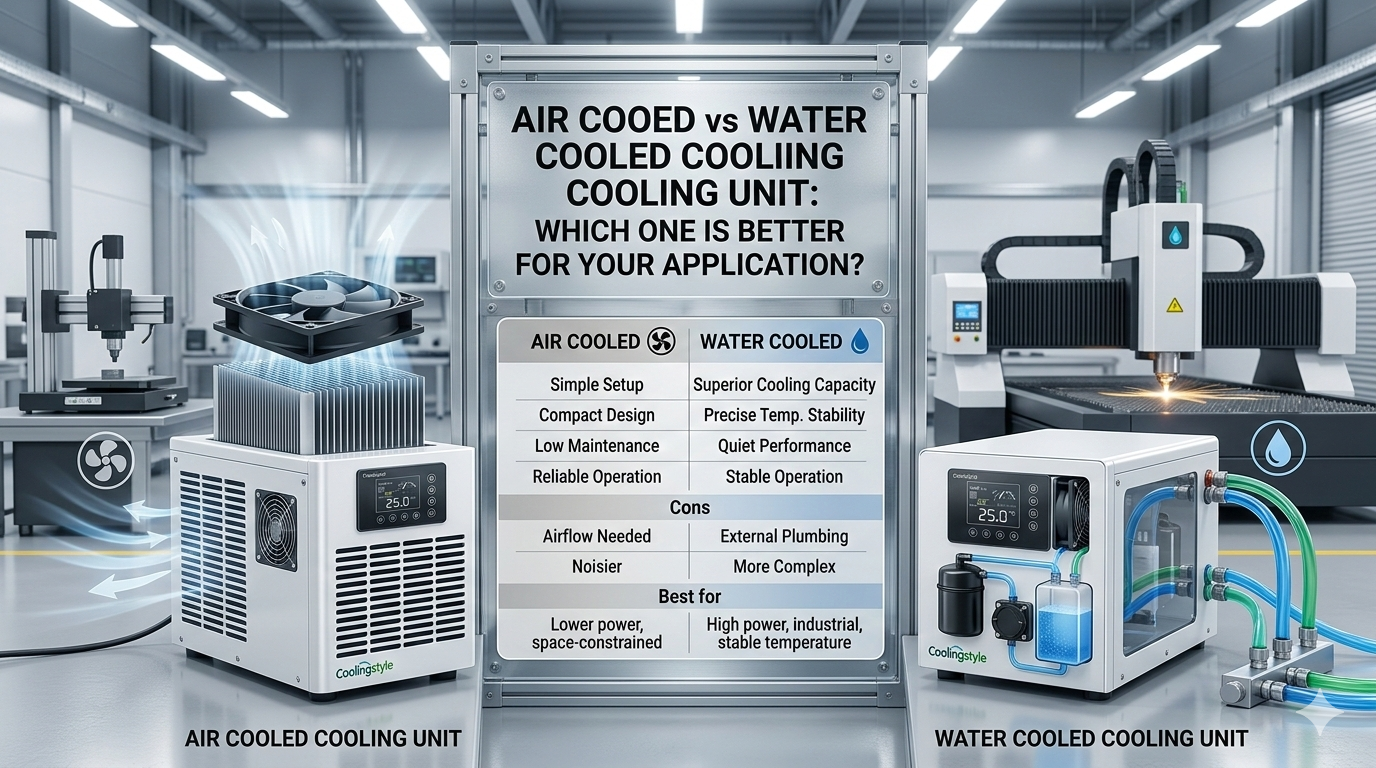
Understanding the differences helps manufacturers improve efficiency, reduce operating costs, and ensure long-term equipment stability.
What Is an Air Cooled Cooling Unit?
An air cooled cooling unit removes heat using ambient air. Internal fans force air across the condenser to dissipate heat generated during the refrigeration cycle.
This type of cooling unit does not require external cooling water infrastructure, making it easier to install and maintain.
Main Advantages
- Simple installation
- No cooling tower required
- Lower initial investment
- Suitable for small and medium systems
- Flexible equipment placement
Typical Applications
- Laser cutting and marking machines
- Laboratory equipment
- Medical devices
- Electronics manufacturing
- Compact industrial machinery
What Is a Water Cooled Cooling Unit?
A water cooled cooling unit transfers heat through circulating cooling water connected to an external cooling tower or centralized water system.
Because water has higher thermal conductivity than air, water cooled systems generally achieve higher cooling efficiency.
Main Advantages
- Higher cooling efficiency
- Stable performance in hot environments
- Lower long-term energy consumption
- Suitable for large heat loads
- Reduced ambient noise
Typical Applications
- Semiconductor manufacturing
- Large industrial production lines
- Injection molding systems
- Data centers
- High-power laser systems
Air Cooled vs Water Cooled Cooling Unit: Key Differences
| Factor | Air Cooled Cooling Unit | Water Cooled Cooling Unit |
|---|---|---|
| Installation | Easy | Requires water system |
| Cooling Efficiency | Moderate | High |
| Maintenance | Low | Moderate |
| Energy Consumption | Higher in hot climates | Lower long-term |
| Initial Cost | Lower | Higher |
| Best Use | Compact equipment | Large industrial systems |
Which Cooling Unit Should You Choose?
The correct choice depends on operational conditions:
- Choose air cooled cooling units if:
- Installation space is limited
- No water infrastructure exists
- Cooling demand is moderate
- Choose water cooled cooling units if:
- Heat load is high
- Continuous operation is required
- Energy efficiency is a priority
Importance of Precision Cooling Performance
In modern industries such as laser processing, semiconductor fabrication, and medical manufacturing, temperature stability directly influences production accuracy.
High-performance cooling units can maintain temperature control within tight tolerances, preventing thermal drift and improving equipment lifespan.
Coolingstyle Cooling Unit Solutions
Coolingstyle provides both air cooled and water cooled cooling unit solutions engineered for high-precision industries.
Our systems are widely used in:
- Laser processing equipment
- Semiconductor manufacturing tools
- Medical technology systems
- Scientific research laboratories
- Military and aerospace electronics
Coolingstyle cooling units feature compact design, energy efficiency, and customizable configurations tailored to specific industrial requirements.
Frequently Asked Questions
Is water cooling always better than air cooling?
Not necessarily. Water cooling provides higher efficiency but requires additional infrastructure. Air cooling is often ideal for compact or standalone systems.
Which cooling unit requires less maintenance?
Air cooled cooling units generally require less maintenance since they do not rely on external water systems.
Can cooling units be customized?
Yes. Coolingstyle offers customized cooling capacity, temperature precision, communication interfaces, and mechanical integration options.
Conclusion
Both air cooled and water cooled cooling units play essential roles in industrial temperature control. Selecting the right solution depends on application scale, environmental conditions, and efficiency goals.
With professional engineering expertise and customizable solutions, Coolingstyle helps global industries achieve stable and efficient thermal management performance.