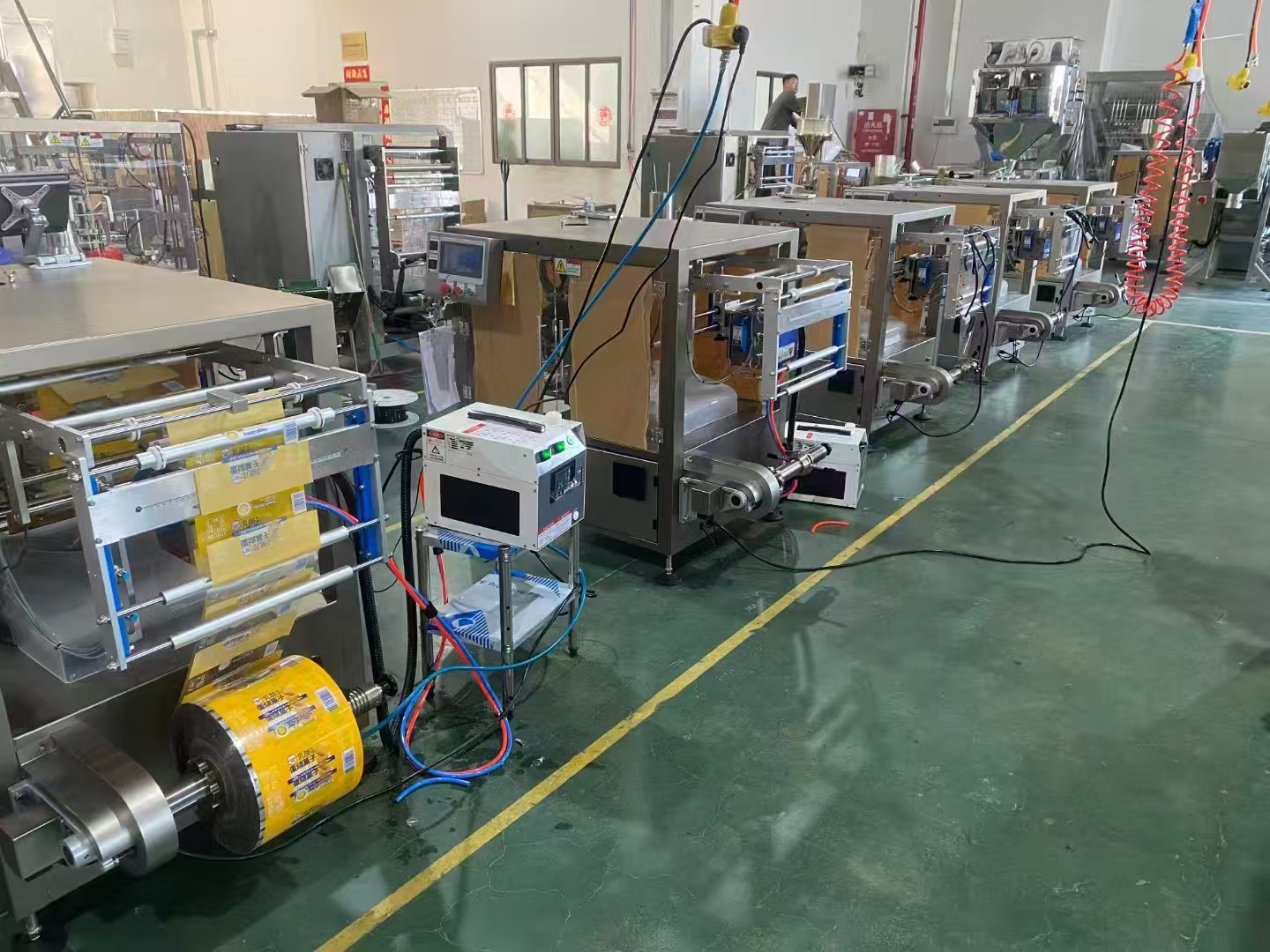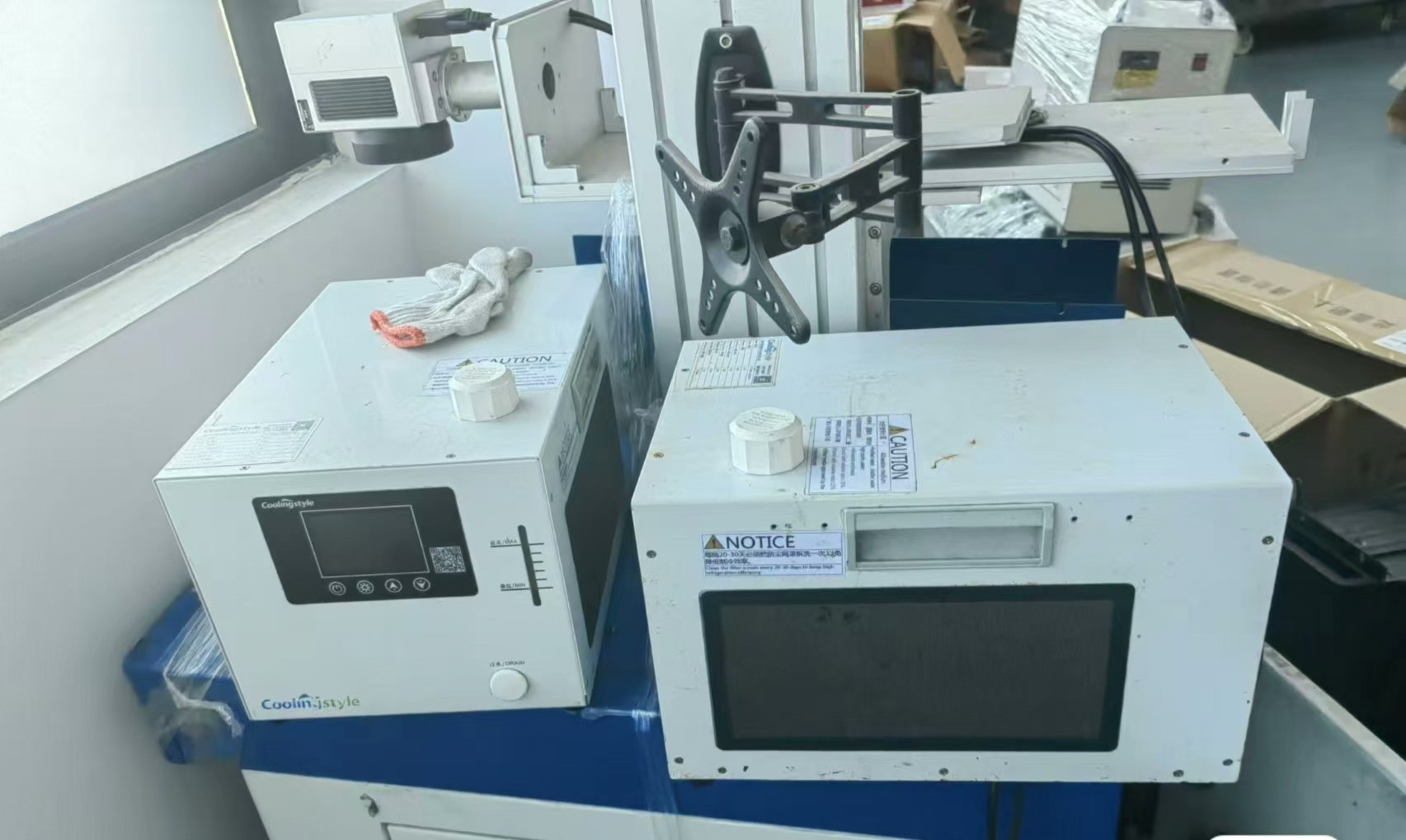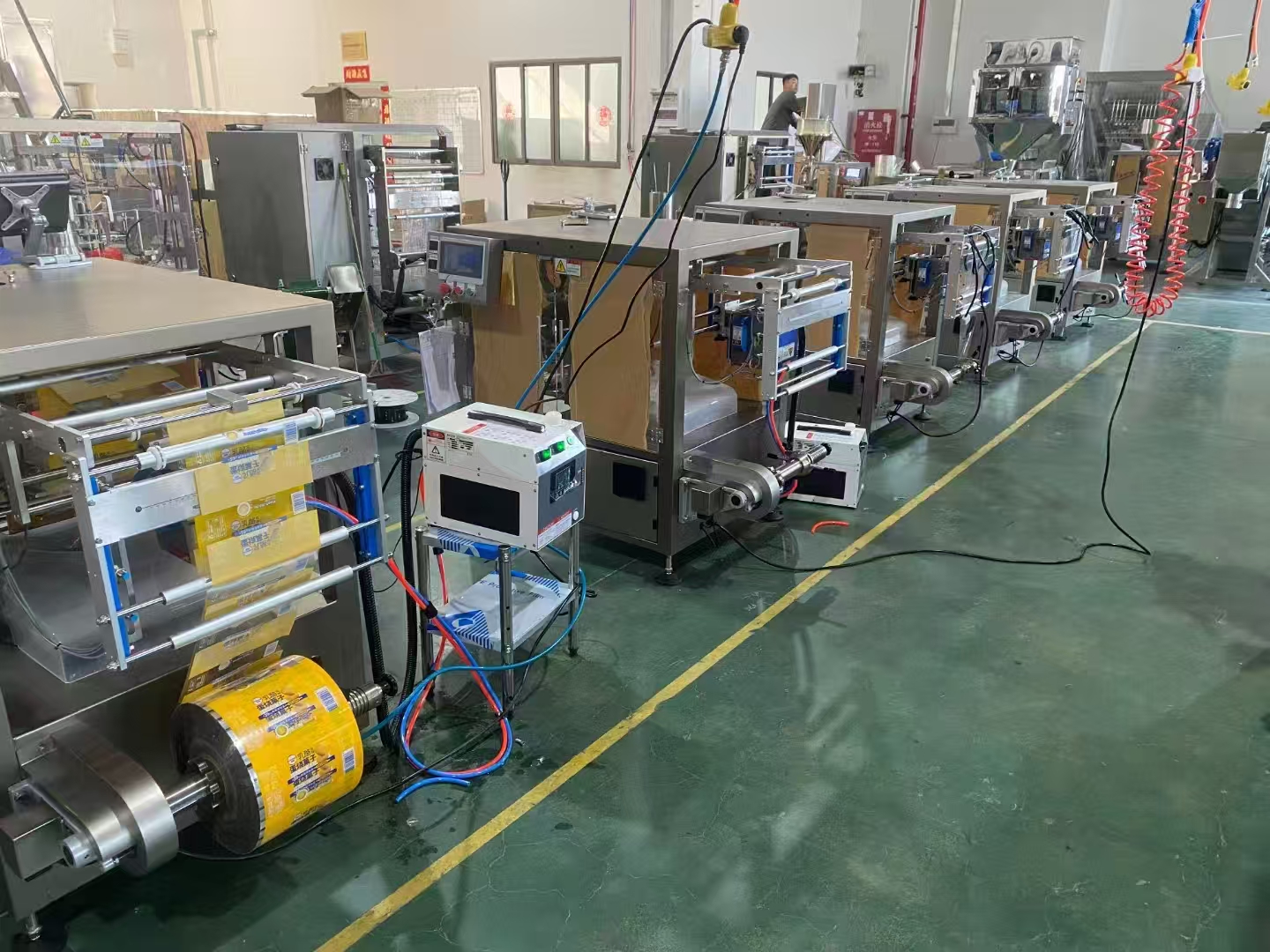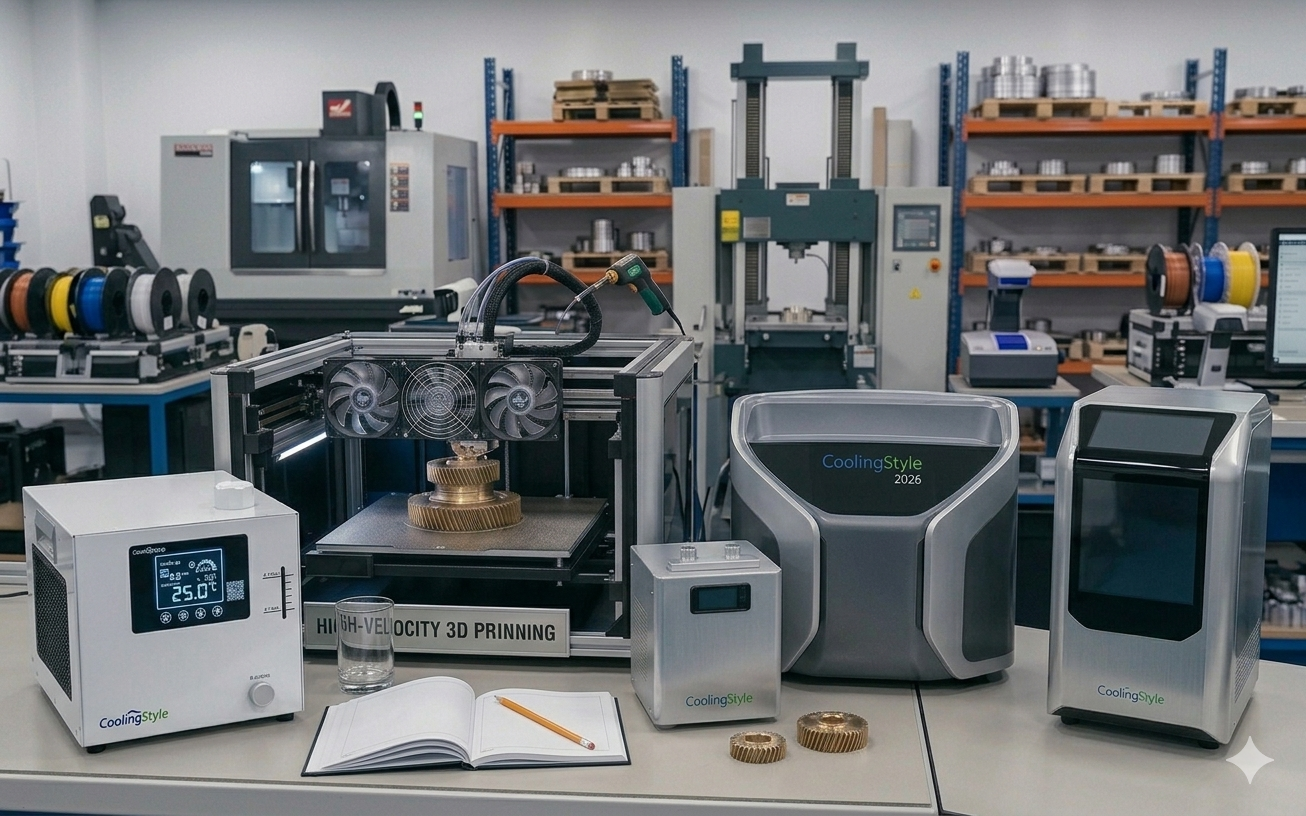
An industrial cooling unit is a critical component used to control temperature in manufacturing, medical, semiconductor, laser, and research environments. Stable temperature control ensures equipment accuracy, operational safety, and long-term reliability.
Modern industries rely heavily on precise thermal management. Whether cooling laser systems, CNC machines, semiconductor tools, or medical imaging equipment, a high-performance industrial cooling unit plays a vital role in maintaining efficiency and preventing overheating.
What Is an Industrial Cooling Unit?
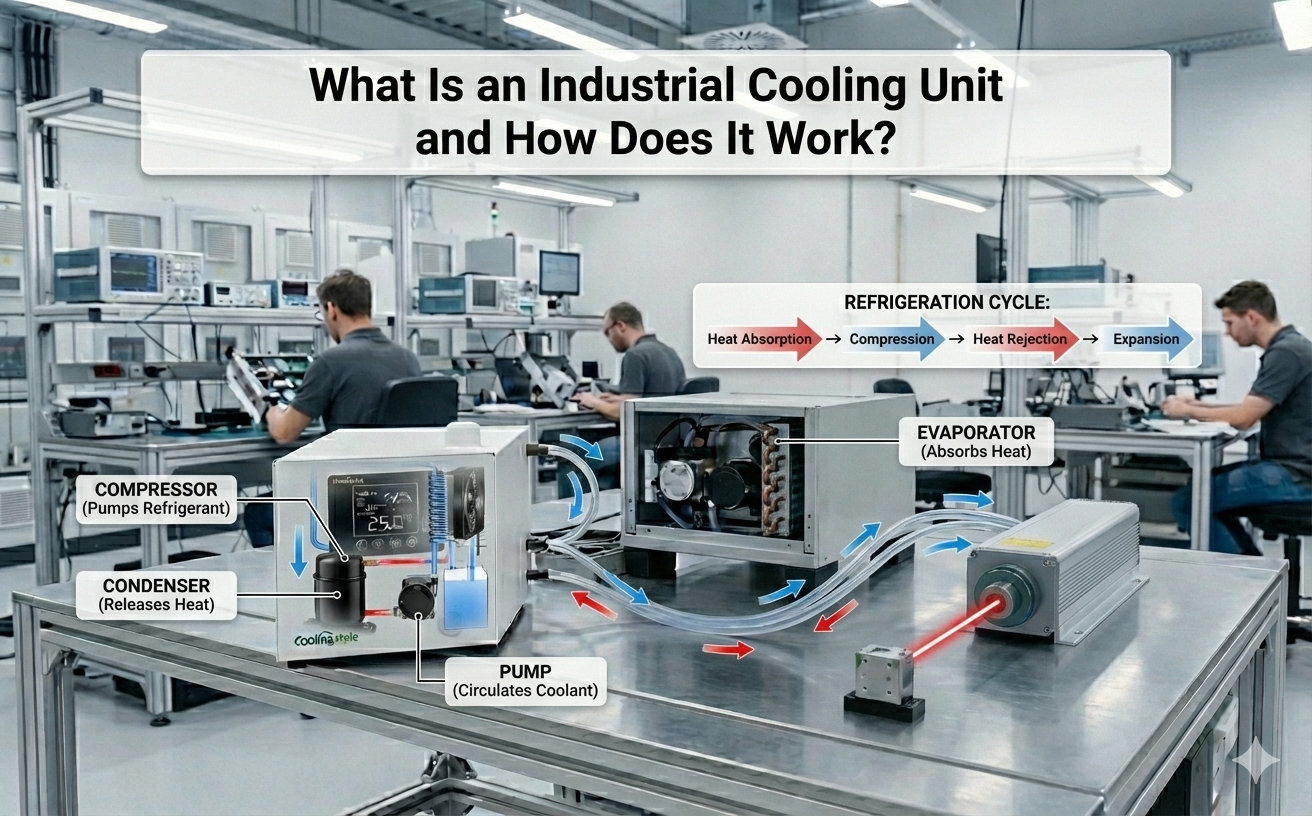
An industrial cooling unit is a temperature control system designed to remove heat from industrial equipment and maintain a stable operating temperature. It typically includes:
- Compressor
- Condenser
- Evaporator
- Circulation pump
- Temperature controller (often PID-based)
- Refrigerant system
These components work together to create a closed-loop cooling system that circulates coolant (usually water or water-glycol mixture) to absorb and dissipate heat.
How Does an Industrial Cooling Unit Work?
The working principle of an industrial cooling unit follows the vapor compression refrigeration cycle:
- Heat Absorption: The coolant absorbs heat from the equipment.
- Compression: The refrigerant is compressed, increasing pressure and temperature.
- Heat Dissipation: The condenser releases heat to air or water.
- Expansion & Cooling: The refrigerant expands and cools before restarting the cycle.
This continuous process ensures stable temperature control, often within ±0.1℃ to ±1℃ depending on system configuration.
Why Is an Industrial Cooling Unit Important?
Without proper cooling, industrial equipment can experience:
- Overheating damage
- Reduced precision
- Shortened equipment lifespan
- Unexpected downtime
- Increased maintenance costs
A high-quality industrial cooling unit ensures:
- Stable thermal performance
- Improved production efficiency
- Enhanced system safety
- Energy-efficient operation
Main Types of Industrial Cooling Units
1. Air-Cooled Industrial Cooling Unit
Uses ambient air to dissipate heat. Suitable for facilities with limited water supply and easier installation requirements.
2. Water-Cooled Industrial Cooling Unit
Uses external cooling water systems or cooling towers. Ideal for large-scale industrial operations requiring higher efficiency.
3. Compact or Micro Industrial Cooling Unit
Designed for laser systems, laboratory equipment, semiconductor tools, and precision medical devices where space-saving and accuracy are essential.
Industrial Cooling Unit Applications
Industrial cooling units are widely used across multiple sectors:
- Laser cutting and laser marking systems
- Semiconductor manufacturing equipment
- CNC machinery
- Medical imaging devices (MRI, CT)
- Battery testing systems
- Military electronic systems
- Research laboratories
Each application requires specific temperature stability, flow rate, and cooling capacity.
How to Choose the Right Industrial Cooling Unit
When selecting an industrial cooling unit, consider the following factors:
- Cooling capacity (kW)
- Required temperature accuracy
- Flow rate and pump pressure
- Operating environment
- Energy efficiency requirements
- Future scalability
Choosing the correct cooling unit directly impacts system stability and operational costs.
Why Choose Coolingstyle Industrial Cooling Units?
Coolingstyle specializes in high-precision industrial cooling unit solutions designed for demanding industries such as laser, semiconductor, medical, and military applications.
Key advantages include:
- High temperature stability control
- Compact and modular design
- Energy-efficient operation
- Low noise performance
- OEM & customized solutions available
Coolingstyle focuses on delivering reliable and durable cooling systems tailored to modern industrial needs.
Frequently Asked Questions (FAQ)
What size industrial cooling unit do I need?
The required size depends on the total heat load of your equipment. Always calculate the maximum heat output and include a safety margin of 10–20%.
Can an industrial cooling unit run continuously?
Yes. Industrial cooling units are designed for continuous 24/7 operation in demanding environments.
How often should maintenance be performed?
Routine inspections are recommended every 3–6 months, depending on operating conditions.
Conclusion
An industrial cooling unit is essential for maintaining precision, reliability, and efficiency in modern industrial operations. By selecting the right system and ensuring proper maintenance, businesses can significantly improve equipment lifespan and operational stability.
If you are looking for a high-performance industrial cooling unit tailored to your application, Coolingstyle provides professional and customized solutions designed to meet global industrial standards.