In 3D printing, temperature control plays a decisive role in determining print quality, 일관성, and overall production efficiency. While many users rely on traditional cooling fans, more advanced setups are increasingly turning to dedicated chiller systems.
But which solution is truly better? Should you stick with a simple fan, or invest in a high-performance chiller?
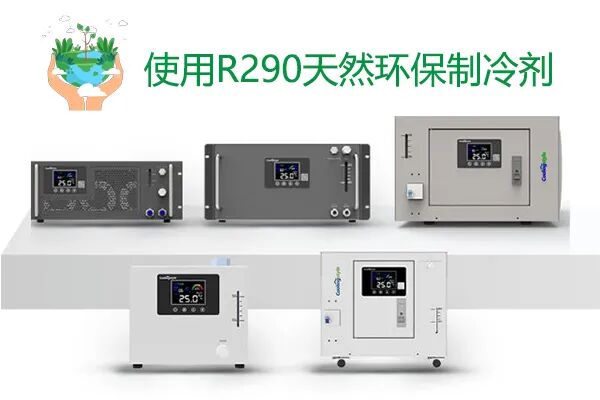
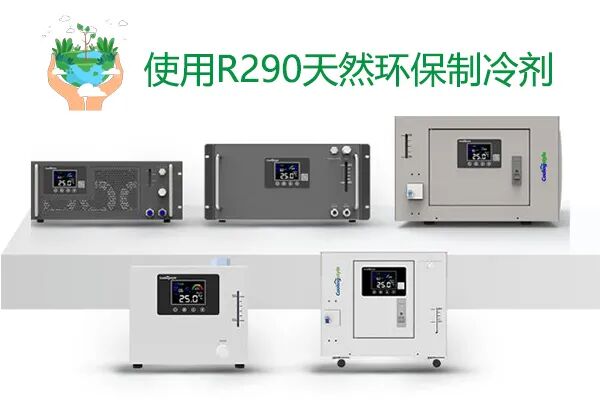
이 종합 가이드에서, we provide a detailed performance comparison between 3D printer chillers and cooling fans, and explain how advanced solutions like 냉각 스타일—특집 ±0.01°C 정밀도, 컴팩트한 마이크로 디자인, 친환경 R290 냉매, 마이크로채널 열교환 기술—deliver superior results.
Understanding Cooling Fans in 3D Printing
Cooling fans are the most common cooling solution used in 3D printing. They operate by blowing air across printed layers or components to dissipate heat.
Advantages of Cooling Fans
- Low cost
- 쉬운 설치
- Widely available
Limitations of Cooling Fans
- 제한된 냉각 용량
- 일관성 없는 온도 제어
- Sensitive to environmental conditions
- Not suitable for high-demand applications
Understanding Chiller Systems
Chiller systems use liquid cooling to remove heat efficiently and maintain precise temperature control.
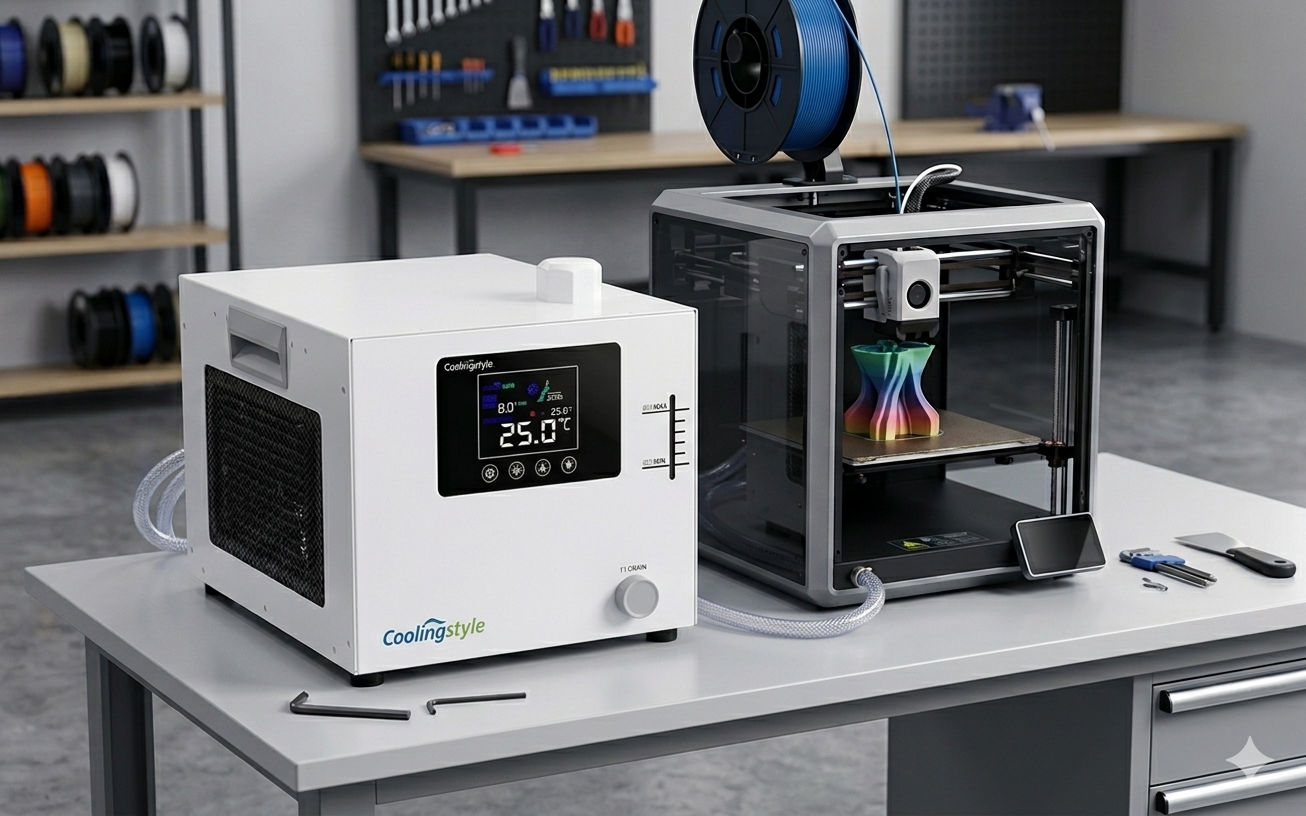
다음과 같은 고급 시스템 냉각기 solutions provide stable and consistent thermal management for demanding applications.
Advantages of Chillers
- 높은 냉각 효율
- 정밀한 온도 제어
- 안정적인 성능
- Ideal for industrial and high-speed printing
Limitations of Chillers
- Higher initial cost
- Requires installation and setup
성능 비교: Chiller vs Cooling Fan
| 특징 | 냉각팬 | Chiller System |
|---|---|---|
| 냉각 효율 | 낮음~보통 | 높은 |
| 온도 정밀도 | 낮은 | Ultra-high (±0.01°C) |
| 안정 | Inconsistent | 높은 안정성 |
| Application Range | 기본 인쇄 | 산업 & 높은 정밀도 |
| 에너지 효율성 | 보통의 | 높은 |
Why Chillers Outperform Cooling Fans
1. Superior Temperature Control
Chillers maintain consistent temperatures, while fans only provide surface-level cooling.
2. Better Heat Dissipation
Liquid cooling removes heat more efficiently than air-based systems.
3. Enhanced Print Quality
Stable conditions result in smoother surfaces and better dimensional accuracy.
4. Reliability for Long Prints
Chillers support continuous operation without performance degradation.
전문적인 설정용, ㅏ 냉각기 system is clearly the better choice.
냉각 방식의 장점
냉각 스타일 stands out as a leader in advanced cooling solutions for 3D printing.
주요 특징:
- 초고정밀 온도 제어 (±0.01°C)
- Compact micro design for flexible integration
- 친환경 R290 냉매
- 첨단 마이크로채널 열교환 기술
- Energy-efficient and reliable operation
These features ensure superior performance compared to traditional cooling methods.
When to Use Cooling Fans
- Entry-level 3D printing
- Low-speed printing
- Small-scale projects
When to Use a Chiller
- High-speed printing
- Industrial applications
- Large-format printing
- Precision-critical projects
For advanced use cases, upgrading to a 냉각기 필수적입니다.
Cost vs Performance Consideration
While chillers require a higher initial investment, they offer:
- 실패율 감소
- Lower long-term costs
- 생산성 향상
- Better ROI
냉각 기술의 미래 동향
- 스마트 냉각 시스템
- 소형 고성능 냉각기
- 친환경 냉매
- 자동화된 워크플로우와 통합
Coolingstyle 소형 압축기의 응용
While cooling fans remain a simple and cost-effective solution for basic 3D printing, they fall short in demanding applications. Chiller systems, 반면에, provide the precision, 능률, and stability required for modern printing environments.
그것으로 0.01°C 정밀도, 컴팩트한 디자인, 친환경 R290 냉매, 마이크로채널 열교환 기술, 냉각 스타일 offers a powerful alternative that significantly outperforms traditional cooling fans.
If you are serious about improving print quality and reducing failures, investing in a chiller system is the clear choice.