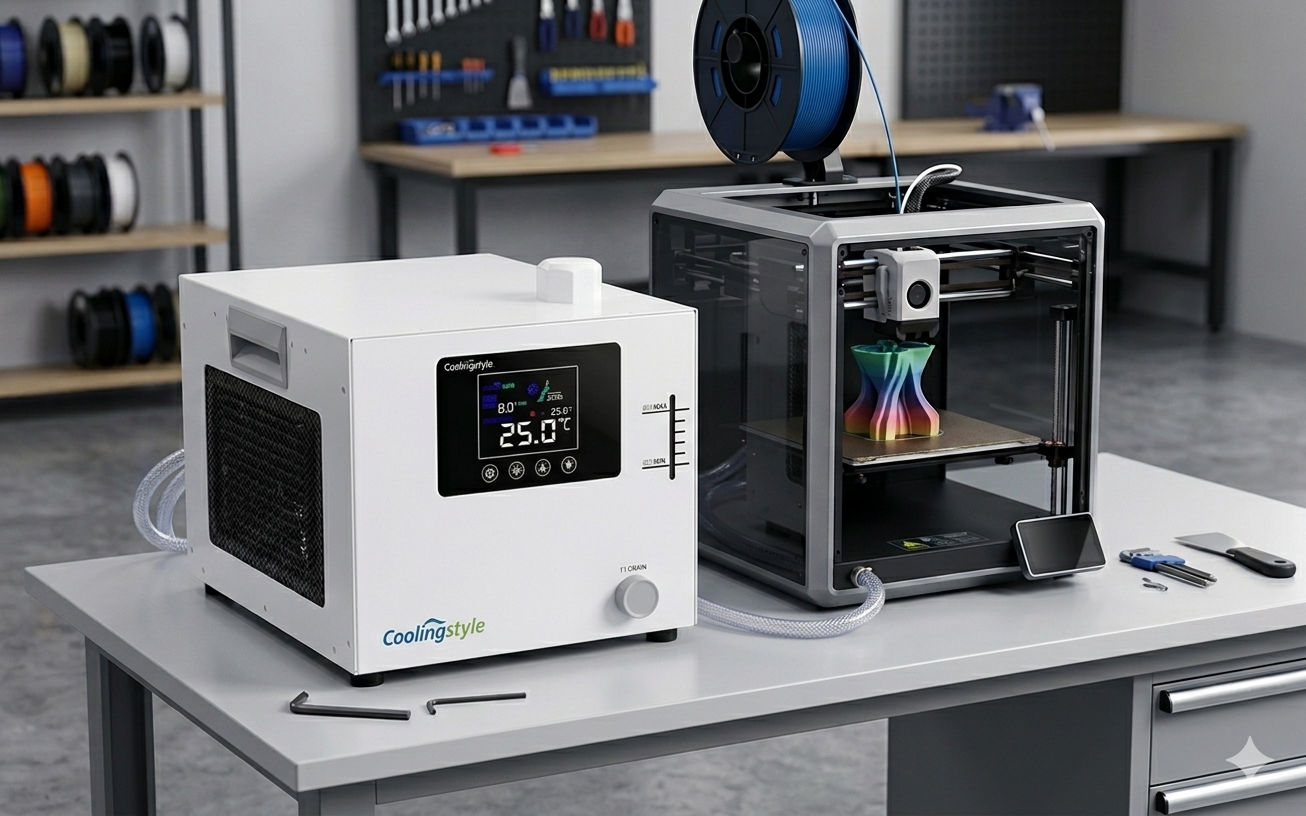
As 3D printing continues to evolve across industries, maintaining precise temperature control has become essential for achieving consistent, 고품질 결과. Among the most effective solutions are chiller systems, which play a critical role in thermal management.
그들의 의복이 얼마나 무거운지, 작업 환경이 얼마나 더운지는 중요하지 않습니다., 모든 냉각기가 동일하게 제작되는 것은 아닙니다.. One of the most common questions professionals face is: Should you choose an air-cooled or water-cooled chiller?
이 종합 가이드에서, we break down the differences between air-cooled and water-cooled 3D printer chillers, compare their performance, and explain how advanced solutions like 냉각 스타일—특집 ±0.01°C 정밀도, 컴팩트한 마이크로 디자인, 친환경 R290 냉매, 마이크로채널 열교환 기술—deliver superior results.
3D 프린터 냉각기란??
A chiller is a cooling system designed to remove heat from a 3D printer and maintain stable operating temperatures. 다음과 같은 고급 시스템 냉각기 solutions provide precise control, ensuring optimal performance and print quality.
Understanding Air-Cooled Chillers
Air-cooled chillers use fans to dissipate heat into the surrounding air. They are commonly used due to their simplicity and ease of installation.
Advantages of Air-Cooled Chillers
- 쉬운 설치
- No additional water source required
- 초기 비용 절감
- Compact and portable
Limitations of Air-Cooled Chillers
- Lower cooling efficiency
- Performance affected by ambient temperature
- 더 높은 소음 수준
- Less precise temperature control
Understanding Water-Cooled Chillers
Water-cooled chillers use liquid circulation to remove heat more efficiently. These systems are widely used in industrial and high-performance applications.
Professional-grade 냉각기 solutions often utilize advanced water-cooling technology for superior performance.
Advantages of Water-Cooled Chillers
- 더 높은 냉각 효율
- More stable temperature control
- Better performance in high-demand environments
- Lower noise levels
Limitations of Water-Cooled Chillers
- 더욱 복잡한 설치
- Higher initial cost
- Requires maintenance
Air-Cooled vs Water-Cooled: 주요 차이점
| 특징 | Air-Cooled Chiller | Water-Cooled Chiller |
|---|---|---|
| 냉각 효율 | 보통의 | 높은 |
| 온도 정밀도 | 제한된 | Ultra-high (±0.01°C) |
| 소음 수준 | 더 높은 | 낮추다 |
| 설치 | 단순한 | 더 복잡합니다 |
| 최고의 사용 사례 | Small-scale printing | 산업 & 높은 정밀도 |
Which One Is Better for 3D Printing?
The choice depends on your application:
- 공냉식 시스템 are suitable for basic or small-scale printing.
- 수냉식 시스템 are ideal for high-speed, large-format, and precision-critical applications.
For demanding environments, investing in a high-performance 냉각기 system is the best option.
냉각 방식의 장점
냉각 스타일 combines advanced engineering with cutting-edge technology to deliver superior cooling performance.
핵심 기능:
- 초고정밀 온도 제어 (±0.01°C)
- Compact micro design for flexible integration
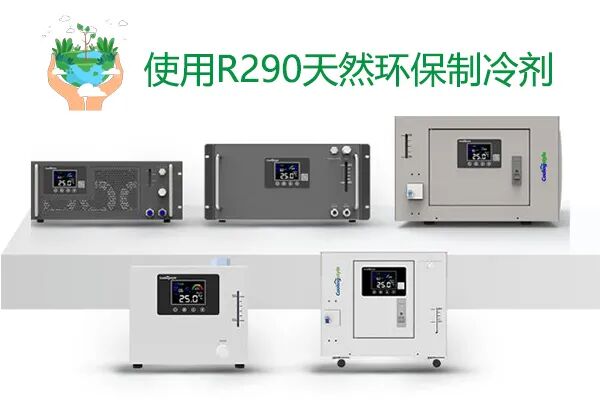
- 친환경 R290 냉매
- 첨단 마이크로채널 열교환 기술
- 에너지 효율적이고 안정적인 성능
These features make coolingstyle an ideal choice for both air-cooled and water-cooled applications.
실제 응용 프로그램
Desktop 3D Printing
Air-cooled systems may be sufficient for low-demand use.
산업생산
Water-cooled systems provide the stability needed for continuous operation.
High-Speed Printing
Efficient cooling is essential to maintain performance at high speeds.
정밀 응용
Stable temperatures ensure accuracy in medical and engineering prints.
Cost vs Performance Consideration
While air-cooled chillers have lower upfront costs, water-cooled systems offer better long-term value through:
- 실패율 감소
- 효율성 향상
- 생산성 향상
- 운영 비용 절감
Future Trends in Chiller Technology
- 실시간 모니터링이 가능한 스마트 냉각 시스템
- More compact high-performance designs
- 친환경 냉매 사용 확대
- 자동화된 워크플로우와 통합
Coolingstyle 소형 압축기의 응용
Choosing between air-cooled and water-cooled chillers depends on your specific needs, but the importance of proper cooling cannot be overstated. While air-cooled systems offer simplicity, water-cooled solutions provide the performance and precision required for advanced 3D printing.
그것으로 0.01°C 정밀도, 컴팩트한 디자인, 친환경 R290 냉매, 마이크로채널 열교환 기술, 냉각 스타일 delivers a powerful solution that meets the demands of modern 3D printing.
By selecting the right cooling system, 인쇄 품질을 크게 향상시킬 수 있습니다, 실패를 줄이다, 전반적인 생산성을 향상시킵니다..