3D printing, also known as additive manufacturing, has transformed modern production processes across industries. From rapid prototyping to end-use part manufacturing, this technology offers unmatched flexibility and efficiency. However, one critical factor that often determines whether a print succeeds or fails is temperature control.
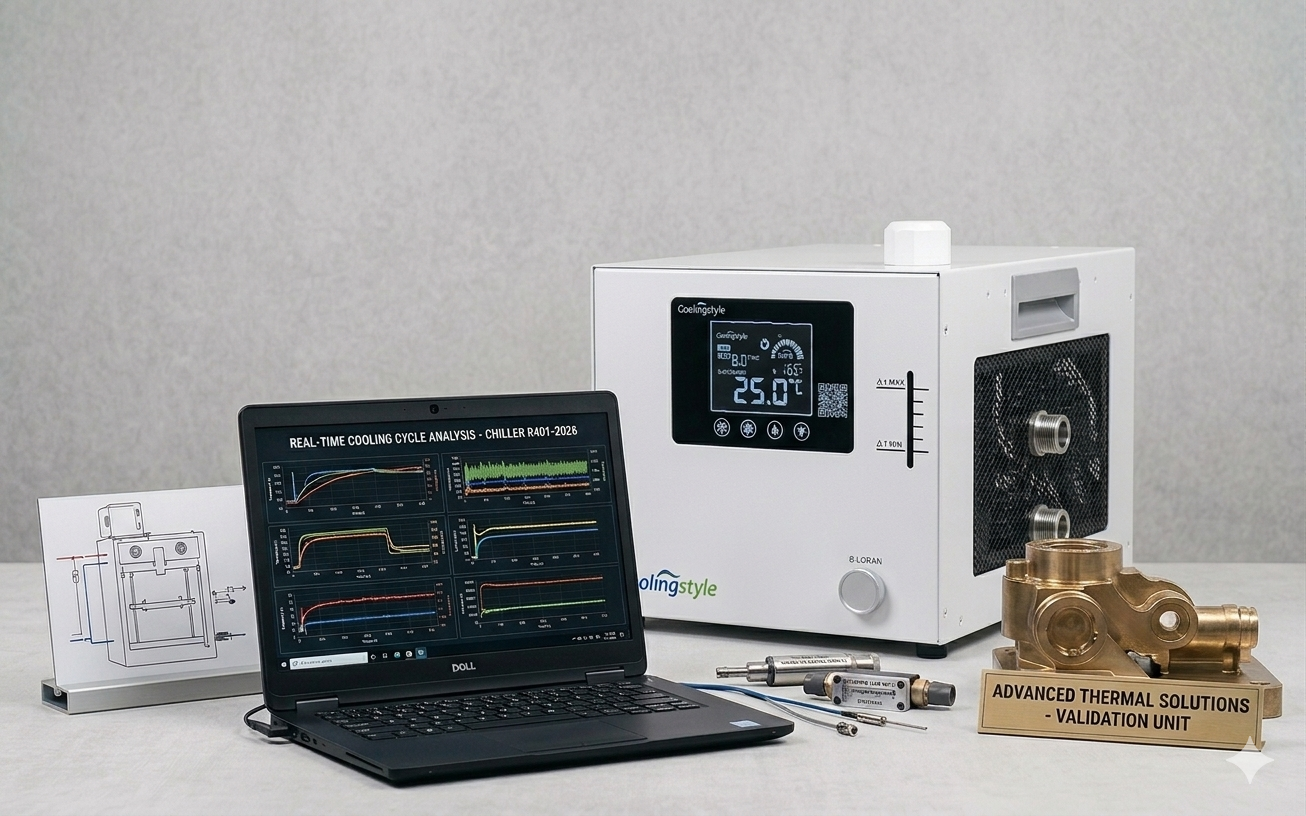
Precise thermal management directly affects material behavior, layer adhesion, dimensional accuracy, and overall print quality. Even minor fluctuations can lead to defects such as warping, cracking, or poor surface finish. As a result, advanced temperature control solutions—like those developed by coolingstyle—are becoming essential in both industrial and high-end desktop 3D printing.
Why Temperature Control Matters in 3D Printing
Material Performance Depends on Temperature
Each 3D printing material has a specific temperature range for optimal performance:
- PLA: Easy to print but sensitive to overheating
- ABS: Requires stable high temperatures to prevent warping
- PETG: Needs balanced cooling to avoid stringing
- Nylon: Demands precise thermal stability due to moisture sensitivity
If temperatures are too low, materials fail to bond properly. If too high, prints may deform or string. Maintaining a stable temperature is therefore critical.
Layer Adhesion and Strength
Consistent temperature ensures that each printed layer bonds effectively with the previous one. Poor thermal control leads to weak interlayer bonding, reducing the mechanical strength of the final product.
Warping and Shrinkage Prevention
Warping occurs when uneven cooling causes internal stress within the printed object. Proper temperature regulation ensures uniform cooling, reducing deformation and improving print reliability.
Surface Finish and Accuracy
Temperature fluctuations can result in rough surfaces, sagging, or dimensional inaccuracies. High-precision applications require extremely stable thermal environments.
Challenges in Temperature Management
Maintaining optimal temperature conditions is not always straightforward. Several challenges can affect performance:
- Environmental factors: Ambient temperature and airflow can disrupt prints
- Heat accumulation: Long printing sessions generate excess heat
- Limited stock cooling: Standard printers often lack precise cooling systems
- High precision demands: Advanced applications require extremely tight tolerances
These challenges highlight the need for professional-grade cooling solutions.
The Role of Advanced Cooling Systems
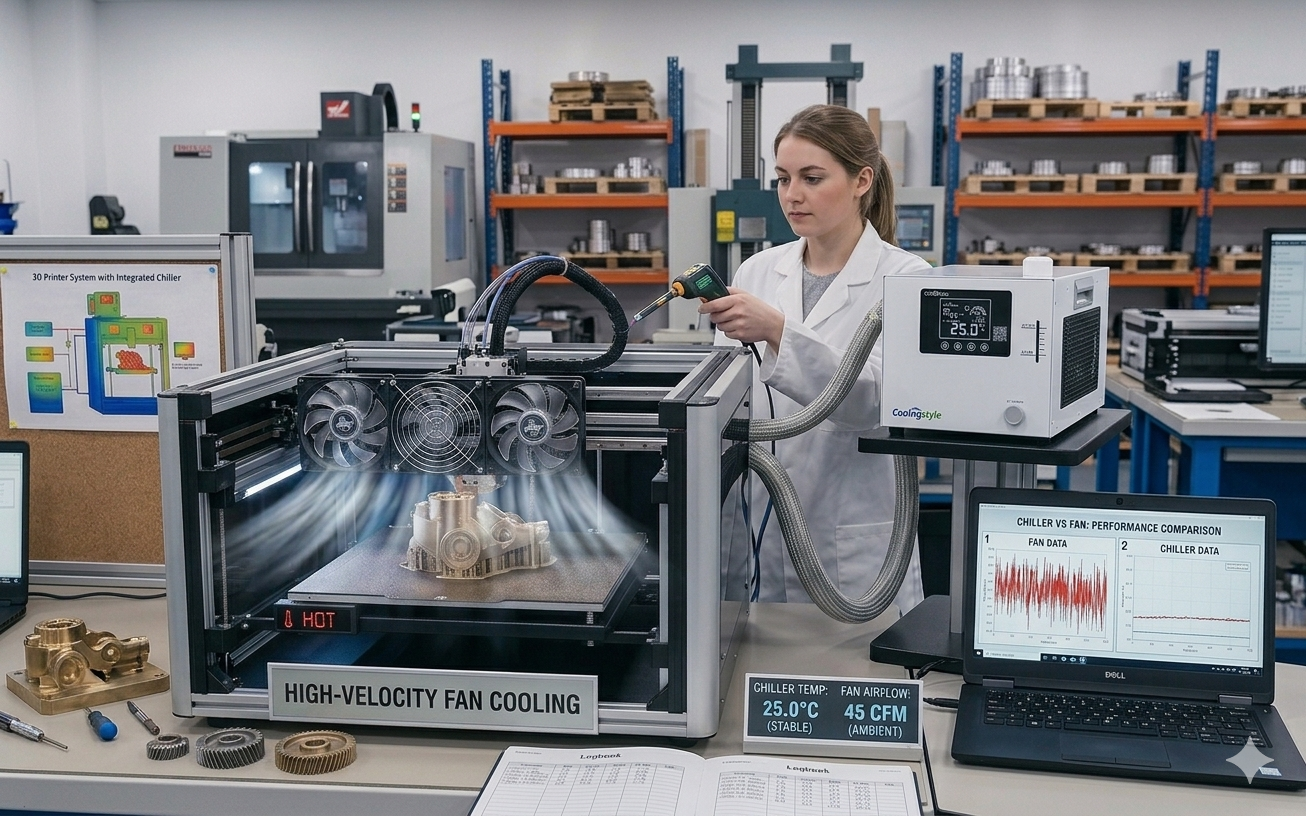
Modern 3D printing increasingly relies on external cooling systems to maintain stable temperatures. A high-performance cooling solution should provide:
- Accurate temperature regulation
- Fast response to thermal changes
- Energy efficiency
- Compact and integrable design
This is where coolingstyle delivers significant advantages.
How coolingstyle Enhances 3D Printing Performance
Ultra-High Precision Temperature Control
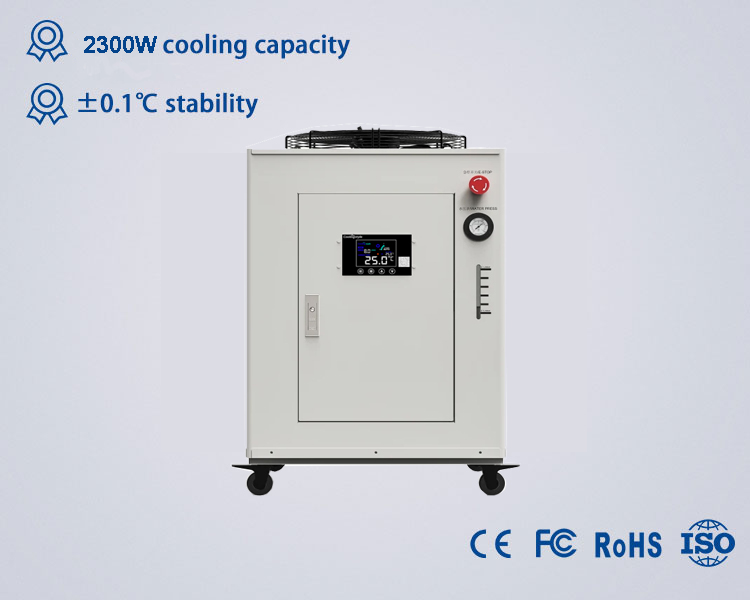
coolingstyle systems offer temperature accuracy of up to ±0.01°C, ensuring highly stable printing conditions. This level of precision is ideal for applications requiring strict dimensional tolerances.
Compact and Micro Design
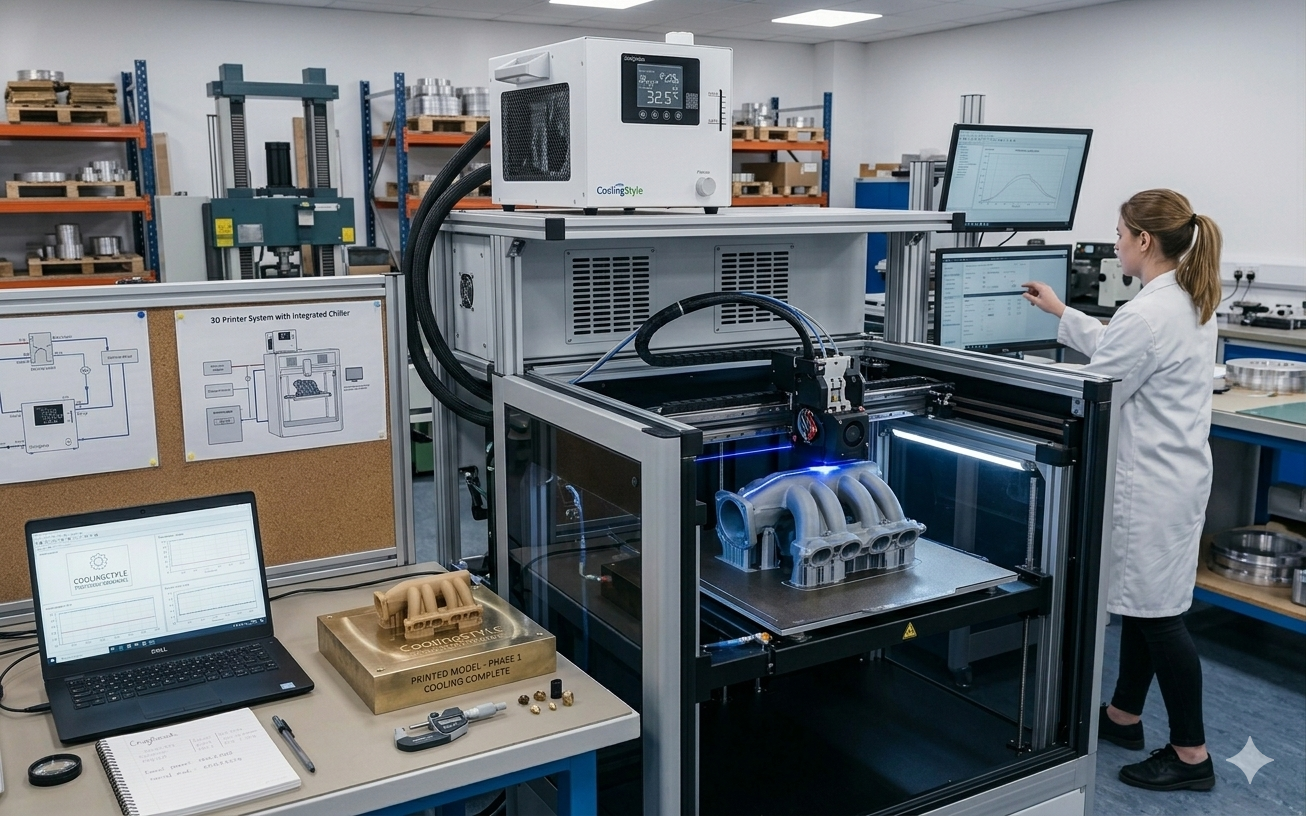
Unlike traditional bulky chillers, coolingstyle solutions feature a compact, micro-scale design, making them easy to integrate into both desktop and industrial 3D printing setups.
Eco-Friendly R290 Refrigerant
Coolingstyle uses R290 refrigerant, a natural and environmentally friendly cooling medium with low global warming potential and high efficiency.
Microchannel Heat Exchange Technology
The use of microchannel heat exchangers allows for faster heat transfer and improved cooling efficiency while reducing energy consumption and system size.
Why Choose coolingstyle?
- 0.01°C ultra-precise temperature control
- Compact and space-saving design
- Eco-friendly R290 refrigerant
- Advanced microchannel heat exchange
Applications of Temperature Control in 3D Printing
Industrial Manufacturing
Temperature stability ensures consistent quality in mass production of functional parts.
Medical and Dental Printing
Precision temperature control is essential for producing accurate implants and dental models.
Electronics and Micro-Components
Micro-scale printing requires extremely stable thermal environments to prevent defects.
Research and Development
R&D environments benefit from controlled conditions for testing new materials and processes.
Best Practices for Temperature Control
- Keep your printer in a stable environment
- Optimize nozzle and bed temperature settings
- Monitor temperature in real time
- Upgrade to professional cooling systems like coolingstyle
Future Trends in 3D Printing Temperature Control
- Smart systems: AI-driven real-time adjustments
- Integrated cooling: Built-in advanced systems
- Sustainability: Adoption of eco-friendly refrigerants like R290
- Higher precision: Increasing demand for ultra-precise control
Conclusion
Temperature control is a fundamental factor in 3D printing success. It directly impacts print quality, strength, and accuracy. As technology advances, the need for precise and reliable thermal management continues to grow.
With its 0.01°C precision, compact design, eco-friendly R290 refrigerant, and microchannel heat exchange technology, coolingstyle provides an advanced solution for achieving superior 3D printing performance.
If you are looking to improve print quality and consistency, investing in a professional cooling system is one of the most effective steps you can take.